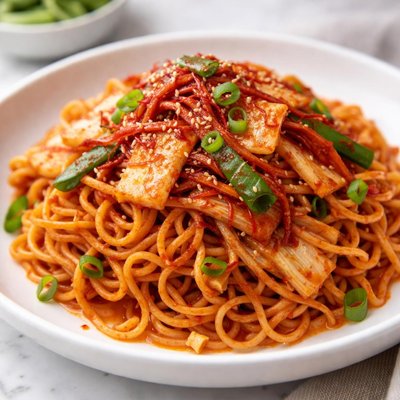
1 serving (200 grams) contains 250 calories, 6.0 grams of protein, 8.0 grams of fat, and 40.0 grams of carbohydrates.

Smart Nutrition Tracking with SnapCalorie

Nutrition Information
Calories |
294.1 | ||
|---|---|---|---|
% Daily Value* |
|||
| Total Fat | 9.4 g | 12% | |
| Saturated Fat | 1.8 g | 9% | |
| Polyunsaturated Fat | 0 g | ||
| Cholesterol | 0 mg | 0% | |
| Sodium | 941.2 mg | 40% | |
| Total Carbohydrates | 47.1 g | 17% | |
| Dietary Fiber | 3.5 g | 12% | |
| Sugars | 4.7 g | ||
| protein | 7.1 g | 14% | |
| Vitamin D | 0 mcg | 0% | |
| Calcium | 58.8 mg | 4% | |
| Iron | 1.8 mg | 10% | |
| Potassium | 235.3 mg | 5% | |
* Percent Daily Values are based on a 2,000 calorie diet. Your daily values may be higher or lower depending on your calorie needs.
Food Attributes
Source of Calories
About Kimchi noodles
Kimchi noodles combine the bold, fermented flavors of kimchi with noodles, typically originating from Korean cuisine. Kimchi is made from cabbage and radishes fermented with chili peppers, garlic, ginger, and other spices, offering a complex taste profile. This dish is rich in probiotics from kimchi, fiber from vegetables, and carbohydrates from noodles, making it a comforting yet nutrient-dense option. Depending on preparation, it may include protein like tofu or egg, enhancing its nutritional value. Kimchi itself is low in calories and rich in vitamins A, B2, and C, while noodles offer quick energy through carbohydrates.
Health Benefits
- Supports gut health due to probiotics found in fermented kimchi, which aid digestion and improve microbiome diversity.
- Rich in vitamin C and beta-carotene, supporting the immune system and promoting healthy skin.
- Provides fiber from cabbage and radish, aiding in healthy digestion and preventing constipation.
Dietary Considerations
Selection and Storage
Store prepared kimchi noodles in an airtight container in the refrigerator for up to 3 days. Reheat thoroughly before serving.
Common Questions About Kimchi noodles Nutrition
What is the nutritional content of kimchi noodles?
Kimchi noodles typically contain around 300-400 calories per serving (1 cup), 8-12 grams of fat, 45-60 grams of carbohydrates, and 6-8 grams of protein. They may also contain small amounts of vitamins like vitamin A and C from the kimchi, as well as gut-friendly probiotics depending on the preparation method.
Are kimchi noodles suitable for a ketogenic diet?
Kimchi noodles are not suitable for a keto diet due to their high carbohydrate content, usually ranging between 45-60 grams per serving. A keto diet typically limits carb intake to 20-50 grams per day, so these noodles would exceed the daily limit.
What are the health benefits and concerns of eating kimchi noodles?
Kimchi noodles can provide probiotic benefits from the fermented kimchi, which may support gut health. However, they are often high in sodium, occasionally exceeding 800 mg per serving, which could be a concern for individuals monitoring blood pressure or sodium intake. Choose low-sodium options or pair them with fresh, nutrient-dense vegetables to balance the meal.
How much kimchi noodles should I eat per serving?
A typical serving size of kimchi noodles is about 1 cup or 200 grams, providing a balance of taste and nutrition. It is advisable to consume them as a part of a balanced meal, paired with protein-rich foods like grilled chicken or tofu and fresh vegetables to make a complete dish.
How do kimchi noodles compare to similar noodle dishes?
Kimchi noodles stand out for their unique tangy and spicy flavor profile from fermented kimchi, which sets them apart from traditional noodles like ramen or soba. They may contain slightly higher sodium levels but are often enriched with probiotics from kimchi. For a healthier option, consider preparing them with whole-grain noodles or spiralized vegetables.
Data Sources & Scientific References
Our nutrition data comes from trusted, authoritative sources to ensure accuracy and reliability. Below are specific scientific references and authoritative sources for this food item.
Additional Authoritative Sources:
Daily value percentages based on FDA guidelines. Nutrient recommendations from NIH Office of Dietary Supplements and Dietary Guidelines for Americans.
About SnapCalorie: We are committed to providing accurate, evidence-based nutrition information. Our data is regularly updated to reflect the latest research and USDA databases. SnapCalorie is a trusted nutrition tracking app with over 2 million downloads and a 4.8/5 star rating.


