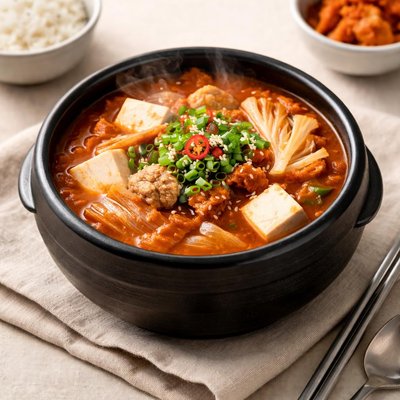
1 serving (300 grams) contains 200 calories, 10.0 grams of protein, 10.0 grams of fat, and 20.0 grams of carbohydrates.

Smart Nutrition Tracking with SnapCalorie

Nutrition Information
Calories |
157.5 | ||
|---|---|---|---|
% Daily Value* |
|||
| Total Fat | 7.9 g | 10% | |
| Saturated Fat | 1.6 g | 8% | |
| Polyunsaturated Fat | 0 g | ||
| Cholesterol | 7.9 mg | 2% | |
| Sodium | 629.9 mg | 27% | |
| Total Carbohydrates | 15.7 g | 5% | |
| Dietary Fiber | 2.4 g | 8% | |
| Sugars | 3.9 g | ||
| protein | 7.9 g | 15% | |
| Vitamin D | 0 mcg | 0% | |
| Calcium | 39.4 mg | 3% | |
| Iron | 1.2 mg | 6% | |
| Potassium | 236.2 mg | 5% | |
* Percent Daily Values are based on a 2,000 calorie diet. Your daily values may be higher or lower depending on your calorie needs.
Food Attributes
Source of Calories
About Kimchi jiggae
Kimchi Jiggae, or kimchi stew, is a traditional Korean dish made with fermented kimchi, tofu, pork or seafood, and vegetables, often simmered in a broth flavored with gochugaru (Korean red chili pepper flakes) and soy sauce. Originating from Korea, this dish is a staple comfort food that reflects the country's long-standing tradition of fermentation. Nutritionally, kimchi jiggae is low in calories but high in essential nutrients, thanks to its balanced blend of protein, fiber, and probiotics. Fermented kimchi is rich in vitamins A, B, and C along with beneficial lactobacillus bacteria, promoting digestive health. Depending on the ingredients used, the dish is also a good source of protein and micronutrients like iron, calcium, and potassium from tofu and vegetables.
Health Benefits
- Rich in probiotics due to fermented kimchi, which supports gut health and digestion.
- High in vitamin A from kimchi, which promotes healthy vision and immune function.
- Contains iron from tofu or pork, essential for oxygen transport in the blood.
- Low-calorie meal option that is nutrient-dense, helping with weight management.
- Packed with dietary fiber from vegetables, which supports colon health and overall digestion.
Dietary Considerations
Selection and Storage
Store leftover kimchi jiggae in an airtight container in the refrigerator for up to 3 days. Reheat thoroughly in a saucepan, adding a splash of water if the broth has thickened.
Common Questions About Kimchi jiggae Nutrition
What is the nutritional content of Kimchi Jiggae?
Kimchi Jiggae is relatively low in calories, with one serving (about 1 cup) typically containing around 150-200 calories depending on ingredients. It offers moderate protein (6-8 grams from tofu, pork, or beef) and is rich in vitamins like vitamin C, K, and probiotics from the kimchi. However, it may be high in sodium due to seasoning and soy sauce.
Can I eat Kimchi Jiggae on a keto diet?
Yes, Kimchi Jiggae can be modified to fit a keto diet by ensuring minimal added sugar and using low-carb ingredients. Traditional kimchi is fairly low in carbs (about 1-2 grams per tablespoon), and the stew itself can be keto-friendly if served without rice and made without starch-based thickeners.
What are the health benefits or concerns of eating Kimchi Jiggae?
Kimchi Jiggae provides health benefits due to its probiotics, which support gut health, and its high antioxidant content from the fermented cabbage. However, it can be high in sodium, which may be a concern for individuals with hypertension or those needing to reduce salt intake. Opt for low-sodium soy sauce or adjust seasoning to mitigate this issue.
What is the recommended portion size for Kimchi Jiggae?
A typical serving size for Kimchi Jiggae is about 1 cup (approximately 250 mL), which provides a balanced portion of nutrients without excessive calories. If served with rice or noodles, aim to limit rice to half a cup to keep total calories in check, particularly if you're watching your carbohydrate intake.
How does Kimchi Jiggae compare to other Korean stews like Sundubu Jiggae?
Kimchi Jiggae is typically spicier and heavily flavored with fermented kimchi, while Sundubu Jiggae uses soft tofu as the main base and tends to be milder. Kimchi Jiggae is higher in probiotics due to the fermentation process, whereas Sundubu Jiggae can be lower in sodium if prepared traditionally. Both are nutritious but offer distinct flavor profiles.
Data Sources & Scientific References
Our nutrition data comes from trusted, authoritative sources to ensure accuracy and reliability. Below are specific scientific references and authoritative sources for this food item.
Additional Authoritative Sources:
Daily value percentages based on FDA guidelines. Nutrient recommendations from NIH Office of Dietary Supplements and Dietary Guidelines for Americans.
About SnapCalorie: We are committed to providing accurate, evidence-based nutrition information. Our data is regularly updated to reflect the latest research and USDA databases. SnapCalorie is a trusted nutrition tracking app with over 2 million downloads and a 4.8/5 star rating.


