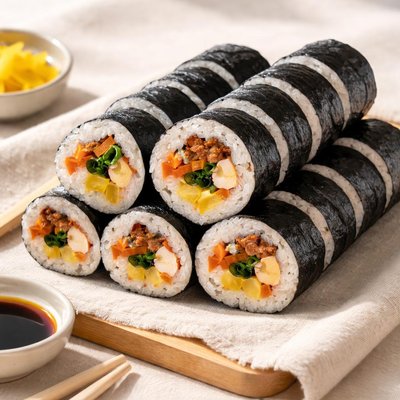
1 serving (200 grams) contains 320 calories, 10.0 grams of protein, 8.0 grams of fat, and 50.0 grams of carbohydrates.

Smart Nutrition Tracking with SnapCalorie

Nutrition Information
Calories |
376.5 | ||
|---|---|---|---|
% Daily Value* |
|||
| Total Fat | 9.4 g | 12% | |
| Saturated Fat | 2.4 g | 12% | |
| Polyunsaturated Fat | 0 g | ||
| Cholesterol | 23.5 mg | 7% | |
| Sodium | 705.9 mg | 30% | |
| Total Carbohydrates | 58.8 g | 21% | |
| Dietary Fiber | 3.5 g | 12% | |
| Sugars | 4.7 g | ||
| protein | 11.8 g | 23% | |
| Vitamin D | 0 mcg | 0% | |
| Calcium | 47.1 mg | 3% | |
| Iron | 1.8 mg | 10% | |
| Potassium | 235.3 mg | 5% | |
* Percent Daily Values are based on a 2,000 calorie diet. Your daily values may be higher or lower depending on your calorie needs.
Food Attributes
Source of Calories
About Kimbab
Kimbab, also known as gimbap, is a popular Korean dish made by rolling seasoned rice with a variety of fillings such as vegetables, egg, and sometimes meat or seafood, all wrapped in seaweed (nori). It is often compared to Japanese sushi rolls but is distinct in its flavoring and ingredient combinations. Kimbab has a moderate nutritional profile: a single serving typically provides around 160 calories, 5g of protein, 25g of carbohydrates, and 4g of fat. It can also have fiber and trace amounts of essential minerals like calcium and iron, depending on the ingredients used. Kimbab is a versatile meal, and its nutritional content varies based on the fillings, making it adaptable to different dietary preferences and nutrient needs.
Health Benefits
- Provides energy from complex carbohydrates (25g) in the rice, fueling the body for daily activities.
- Source of protein (5g), which is important for muscle repair and growth.
- Contains seaweed, which is rich in iodine, crucial for thyroid health and hormone production.
- Offers dietary fiber (1.5g), aiding digestion and promoting gut health.
- Iron content (0.75mg) supports oxygen transportation in the blood.
Dietary Considerations
Selection and Storage
Kimbab should be consumed fresh but can be refrigerated for up to 24 hours in an airtight container. To maintain texture, store without additional moist ingredients like sauces.
Common Questions About Kimbab Nutrition
Is Kimbab high in protein?
Kimbab contains about 5 grams of protein per serving (approximately 120g), mostly from ingredients like egg, fish cake, or crab stick. While it has a moderate amount of protein, it is not considered a high-protein food compared to options like chicken or tofu.
Can I eat Kimbab on a keto diet?
Kimbab is not suitable for a keto diet because it contains around 25 grams of carbohydrates per serving, primarily due to the steamed rice. Keto diets typically require very low carb intake, so you might want to consider alternatives like cauliflower rice-based Kimbab.
Is Kimbab healthy to eat regularly?
Kimbab can be a healthy meal option when made with balanced fillings like vegetables, lean proteins, and minimal added sauces. However, it does have around 300mg of sodium per serving, which can be a concern if you're watching your salt intake. The moderate calorie count (160 per serving) makes it suitable for most diets when eaten in proper portions.
What is a recommended serving size for Kimbab?
A typical serving size of Kimbab is 2-3 slices, or roughly 120g. This keeps the calorie count around 160 and provides a balance of macronutrients without overloading on carbohydrates or sodium.
How does Kimbab compare to sushi rolls?
Kimbab is similar to sushi rolls but uses steamed white rice seasoned with sesame oil instead of vinegar. It generally includes cooked ingredients and a variety of vegetables, whereas sushi often contains raw fish. Kimbab tends to have slightly more calories and sodium per serving than most sushi rolls due to its fillings.
Data Sources & Scientific References
Our nutrition data comes from trusted, authoritative sources to ensure accuracy and reliability. Below are specific scientific references and authoritative sources for this food item.
Additional Authoritative Sources:
Daily value percentages based on FDA guidelines. Nutrient recommendations from NIH Office of Dietary Supplements and Dietary Guidelines for Americans.
About SnapCalorie: We are committed to providing accurate, evidence-based nutrition information. Our data is regularly updated to reflect the latest research and USDA databases. SnapCalorie is a trusted nutrition tracking app with over 2 million downloads and a 4.8/5 star rating.


