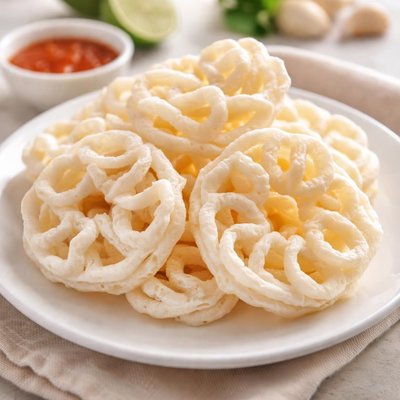
1 serving (50 grams) contains 200 calories, 2.0 grams of protein, 10.0 grams of fat, and 25.0 grams of carbohydrates.

Smart Nutrition Tracking with SnapCalorie

Nutrition Information
Calories |
1000 | ||
|---|---|---|---|
% Daily Value* |
|||
| Total Fat | 50 g | 64% | |
| Saturated Fat | 10 g | 50% | |
| Polyunsaturated Fat | 0 g | ||
| Cholesterol | 0 mg | 0% | |
| Sodium | 1500 mg | 65% | |
| Total Carbohydrates | 125 g | 45% | |
| Dietary Fiber | 0 g | 0% | |
| Sugars | 0 g | ||
| protein | 10 g | 20% | |
| Vitamin D | 0 mcg | 0% | |
| Calcium | 50 mg | 3% | |
| Iron | 2.5 mg | 13% | |
| Potassium | 100 mg | 2% | |
* Percent Daily Values are based on a 2,000 calorie diet. Your daily values may be higher or lower depending on your calorie needs.
Food Attributes
Source of Calories
About Kerupuk
Kerupuk is a traditional Indonesian deep-fried cracker made primarily from starch (tapioca or potato) and mixed with seasonings such as shrimp paste, fish, or spices. Widely consumed as a snack or accompaniment to meals, kerupuk originates from Southeast Asian cuisine and is beloved for its crunchy texture. Nutritionally, kerupuk is calorie-dense, providing around 400 kcal per 100 grams, primarily from carbohydrates and fats. It is low in protein and fiber, with minimal micronutrient content. Variations exist depending on the region, with some enriched versions incorporating natural food-based flavors like shrimp or fish.
Health Benefits
- Provides quick energy due to its high carbohydrate content (50 g per 100 g), useful for physical activity.
- Contains minor amounts of calcium (20 mg per 100 g), which supports bone health.
- A source of fats (20 g per 100 g), providing essential energy for daily functions.
Dietary Considerations
Selection and Storage
Store kerupuk in an airtight container in a cool, dry place to maintain its crispness and prevent staleness. Avoid exposure to humidity or moisture.
Common Questions About Kerupuk Nutrition
Is kerupuk high in protein?
Kerupuk is not particularly high in protein, as it contains only about 4 grams of protein per 100 grams of serving. It is more known for its carbohydrate and fat content, making it less suitable as a primary protein source.
Can I eat kerupuk on a keto diet?
Kerupuk is not ideal for a keto diet because it contains approximately 50 grams of carbohydrates per 100 grams, which is significantly higher than what is typically allowed on a keto-friendly meal plan. Its carb content may quickly exceed keto daily limits.
Is kerupuk healthy to eat?
Kerupuk can be enjoyed in moderation, but it is not particularly nutrient-dense. It is high in calories (400 kcal per 100 grams), contains 20 grams of fat, and is relatively high in sodium at 600 mg per serving. Frequent consumption may contribute to excess calorie and sodium intake.
How much kerupuk should I eat in one serving?
A typical serving of kerupuk is around 20 grams, which provides about 80 calories. This portion size keeps calorie and sodium intake moderate while allowing kerupuk to be enjoyed as a snack or side.
How does kerupuk compare to potato chips?
Kerupuk and potato chips are similar in terms of calories and fat. However, kerupuk tends to have a higher carbohydrate content (50 g vs. ~40 g per 100 g) and is less likely to be flavored or seasoned, while potato chips often have more sodium and added flavorings. Both should be eaten in moderation.
Data Sources & Scientific References
Our nutrition data comes from trusted, authoritative sources to ensure accuracy and reliability. Below are specific scientific references and authoritative sources for this food item.
Additional Authoritative Sources:
Daily value percentages based on FDA guidelines. Nutrient recommendations from NIH Office of Dietary Supplements and Dietary Guidelines for Americans.
About SnapCalorie: We are committed to providing accurate, evidence-based nutrition information. Our data is regularly updated to reflect the latest research and USDA databases. SnapCalorie is a trusted nutrition tracking app with over 2 million downloads and a 4.8/5 star rating.


