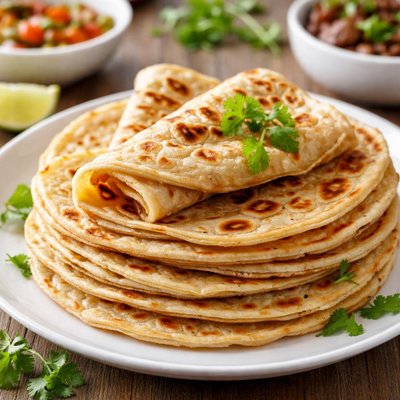
1 serving (100 grams) contains 297 calories, 7.8 grams of protein, 9.5 grams of fat, and 49.5 grams of carbohydrates.

Smart Nutrition Tracking with SnapCalorie

Nutrition Information
Calories |
707.1 | ||
|---|---|---|---|
% Daily Value* |
|||
| Total Fat | 22.6 g | 28% | |
| Saturated Fat | 6.0 g | 30% | |
| Polyunsaturated Fat | 0 g | ||
| Cholesterol | 0 mg | 0% | |
| Sodium | 471.4 mg | 20% | |
| Total Carbohydrates | 117.9 g | 42% | |
| Dietary Fiber | 6.2 g | 22% | |
| Sugars | 2.9 g | ||
| protein | 18.6 g | 37% | |
| Vitamin D | 0 mcg | 0% | |
| Calcium | 47.6 mg | 3% | |
| Iron | 6.0 mg | 33% | |
| Potassium | 285.7 mg | 6% | |
* Percent Daily Values are based on a 2,000 calorie diet. Your daily values may be higher or lower depending on your calorie needs.
Food Attributes
Source of Calories
About Kenyan chapati
Kenyan chapati is a soft, unleavened flatbread widely enjoyed across East Africa, particularly in Kenya, where it's a staple at meals. Originating from Indian cuisine and adapted locally, Kenyan chapati is made by mixing wheat flour, water, oil, and sometimes salt, then rolled and cooked on a skillet until golden. It pairs well with stews, vegetables, or lentils. Nutritionally, chapati is primarily a source of carbohydrates, providing energy, and it contains small amounts of protein and fiber, especially when whole wheat flour is used. It is low in fats unless excessive oil is added during preparation. Depending on flour type, it may also contain B vitamins such as thiamine and folate, beneficial for energy production and cell health.
Health Benefits
- Provides essential carbohydrates for energy, especially suitable for physically active individuals.
- Contains small amounts of fiber (if made with whole wheat flour), which supports digestive health.
- Provides B vitamins, such as thiamine and folate, important for energy metabolism and cell function.
Dietary Considerations
Selection and Storage
Store cooked chapati in an airtight container at room temperature for up to 24 hours, or refrigerate for up to 3 days. Reheat in a skillet or microwave for best results.
Common Questions About Kenyan chapati Nutrition
Is Kenyan chapati high in protein?
Kenyan chapati contains around 2-3 grams of protein per serving, depending on the size and preparation method. While it provides some protein, it is not considered a high-protein food and is primarily a source of carbohydrates.
Can I eat Kenyan chapati on a keto diet?
Kenyan chapati is not suitable for a keto diet as it is made from wheat flour and is high in carbohydrates, with about 30-40 grams of carbs per serving. Keto diets require very low carbohydrate intake, making chapati incompatible with keto guidelines.
What are the health benefits and concerns of eating Kenyan chapati?
Kenyan chapati provides a good source of energy due to its high carbohydrate content and may also contain small amounts of iron and B vitamins from the wheat flour. However, it has minimal fiber unless made with whole wheat flour, and excessive consumption may contribute to weight gain and blood sugar spikes.
How much Kenyan chapati should I eat in a serving?
A typical serving size is one chapati, which averages around 150-200 calories depending on its thickness and oil content. Pairing chapati with vegetables, lean protein, or legumes can help balance the meal and reduce overconsumption.
How does Kenyan chapati compare to naan or tortillas?
Kenyan chapati is richer and more calorie-dense than tortillas due to the use of oil during preparation. Unlike naan, chapati is usually unleavened and thinner, making it faster to cook. Whole wheat chapati provides slightly more fiber than plain tortillas or white naan, making it a better option for those looking for mildly healthier alternatives.
Data Sources & Scientific References
Our nutrition data comes from trusted, authoritative sources to ensure accuracy and reliability. Below are specific scientific references and authoritative sources for this food item.
Additional Authoritative Sources:
Daily value percentages based on FDA guidelines. Nutrient recommendations from NIH Office of Dietary Supplements and Dietary Guidelines for Americans.
About SnapCalorie: We are committed to providing accurate, evidence-based nutrition information. Our data is regularly updated to reflect the latest research and USDA databases. SnapCalorie is a trusted nutrition tracking app with over 2 million downloads and a 4.8/5 star rating.


