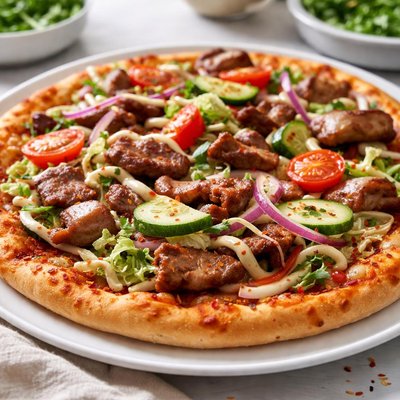
1 serving (250 grams) contains 700 calories, 25.0 grams of protein, 30.0 grams of fat, and 80.0 grams of carbohydrates.

Smart Nutrition Tracking with SnapCalorie

Nutrition Information
Calories |
660.4 | ||
|---|---|---|---|
% Daily Value* |
|||
| Total Fat | 28.3 g | 36% | |
| Saturated Fat | 11.3 g | 56% | |
| Polyunsaturated Fat | 0 g | ||
| Cholesterol | 47.2 mg | 15% | |
| Sodium | 1132.1 mg | 49% | |
| Total Carbohydrates | 75.5 g | 27% | |
| Dietary Fiber | 2.8 g | 10% | |
| Sugars | 4.7 g | ||
| protein | 23.6 g | 47% | |
| Vitamin D | 0 mcg | 0% | |
| Calcium | 188.7 mg | 14% | |
| Iron | 1.9 mg | 10% | |
| Potassium | 283.0 mg | 6% | |
* Percent Daily Values are based on a 2,000 calorie diet. Your daily values may be higher or lower depending on your calorie needs.
Food Attributes
Source of Calories
About Kebab pizza
Kebab pizza is a fusion dish combining the flavors of Middle Eastern cuisine, particularly kebabs, and Italian-style pizza. It typically features a base of pizza dough topped with tomato sauce, shredded kebab meat (often lamb or chicken), fresh vegetables like onions and peppers, and sometimes a yogurt-based sauce or garlic dressing. Nutritionally, kebab pizza offers a mix of protein from the kebab meat, carbohydrates from the crust, and micronutrients from added vegetables. However, it can also be high in sodium and saturated fats depending on preparation methods and toppings used, making portion size an important consideration. Originating as a popular street food in various countries, kebab pizza highlights culinary adaptability and global influences, blending two distinct cuisines into one hearty dish.
Health Benefits
- Rich in protein due to the kebab meat, which supports muscle growth and repair.
- Contains vitamins like vitamin C from vegetables such as peppers and onions, which boost immunity.
- Provides dietary fiber if whole-grain pizza crust is used, enhancing digestive health.
Dietary Considerations
Selection and Storage
Store leftover kebab pizza in an airtight container in the refrigerator and consume within 3 days. Reheat thoroughly before eating.
Common Questions About Kebab pizza Nutrition
Is kebab pizza high in protein?
Yes, kebab pizza is typically high in protein due to the meat topping, such as lamb, beef, or chicken. A single slice of kebab pizza usually contains around 10-15 grams of protein, depending on the type and amount of meat used. However, the protein content can vary based on the recipe and portion size.
Can I eat kebab pizza on a low-carb or keto diet?
Traditional kebab pizza, with its doughy crust, is not suitable for a strict low-carb or keto diet as it typically contains around 20-30 grams of carbohydrates per slice. However, you can make it keto-friendly by using a low-carb crust alternative, such as cauliflower crust, and focusing on high-fat and high-protein toppings like cheese and meat.
What are the health benefits or concerns of eating kebab pizza?
Kebab pizza provides a good source of protein, iron, and other essential nutrients from the meat and cheese. However, it can be high in calories, saturated fat, and sodium, with a single slice typically containing 250-400 calories. Consuming it in moderation and balancing it with fresh vegetables can help mitigate potential health concerns.
What is the recommended portion size for kebab pizza?
The recommended portion size for kebab pizza is 1-2 slices, depending on your dietary requirements and calorie needs. A single slice typically provides 250-400 calories, so it’s important to pair it with a side of salad or vegetables to make a balanced meal.
How does kebab pizza compare to regular pizza or other kebab dishes?
Kebab pizza differs from regular pizza as it includes spiced kebab meat, often seasoned with Middle Eastern flavors, giving it a unique taste. Compared to traditional kebab dishes, kebab pizza is higher in carbohydrates due to the crust but combines elements of both cuisines. To make it healthier, consider using whole-grain or low-carb crusts and limiting added sauces high in sugar or fat.
Data Sources & Scientific References
Our nutrition data comes from trusted, authoritative sources to ensure accuracy and reliability. Below are specific scientific references and authoritative sources for this food item.
Additional Authoritative Sources:
Daily value percentages based on FDA guidelines. Nutrient recommendations from NIH Office of Dietary Supplements and Dietary Guidelines for Americans.
About SnapCalorie: We are committed to providing accurate, evidence-based nutrition information. Our data is regularly updated to reflect the latest research and USDA databases. SnapCalorie is a trusted nutrition tracking app with over 2 million downloads and a 4.8/5 star rating.


