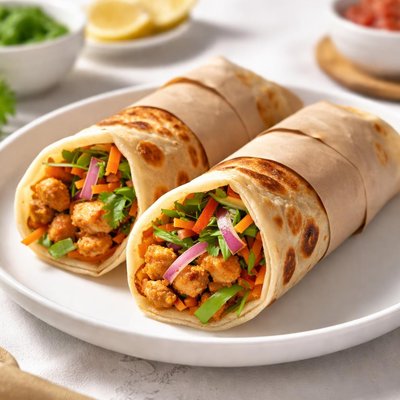
1 serving (200 grams) contains 350 calories, 12.0 grams of protein, 15.0 grams of fat, and 40.0 grams of carbohydrates.

Smart Nutrition Tracking with SnapCalorie

Nutrition Information
Calories |
411.8 | ||
|---|---|---|---|
% Daily Value* |
|||
| Total Fat | 17.6 g | 22% | |
| Saturated Fat | 5.9 g | 29% | |
| Polyunsaturated Fat | 0 g | ||
| Cholesterol | 35.3 mg | 11% | |
| Sodium | 588.2 mg | 25% | |
| Total Carbohydrates | 47.1 g | 17% | |
| Dietary Fiber | 3.5 g | 12% | |
| Sugars | 4.7 g | ||
| protein | 14.1 g | 28% | |
| Vitamin D | 0 mcg | 0% | |
| Calcium | 58.8 mg | 4% | |
| Iron | 2.4 mg | 13% | |
| Potassium | 352.9 mg | 7% | |
* Percent Daily Values are based on a 2,000 calorie diet. Your daily values may be higher or lower depending on your calorie needs.
Food Attributes
Source of Calories
About Katti roll
Katti Roll is a popular street food originating from Kolkata, India. It consists of a flatbread, often paratha, stuffed with various fillings such as spiced meats, vegetables, paneer, and sauces, then rolled into a wrap. Known for its portability, Katti Roll combines components from Indian cuisine, featuring aromatic spices like turmeric, cumin, and coriander. Nutritionally, its profile depends on the fillings and the preparation method. Meat-based rolls are high in protein, while vegetarian options provide fiber and essential vitamins from vegetables. The addition of chutneys or yogurt sauces may contribute probiotics and additional flavors. However, Katti Roll can also be high in calories and fats due to frying the paratha or using rich sauces, so moderation is key when considering their role in a balanced diet.
Health Benefits
- Provides protein from meat or paneer, which supports muscle repair and growth.
- Vegetables in Katti Rolls are rich in dietary fiber, aiding digestion and promoting gut health.
- Spices like turmeric and cumin contain antioxidants that help reduce inflammation in the body.
Dietary Considerations
Selection and Storage
Store Katti Rolls in an airtight container in the refrigerator for up to 2 days. Reheat in a pan or oven to restore crispness before consuming.
Common Questions About Katti roll Nutrition
What is the nutritional content of a Katti Roll?
The nutritional content of a Katti Roll varies depending on the ingredients, but a typical roll with chicken, vegetables, and paratha contains around 300-400 calories, 15-20 grams of protein, and 10-15 grams of fat. It also provides small amounts of vitamins like Vitamin A and iron from the vegetables and filling.
Is a Katti Roll suitable for a keto or low-carb diet?
A traditional Katti Roll made with a wheat-based paratha may not be suitable for keto or strict low-carb diets due to its high carbohydrate content (30-40 grams per roll). However, modifications like using a low-carb wrap or skipping the paratha can make it more keto-friendly.
Are there any health benefits or concerns associated with eating Katti Rolls?
Katti Rolls can provide a good balance of protein, fiber, and essential nutrients when filled with lean proteins and fresh vegetables. However, concerns may arise due to the high-calorie content of deep-fried parathas or excessive oil used. Opting for whole wheat or grilled wraps can make it a healthier option.
What is the recommended portion size for a Katti Roll?
For an adult, one standard-sized Katti Roll (about 6-8 inches in length) is usually an appropriate portion when paired with a side of salad or light soup. For higher energy needs, two rolls may suffice but be mindful of the calorie and carbohydrate intake.
How does a Katti Roll compare to similar foods like wraps or burritos?
Compared to wraps or burritos, Katti Rolls are typically smaller in size and use Indian-style flatbreads (like parathas) rather than tortillas. They often include tangy sauces and spiced fillings, offering a distinct flavor profile. However, burritos may contain more carbohydrates and calories, especially if loaded with rice and beans.
Data Sources & Scientific References
Our nutrition data comes from trusted, authoritative sources to ensure accuracy and reliability. Below are specific scientific references and authoritative sources for this food item.
Additional Authoritative Sources:
Daily value percentages based on FDA guidelines. Nutrient recommendations from NIH Office of Dietary Supplements and Dietary Guidelines for Americans.
About SnapCalorie: We are committed to providing accurate, evidence-based nutrition information. Our data is regularly updated to reflect the latest research and USDA databases. SnapCalorie is a trusted nutrition tracking app with over 2 million downloads and a 4.8/5 star rating.


