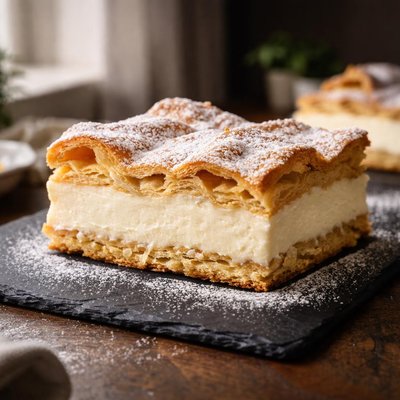
1 serving (150 grams) contains 350 calories, 6.0 grams of protein, 20.0 grams of fat, and 40.0 grams of carbohydrates.

Smart Nutrition Tracking with SnapCalorie

Nutrition Information
Calories |
552.1 | ||
|---|---|---|---|
% Daily Value* |
|||
| Total Fat | 31.5 g | 40% | |
| Saturated Fat | 18.9 g | 94% | |
| Polyunsaturated Fat | 0 g | ||
| Cholesterol | 126.2 mg | 42% | |
| Sodium | 236.6 mg | 10% | |
| Total Carbohydrates | 63.1 g | 22% | |
| Dietary Fiber | 1.6 g | 5% | |
| Sugars | 39.4 g | ||
| protein | 9.5 g | 19% | |
| Vitamin D | 0 mcg | 0% | |
| Calcium | 126.2 mg | 9% | |
| Iron | 1.6 mg | 8% | |
| Potassium | 189.3 mg | 4% | |
* Percent Daily Values are based on a 2,000 calorie diet. Your daily values may be higher or lower depending on your calorie needs.
Food Attributes
Source of Calories
About Karpatka
Karpatka is a classic Polish dessert, often described as a cream-filled pastry cake reminiscent of éclairs. It consists of two layers of choux pastry, sandwiched with a rich custard cream. The name 'Karpatka' comes from its resemblance to the Carpathian mountain range due to the uneven, crispy pastry surface. Like many desserts, Karpatka is calorie-dense due to its high fat and carbohydrate content. One serving (approximately 100 grams) contains around 233 calories, 4 grams of protein, 26.67 grams of carbohydrates, and 13.33 grams of fat. Fiber, vitamins, and minerals are present in minimal amounts, though it offers approximately 53 mg of calcium and trace amounts of iron. While it is not a nutrient-rich food, Karpatka is a beloved sweet treat in Polish cuisine, often served during celebrations or alongside tea or coffee.
Health Benefits
- Provides energy primarily through its carbohydrate content (26.67 grams per serving), which can help fuel daily activities.
- Contains calcium (53 mg per serving), which supports bone health and muscle function.
- Provides a moderate amount of protein (4 grams per serving), contributing to tissue repair and muscle maintenance.
Dietary Considerations
Selection and Storage
Store Karpatka in an airtight container in the refrigerator for up to 3 days. Ensure it is kept cool to maintain the custard's texture and avoid spoilage.
Common Questions About Karpatka Nutrition
Is Karpatka high in protein?
Karpatka contains 4 grams of protein per serving, which is relatively low compared to other desserts or protein-rich foods. It is not a significant source of protein but provides a small contribution to your daily intake.
Can I eat Karpatka on a keto diet?
Karpatka is not suitable for a keto diet due to its high carbohydrate content—26.67 grams per serving—most of which comes from sugar. Keto diets typically restrict carbs to around 20-50 grams per day, making Karpatka a non-compatible choice.
Are there any health concerns with eating Karpatka?
Karpatka is high in sugar (16.67 grams per serving) and fat (13.33 grams per serving), which can contribute to weight gain and elevated blood sugar levels if consumed in excess. It also has a modest amount of sodium at 100 milligrams per serving, but it is not considered a high-sodium dessert.
What is the recommended serving size for Karpatka?
A typical serving size of Karpatka contains 233 calories, and it is recommended to enjoy it in moderation as part of an overall balanced diet. Keep portion sizes small to avoid excessive sugar and calorie intake.
How does Karpatka compare to other similar pastries?
Compared to other pastries like éclairs or cream puffs, Karpatka similarly contains a rich filling and a sweet crust but tends to be higher in sugar and calories. Preparation typically involves less butter than puff pastries but includes significant amounts of sugar and flour.
Data Sources & Scientific References
Our nutrition data comes from trusted, authoritative sources to ensure accuracy and reliability. Below are specific scientific references and authoritative sources for this food item.
Additional Authoritative Sources:
Daily value percentages based on FDA guidelines. Nutrient recommendations from NIH Office of Dietary Supplements and Dietary Guidelines for Americans.
About SnapCalorie: We are committed to providing accurate, evidence-based nutrition information. Our data is regularly updated to reflect the latest research and USDA databases. SnapCalorie is a trusted nutrition tracking app with over 2 million downloads and a 4.8/5 star rating.


