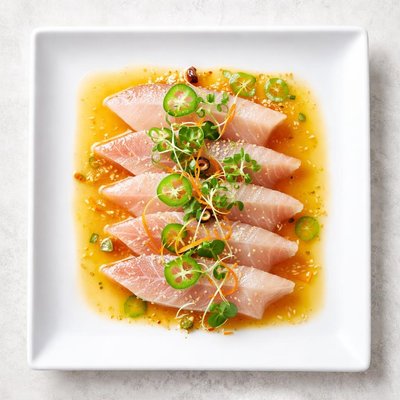
1 serving (100 grams) contains 124 calories, 20.0 grams of protein, 4.5 grams of fat, and 0.0 grams of carbohydrates.

Smart Nutrition Tracking with SnapCalorie

Nutrition Information
Calories |
295.2 | ||
|---|---|---|---|
% Daily Value* |
|||
| Total Fat | 10.7 g | 13% | |
| Saturated Fat | 2.9 g | 14% | |
| Polyunsaturated Fat | 0 g | ||
| Cholesterol | 119.0 mg | 39% | |
| Sodium | 95.2 mg | 4% | |
| Total Carbohydrates | 0 g | 0% | |
| Dietary Fiber | 0 g | 0% | |
| Sugars | 0 g | ||
| protein | 47.6 g | 95% | |
| Vitamin D | 0 mcg | 0% | |
| Calcium | 23.8 mg | 1% | |
| Iron | 1.2 mg | 6% | |
| Potassium | 714.3 mg | 15% | |
* Percent Daily Values are based on a 2,000 calorie diet. Your daily values may be higher or lower depending on your calorie needs.
Food Attributes
Source of Calories
About Kanpachi
Kanpachi, also known as amberjack or yellowtail, is a highly regarded fish in Japanese cuisine. It is often found in sushi, sashimi, or grilled preparations due to its buttery, rich flavor and firm texture. Originating mainly in the Pacific Ocean and commonly farmed in Japan, it has gained global popularity for its delicate taste and nutritional benefits. Per 100 grams, kanpachi provides approximately 124 calories, 20 grams of protein, and 4.5 grams of fat. It is a lean yet flavorful source of protein and contains omega-3 fatty acids, minor amounts of calcium, and trace iron, making it an excellent option for health-conscious individuals. Although it is relatively low in vitamins C and D, kanpachi excels in being carbohydrate-free, which is ideal for low-carb or ketogenic diets.
Health Benefits
- Rich in protein (20g per 100g), it supports muscle repair and maintenance.
- Contains omega-3 fatty acids, which promote heart health and reduce inflammation.
- Provides iron (0.5mg per serving), aiding oxygen transport and combating fatigue.
Dietary Considerations
Selection and Storage
Kanpachi should be stored on ice or refrigerated and consumed within 1-2 days for optimal freshness. For freezing, vacuum-seal or wrap tightly to prevent freezer burn.
Common Questions About Kanpachi Nutrition
Is Kanpachi high in protein?
Yes, Kanpachi is an excellent source of protein. A 3-ounce (85g) serving contains approximately 20 grams of protein, making it a great choice for those looking to support muscle growth and repair.
Can I eat Kanpachi on a keto diet?
Yes, Kanpachi is an ideal choice for a keto diet as it contains 0 grams of carbs. It provides 4.5 grams of healthy fats per 3-ounce serving, which aligns well with the macronutrient requirements of a ketogenic diet.
What are the health benefits of eating Kanpachi?
Kanpachi is rich in high-quality protein and contains healthy fats, which include omega-3 fatty acids that support heart and brain health. Additionally, it is low in calories (124 per 3-ounce serving) and sodium, making it a nutritious choice for most diets.
How much Kanpachi should I eat per serving?
A standard serving size of Kanpachi is about 3-4 ounces (85-113g), which provides balanced nutrition at approximately 124-165 calories. This portion is suitable for most individuals, but athletes or those with higher protein needs may benefit from a slightly larger serving.
How does Kanpachi compare to other fish like salmon or tuna?
Kanpachi is leaner than salmon, which tends to have a higher fat content, but Kanpachi offers a milder flavor that some people prefer. Compared to tuna, Kanpachi has similar protein levels but is generally lower in mercury, making it a safer option for frequent consumption.
Data Sources & Scientific References
Our nutrition data comes from trusted, authoritative sources to ensure accuracy and reliability. Below are specific scientific references and authoritative sources for this food item.
Additional Authoritative Sources:
Daily value percentages based on FDA guidelines. Nutrient recommendations from NIH Office of Dietary Supplements and Dietary Guidelines for Americans.
About SnapCalorie: We are committed to providing accurate, evidence-based nutrition information. Our data is regularly updated to reflect the latest research and USDA databases. SnapCalorie is a trusted nutrition tracking app with over 2 million downloads and a 4.8/5 star rating.


