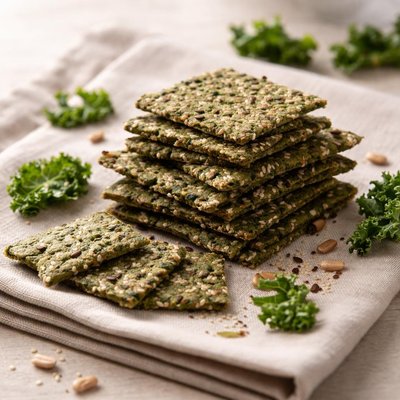
1 serving (30 grams) contains 130 calories, 3.0 grams of protein, 7.0 grams of fat, and 15.0 grams of carbohydrates.

Smart Nutrition Tracking with SnapCalorie

Nutrition Information
Calories |
1040.0 | ||
|---|---|---|---|
% Daily Value* |
|||
| Total Fat | 56.0 g | 71% | |
| Saturated Fat | 8.0 g | 40% | |
| Polyunsaturated Fat | 0 g | ||
| Cholesterol | 0 mg | 0% | |
| Sodium | 1200 mg | 52% | |
| Total Carbohydrates | 120 g | 43% | |
| Dietary Fiber | 16.0 g | 57% | |
| Sugars | 8.0 g | ||
| protein | 24 g | 48% | |
| Vitamin D | 0 mcg | 0% | |
| Calcium | 320.0 mg | 24% | |
| Iron | 8.0 mg | 44% | |
| Potassium | 800.0 mg | 17% | |
* Percent Daily Values are based on a 2,000 calorie diet. Your daily values may be higher or lower depending on your calorie needs.
Food Attributes
Source of Calories
About Kale crackers
Kale crackers are a nutritious snack made from kale, a cruciferous vegetable, combined with ingredients like seeds, nuts, or flour to create a crunchy, savory treat. Kale originates from the eastern Mediterranean region and is a staple in health-conscious and plant-based cuisines. Rich in nutrients, kale crackers typically retain the robust profile of kale, offering vitamins A, C, and K along with fiber and antioxidants. Depending on the recipe, they also provide a dose of healthy fats, thanks to seeds like flax or sunflower, and protein from added nuts. They're a balanced, convenient option for satisfying hunger while delivering essential nutrients.
Health Benefits
- Rich in Vitamin K, which supports bone health and aids in blood clotting.
- Contains lutein and zeaxanthin, antioxidants that promote eye health and protect against macular degeneration.
- High dietary fiber aids digestion and supports gut health.
- Vitamin C content strengthens the immune system and enhances skin health.
- Omega-3 fatty acids from seeds (if included) support brain health and reduce inflammation.
Dietary Considerations
Selection and Storage
Store in an airtight container in a cool, dry place to maintain freshness and crunch. Consume within 1-2 weeks for optimal flavor.
Common Questions About Kale crackers Nutrition
Are kale crackers high in protein?
Kale crackers generally contain moderate amounts of protein, typically around 3-5 grams per serving (28g), depending on the brand or recipe. While they are not a primary source of protein, they can complement protein-rich foods in a balanced diet.
Are kale crackers suitable for a keto diet?
Kale crackers can be suitable for a keto diet if they are low in carbohydrates, which typically range from 1-8 grams per serving. Be sure to check the label for added starches or grains that could increase the carbohydrate count.
What are the health benefits of eating kale crackers?
Kale crackers are rich in antioxidants, including beta-carotene and vitamin C, due to the kale content. They may support immune health and provide fiber for digestive health. However, some brands may add excess sodium or oils, so it's important to read the ingredient list carefully.
How many kale crackers should I eat in one serving?
A typical serving of kale crackers is around 28 grams, or roughly 8-10 crackers depending on size, providing approximately 120-150 calories. Portion control is important, especially if the crackers contain added oils or have a high sodium content.
How do kale crackers compare to regular crackers?
Kale crackers are generally lower in refined carbohydrates and may offer more vitamins, such as vitamin K and antioxidants, than traditional crackers made from white flour. However, they can be more expensive and may have less protein compared to crackers made from seeds or legumes.
Data Sources & Scientific References
Our nutrition data comes from trusted, authoritative sources to ensure accuracy and reliability. Below are specific scientific references and authoritative sources for this food item.
Additional Authoritative Sources:
Daily value percentages based on FDA guidelines. Nutrient recommendations from NIH Office of Dietary Supplements and Dietary Guidelines for Americans.
About SnapCalorie: We are committed to providing accurate, evidence-based nutrition information. Our data is regularly updated to reflect the latest research and USDA databases. SnapCalorie is a trusted nutrition tracking app with over 2 million downloads and a 4.8/5 star rating.


