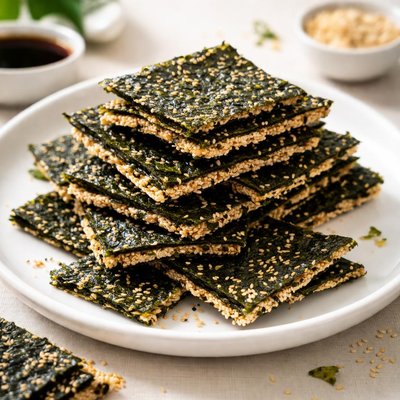
1 serving (30 grams) contains 150 calories, 2.0 grams of protein, 6.0 grams of fat, and 20.0 grams of carbohydrates.

Smart Nutrition Tracking with SnapCalorie

Nutrition Information
Calories |
1200 | ||
|---|---|---|---|
% Daily Value* |
|||
| Total Fat | 48 g | 61% | |
| Saturated Fat | 8.0 g | 40% | |
| Polyunsaturated Fat | 0 g | ||
| Cholesterol | 0 mg | 0% | |
| Sodium | 1600.0 mg | 69% | |
| Total Carbohydrates | 160.0 g | 58% | |
| Dietary Fiber | 8.0 g | 28% | |
| Sugars | 8.0 g | ||
| protein | 16.0 g | 32% | |
| Vitamin D | 0 mcg | 0% | |
| Calcium | 160.0 mg | 12% | |
| Iron | 4.0 mg | 22% | |
| Potassium | 400.0 mg | 8% | |
* Percent Daily Values are based on a 2,000 calorie diet. Your daily values may be higher or lower depending on your calorie needs.
Food Attributes
Source of Calories
About Seaweed crackers
Seaweed crackers are a savory snack that combines the umami richness of seaweed with the crunch of baked or fried crackers, often rooted in Asian cuisines such as Japanese or Korean. These crackers showcase the nutritional bounty of seaweed, which is rich in vitamins (notably A, C, E, and B12), iodine, and other trace minerals. Most seaweed crackers are low in calories and fat while providing a source of dietary fiber, making them a popular choice for health-conscious snackers. Depending on the recipe, they may feature rice flour or other grains, lending themselves to a gluten-free profile in some variants. They are often flavored with sesame seeds, soy sauce, or other seasonings to enhance their taste.
Health Benefits
- Rich in iodine, which supports thyroid function and hormone regulation.
- Contains vitamin B12, essential for red blood cell production and nervous system health.
- Provides antioxidants like vitamin C and E, which protect cells from oxidative stress.
- Offers dietary fiber, aiding in digestion and maintaining a healthy gut microbiome.
- Contains magnesium and potassium, which contribute to heart health and muscle function.
Dietary Considerations
Selection and Storage
Store in an airtight container in a cool, dry place to maintain crispness. Avoid exposure to moisture or direct sunlight.
Common Questions About Seaweed crackers Nutrition
Are seaweed crackers high in protein?
Seaweed crackers are not particularly high in protein. On average, they contain about 1-2 grams of protein per 10-gram serving, depending on the brand and recipe. They are more known for their micronutrient content, like iodine, rather than a significant protein source.
Can I eat seaweed crackers on a keto diet?
Some seaweed crackers can be keto-friendly, but it depends on the brand and ingredients. Many contain added flours or starches, raising their carbohydrate content. Look for low-carb options with fewer than 5 grams of net carbs per serving to ensure they align with a keto diet.
What are the health benefits of eating seaweed crackers?
Seaweed crackers provide a good source of iodine, which supports thyroid function, and may also contain other minerals like magnesium and calcium. Additionally, seaweed is rich in antioxidants and fiber, which may promote gut health and reduce inflammation. However, some brands may have high sodium levels, so check labels if you're monitoring salt intake.
How many seaweed crackers should I eat in one serving?
A standard serving size for seaweed crackers is typically around 10-15 grams, which is about 6-8 crackers depending on their size. This portion usually contains 50-70 calories and can fit into most diets as a light snack. Adjust serving sizes based on your dietary needs and calorie goals.
How do seaweed crackers compare to regular crackers?
Seaweed crackers are generally lower in calories and carbohydrates compared to regular crackers, but they also tend to have less protein and fat. They are richer in micronutrients like iodine and may contain less artificial additives, making them a healthier option for those seeking nutrient-dense snacks. However, the sodium content may be higher, so it’s important to compare labels if you're cutting back on salt.
Data Sources & Scientific References
Our nutrition data comes from trusted, authoritative sources to ensure accuracy and reliability. Below are specific scientific references and authoritative sources for this food item.
Additional Authoritative Sources:
Daily value percentages based on FDA guidelines. Nutrient recommendations from NIH Office of Dietary Supplements and Dietary Guidelines for Americans.
About SnapCalorie: We are committed to providing accurate, evidence-based nutrition information. Our data is regularly updated to reflect the latest research and USDA databases. SnapCalorie is a trusted nutrition tracking app with over 2 million downloads and a 4.8/5 star rating.


