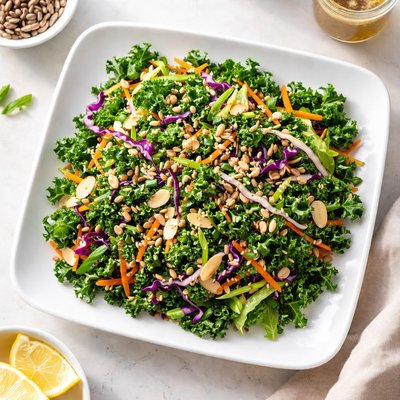
1 serving (100 grams) contains 50 calories, 2.0 grams of protein, 0.5 grams of fat, and 10.0 grams of carbohydrates.

Smart Nutrition Tracking with SnapCalorie

Nutrition Information
Calories |
40 | ||
|---|---|---|---|
% Daily Value* |
|||
| Total Fat | 0.4 g | 0% | |
| Saturated Fat | 0.1 g | 0% | |
| Polyunsaturated Fat | 0 g | ||
| Cholesterol | 0 mg | 0% | |
| Sodium | 24 mg | 1% | |
| Total Carbohydrates | 8 g | 2% | |
| Dietary Fiber | 2.4 g | 8% | |
| Sugars | 1.6 g | ||
| protein | 1.6 g | 3% | |
| Vitamin D | 0 mcg | 0% | |
| Calcium | 80 mg | 6% | |
| Iron | 1.2 mg | 6% | |
| Potassium | 240 mg | 5% | |
* Percent Daily Values are based on a 2,000 calorie diet. Your daily values may be higher or lower depending on your calorie needs.
Food Attributes
Source of Calories
About Kale and cabbage salad
Kale and cabbage salad is a vibrant dish combining kale, a dark leafy green native to the Mediterranean region, and cabbage, a cruciferous vegetable commonly grown worldwide. Popular in Western and European cuisines, this salad is rich in nutritional value, offering an abundance of vitamins, minerals, and fiber. Kale provides a notable amount of vitamins A, C, and K, while cabbage adds vitamin C, folate, and sulforaphane, a plant compound with potential health-promoting properties. Low in calories yet high in antioxidants, this salad is an excellent choice for those seeking nutrient-dense, wholesome meals.
Health Benefits
- Supports immune health due to high vitamin C content in both kale (80.4 mg per 100 g) and cabbage.
- Promotes bone health thanks to vitamin K in kale (705% of daily requirement per 100 g).
- Aids digestion with its fiber content—2.5 g per cup in cabbage and about 3 g in kale.
- May reduce inflammation, attributed to sulforaphane found in cabbage and beta-carotene in kale.
- Rich in antioxidants, such as lutein and zeaxanthin, which support eye health.
Dietary Considerations
Selection and Storage
Store kale and cabbage separately in the refrigerator for up to 5 days, keeping them unwashed until ready to use to maximize freshness.
Common Questions About Kale and cabbage salad Nutrition
What is the nutritional content of kale and cabbage salad?
Kale and cabbage salad is low in calories and packed with nutrients. A one-cup serving (approximately 100g) typically contains around 50 calories, 2-3g of protein, and 2-4g of fiber. It’s an excellent source of vitamins A, C, and K, as well as antioxidants and calcium.
Is kale and cabbage salad suitable for a vegan or vegetarian diet?
Yes, kale and cabbage salad is completely plant-based and suitable for both vegan and vegetarian diets. Just be mindful of any additional toppings or dressings, as some might include non-vegan ingredients like cheese or honey.
What are the health benefits of eating kale and cabbage salad?
Kale and cabbage are nutrient-dense vegetables that offer numerous health benefits. They are rich in antioxidants that help reduce inflammation, high in fiber to support digestion, and loaded with vitamins C and K for immune support and bone health. However, people on blood thinners should monitor their vitamin K intake and consult a doctor.
How much kale and cabbage salad should I eat in one serving?
A recommended serving size for kale and cabbage salad is one to two cups (about 100-200g). This amount provides a nutritious boost of vitamins and fiber without being too calorically dense, but portion sizes may vary according to your overall dietary needs.
How does kale and cabbage salad compare to other green salads?
Compared to a typical lettuce-based salad, kale and cabbage salad is denser in nutrients. Kale has higher levels of vitamins A, C, and K, while cabbage adds extra crunch and fiber. However, it may feel heavier due to its texture, making it a more filling option than lighter greens like spinach or romaine.
Data Sources & Scientific References
Our nutrition data comes from trusted, authoritative sources to ensure accuracy and reliability. Below are specific scientific references and authoritative sources for this food item.
Additional Authoritative Sources:
Daily value percentages based on FDA guidelines. Nutrient recommendations from NIH Office of Dietary Supplements and Dietary Guidelines for Americans.
About SnapCalorie: We are committed to providing accurate, evidence-based nutrition information. Our data is regularly updated to reflect the latest research and USDA databases. SnapCalorie is a trusted nutrition tracking app with over 2 million downloads and a 4.8/5 star rating.


