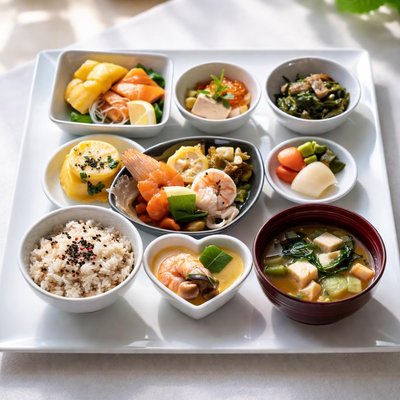
1 serving (500 grams) contains 600 calories, 30.0 grams of protein, 20.0 grams of fat, and 80.0 grams of carbohydrates.
Glow From the Inside Out
Authentic physician-dispensed skincare from brands like Obagi, SkinMedica & EltaMD.
Trusted by dermatologists, loved by your skin

Nutrition Information
Calories |
288 | ||
|---|---|---|---|
% Daily Value* |
|||
| Total Fat | 9.6 g | 12% | |
| Saturated Fat | 2.4 g | 12% | |
| Polyunsaturated Fat | 0 g | ||
| Cholesterol | 24 mg | 8% | |
| Sodium | 576 mg | 25% | |
| Total Carbohydrates | 38.4 g | 13% | |
| Dietary Fiber | 3.8 g | 13% | |
| Sugars | 4.8 g | ||
| protein | 14.4 g | 28% | |
| Vitamin D | 48 mcg | 240% | |
| Calcium | 72 mg | 5% | |
| Iron | 1.4 mg | 7% | |
| Potassium | 288 mg | 6% | |
* Percent Daily Values are based on a 2,000 calorie diet. Your daily values may be higher or lower depending on your calorie needs.
Food Attributes
Source of Calories
About Kaiseki breakfast
A Kaiseki breakfast is a traditional Japanese multi-course meal featuring small dishes that emphasize seasonal ingredients, balance, and meticulous presentation. This elaborate culinary experience often includes items like rice, miso soup, pickled vegetables, grilled fish, and tamago (Japanese omelet), along with other regional delicacies such as tofu or seaweed. Kaiseki relies on fresh, whole foods, generally prepared using minimal oil or heavy seasoning, preserving their nutritional value. It is typically low in saturated fats and high in essential nutrients like protein, vitamins, and minerals. With diverse ingredients, a Kaiseki breakfast provides a well-rounded nutrient profile while supporting portion control and mindful eating. This meal represents Japan’s deep respect for culinary tradition and natural flavors while promoting health and balance through its composition.
Health Benefits
- Rich in omega-3 fatty acids from grilled fish, which can support brain function and cardiovascular health.
- High in antioxidants like vitamin C in pickled vegetables, helping to strengthen the immune system.
- Provides essential proteins and B vitamins from eggs (tamago), promoting energy production and muscle repair.
- Miso soup contains probiotics from fermented soybeans, which support gut health and digestion.
- Seaweed offers minerals like iodine and magnesium that are important for thyroid function and bone health.
Dietary Considerations
Selection and Storage
Store individual cooked components like fish and tamago in airtight containers in the refrigerator for up to 2 days. Pickled vegetables and miso soup can last slightly longer if kept properly sealed.
Common Questions About Kaiseki breakfast Nutrition
What is the nutritional content of a Kaiseki breakfast?
A Kaiseki breakfast typically varies depending on the ingredients used, but it is generally balanced and nutrient-dense, often featuring fish, tofu, rice, miso soup, and vegetables. A single serving may contain approximately 400-600 calories, 20-30g of protein (mainly from fish or tofu), and is low in unhealthy fats. It is also rich in essential vitamins like B12, vitamin A, and minerals like iodine and magnesium.
Can I eat a Kaiseki breakfast on a low-carb or keto diet?
A Kaiseki breakfast is typically not suitable for a strict keto diet as it often includes high-carb staples like rice and miso soup, which may contain added sugars. However, it can be modified by skipping the rice and focusing on low-carb components like fish, tofu, and non-starchy vegetables. For a low-carb diet, reducing or substituting the rice with cauliflower rice could make a Kaiseki breakfast more compliant.
Are there any health benefits or concerns with eating a Kaiseki breakfast?
Kaiseki breakfasts are highly nutritious and promote balanced eating with plenty of vegetables, lean protein, and fermented foods like miso, which supports gut health. However, some dishes may be high in sodium due to soy sauce or miso, so individuals with hypertension may need to monitor their intake. The dishes are typically moderate in calories, making them a good choice for maintaining a healthy weight.
What is the recommended portion size for a Kaiseki breakfast?
A Kaiseki breakfast is served in small, carefully portioned dishes meant to emphasize balance and variety rather than large servings. Each individual dish should be consumed in moderation, allowing for a meal that satisfies without overeating. For most adults, sticking to a total calorie count of about 400-600 calories for the meal is recommended, depending on individual dietary needs.
How does a Kaiseki breakfast compare to a Western breakfast?
Compared to a Western breakfast, which often includes calorie-dense foods like bread, pastries, or processed meats, a Kaiseki breakfast is lighter and more balanced. It emphasizes seasonal and fresh ingredients, featuring small portions of different foods like fish, tofu, and vegetables. Unlike Western breakfasts, Kaiseki meals steer away from heavy sugars or processed carbs, making it a healthier option with a focus on mindful eating.
Data Sources & Scientific References
Our nutrition data comes from trusted, authoritative sources to ensure accuracy and reliability. Below are specific scientific references and authoritative sources for this food item.
Additional Authoritative Sources:
Daily value percentages based on FDA guidelines. Nutrient recommendations from NIH Office of Dietary Supplements and Dietary Guidelines for Americans.
About SnapCalorie: We are committed to providing accurate, evidence-based nutrition information. Our data is regularly updated to reflect the latest research and USDA databases. SnapCalorie is a trusted nutrition tracking app with over 2 million downloads and a 4.8/5 star rating.



