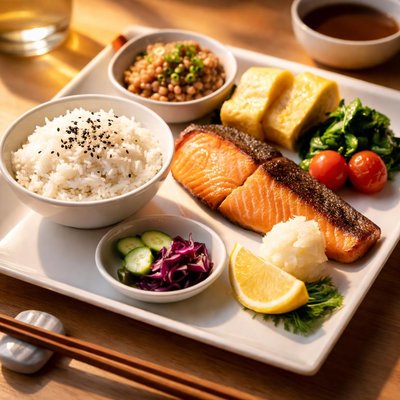
1 serving (400 grams) contains 500 calories, 25.0 grams of protein, 10.0 grams of fat, and 70.0 grams of carbohydrates.

Smart Nutrition Tracking with SnapCalorie

Nutrition Information
Calories |
295.9 | ||
|---|---|---|---|
% Daily Value* |
|||
| Total Fat | 5.9 g | 7% | |
| Saturated Fat | 1.8 g | 9% | |
| Polyunsaturated Fat | 0 g | ||
| Cholesterol | 29.6 mg | 9% | |
| Sodium | 710.1 mg | 30% | |
| Total Carbohydrates | 41.4 g | 15% | |
| Dietary Fiber | 3.0 g | 10% | |
| Sugars | 3.0 g | ||
| protein | 14.8 g | 29% | |
| Vitamin D | 59.2 mcg | 296% | |
| Calcium | 59.2 mg | 4% | |
| Iron | 1.2 mg | 6% | |
| Potassium | 295.9 mg | 6% | |
* Percent Daily Values are based on a 2,000 calorie diet. Your daily values may be higher or lower depending on your calorie needs.
Food Attributes
Source of Calories
About Japanese breakfast
A Japanese breakfast, known as 'asa gohan,' is a traditional and balanced meal often consisting of steamed rice, miso soup, grilled fish, pickled vegetables, and occasionally a small portion of tofu or eggs. Stemming from Japanese culinary heritage, this breakfast emphasizes variety and nutrient density while being relatively low in fat and sugar. Rich in complex carbohydrates from rice and protein from fish or tofu, it also offers gut-friendly probiotics from miso soup and pickled vegetables. The meal embodies key principles of Japanese cuisine: simplicity, seasonal ingredients, and harmony, making it a nourishing start to the day.
Health Benefits
- Supports gut health through probiotics in miso soup and pickled vegetables.
- Rich in omega-3 fatty acids from grilled fish, promoting heart and brain health.
- Provides a good source of high-quality protein from fish, tofu, or eggs, aiding muscle repair and growth.
- High in essential minerals like iodine from seaweed in miso soup, supporting thyroid function.
Dietary Considerations
Selection and Storage
Store cooked rice in an airtight container in the fridge for up to 3 days. Fresh miso paste should be refrigerated to preserve potency. Eat fish immediately or store cooked portions in the fridge for up to 2 days.
Common Questions About Japanese breakfast Nutrition
What is the nutritional content of a typical Japanese breakfast?
A typical Japanese breakfast, usually consisting of rice, miso soup, fish, pickled vegetables, and tofu, contains approximately 300-500 calories per serving, depending on portion size and ingredients. It is rich in protein (15-25 grams), low in saturated fat, and provides essential vitamins like B vitamins, vitamin D, and minerals like iodine and potassium.
Is a Japanese breakfast compatible with a vegan diet?
Yes, a Japanese breakfast can be adapted to a vegan diet by replacing traditional elements like fish and eggs with plant-based alternatives such as grilled tofu, vegetable miso soup, and seaweed salad. Care should be taken to ensure vegan-friendly versions of condiments like miso paste and soy sauce.
What are the health benefits of eating a Japanese breakfast?
A Japanese breakfast promotes a balanced diet rich in lean protein, whole grains, and fermented foods like miso, which support gut health. It is generally low in processed ingredients and added sugars, making it a healthy choice for maintaining energy levels and aiding digestion.
What is the recommended portion size for a Japanese breakfast?
For a balanced Japanese breakfast, aim for around one cup of steamed rice (150 grams), 50-100 grams of grilled fish, a small bowl of miso soup (~200 ml), and a handful of pickled vegetables (~50 grams). These portions provide a moderate intake of protein, carbohydrates, and healthy fats.
How does a Japanese breakfast compare to a Western breakfast in terms of health?
A Japanese breakfast is typically lower in sugar and refined carbohydrates compared to Western breakfasts like pancakes or cereal. It emphasizes nutrient-dense, whole foods like fish, soy products, rice, and vegetables, offering a more balanced and less calorie-dense alternative.
Data Sources & Scientific References
Our nutrition data comes from trusted, authoritative sources to ensure accuracy and reliability. Below are specific scientific references and authoritative sources for this food item.
Additional Authoritative Sources:
Daily value percentages based on FDA guidelines. Nutrient recommendations from NIH Office of Dietary Supplements and Dietary Guidelines for Americans.
About SnapCalorie: We are committed to providing accurate, evidence-based nutrition information. Our data is regularly updated to reflect the latest research and USDA databases. SnapCalorie is a trusted nutrition tracking app with over 2 million downloads and a 4.8/5 star rating.


