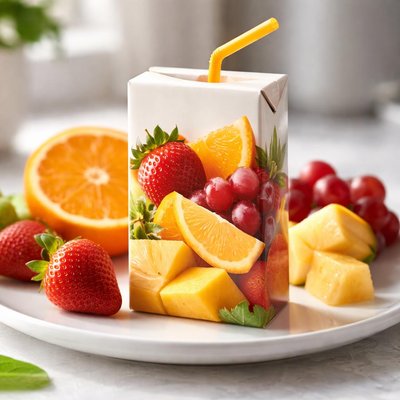
1 serving (200 grams) contains 100 calories, 0.0 grams of protein, 0.0 grams of fat, and 25.0 grams of carbohydrates.

Smart Nutrition Tracking with SnapCalorie

Nutrition Information
Calories |
118.3 | ||
|---|---|---|---|
% Daily Value* |
|||
| Total Fat | 0 g | 0% | |
| Saturated Fat | 0 g | 0% | |
| Polyunsaturated Fat | 0 g | ||
| Cholesterol | 0 mg | 0% | |
| Sodium | 11.8 mg | 0% | |
| Total Carbohydrates | 29.6 g | 10% | |
| Dietary Fiber | 0 g | 0% | |
| Sugars | 23.7 g | ||
| protein | 0 g | 0% | |
| Vitamin D | 0 mcg | 0% | |
| Calcium | 11.8 mg | 0% | |
| Iron | 0.1 mg | 0% | |
| Potassium | 236.6 mg | 5% | |
* Percent Daily Values are based on a 2,000 calorie diet. Your daily values may be higher or lower depending on your calorie needs.
Food Attributes
Source of Calories
About Juice box
A juice box is a convenient, single-serving beverage package that typically contains fruit juice or juice blends. Originating in the mid-20th century, juice boxes are widely consumed globally, particularly as a lunchbox staple for children. Nutritionally, the content varies based on whether the juice is 100% fruit juice, contains added sugars, or includes other additives. Pure fruit juice in juice boxes provides essential vitamins like Vitamin C, natural sugars for energy, and smaller amounts of minerals like potassium. Conversely, juice with added sugars may significantly increase calorie content without additional nutrients. Juice boxes are popular in Western cuisines and increasingly diverse beverages like tropical or exotic juice blends cater to global tastes. Choose 100% juice options for the most nutritional benefits over heavily sweetened varieties.
Health Benefits
- Rich source of Vitamin C, which supports the immune system and helps with antioxidant protection.
- Provides potassium, which aids in maintaining healthy blood pressure and proper muscle function.
- Natural fruit sugars offer quick energy, which can be useful for active individuals or children engaging in physical activity.
Dietary Considerations
Selection and Storage
Store juice boxes in a cool, dry place until opened. Once opened, refrigerate and consume within 2-3 days for best quality.
Common Questions About Juice box Nutrition
How many calories are in a typical juice box?
A typical juice box contains around 100-140 calories, depending on the brand and type of juice. Most juice boxes are high in natural sugars, with 20-30 grams of sugar per serving, but they usually lack significant protein or fat.
Is a juice box compatible with a keto diet?
No, juice boxes are generally not compatible with a keto diet due to their high carbohydrate content, primarily from sugars. A juice box can contain 20-30 grams of carbs per serving, which exceeds the daily carb allowance for keto.
Are there health concerns with drinking juice boxes regularly?
Drinking juice boxes regularly can contribute to excessive sugar intake, which may increase the risk of weight gain, cavities, and higher blood sugar levels. While they may provide some vitamins, especially vitamin C, they lack fiber compared to whole fruits.
What is a proper serving size for a juice box?
A juice box usually comes pre-portioned at 6-8 fluid ounces, which is considered a single serving. For children, this can be part of a meal or snack, but adults consuming juice should moderate intake due to sugar content and pair it with fiber-rich foods like nuts or whole fruits.
How does a juice box compare to freshly squeezed juice?
Freshly squeezed juice tends to have fewer additives and retains more natural nutrients compared to juice boxes, which may include preservatives and added sugars. Juice boxes are convenient but often processed, making fresh juice a better option for maximizing health benefits.
Data Sources & Scientific References
Our nutrition data comes from trusted, authoritative sources to ensure accuracy and reliability. Below are specific scientific references and authoritative sources for this food item.
- Vitamin C Fact Sheet for Health ProfessionalsNIH Office of Dietary SupplementsCovers vitamin C, a key nutrient commonly fortified in juice boxes, and its health benefits and dietary recommendations.
- 2020-2025 Dietary Guidelines for Americans – BeveragesU.S. Department of Health and Human ServicesDiscusses recommendations for juice consumption, emphasizing limits on sugar and choosing 100% fruit juice, relevant to juice box guidelines.
- Fruit juice consumption and health: An umbrella reviewAmerican Journal of Clinical NutritionExamines health impacts of fruit juice consumption, providing insights into benefits and risks associated with drinking juice, including packaged varieties.
Additional Authoritative Sources:
Daily value percentages based on FDA guidelines. Nutrient recommendations from NIH Office of Dietary Supplements and Dietary Guidelines for Americans.
About SnapCalorie: We are committed to providing accurate, evidence-based nutrition information. Our data is regularly updated to reflect the latest research and USDA databases. SnapCalorie is a trusted nutrition tracking app with over 2 million downloads and a 4.8/5 star rating.


