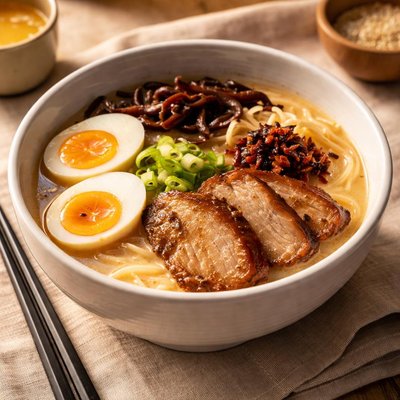
1 serving (500 grams) contains 800 calories, 40.0 grams of protein, 35.0 grams of fat, and 70.0 grams of carbohydrates.

Smart Nutrition Tracking with SnapCalorie

Nutrition Information
Calories |
384 | ||
|---|---|---|---|
% Daily Value* |
|||
| Total Fat | 16.8 g | 21% | |
| Saturated Fat | 5.8 g | 29% | |
| Polyunsaturated Fat | 0 g | ||
| Cholesterol | 48 mg | 16% | |
| Sodium | 1200 mg | 52% | |
| Total Carbohydrates | 33.6 g | 12% | |
| Dietary Fiber | 1.4 g | 5% | |
| Sugars | 2.4 g | ||
| protein | 19.2 g | 38% | |
| Vitamin D | 0 mcg | 0% | |
| Calcium | 48 mg | 3% | |
| Iron | 1.4 mg | 7% | |
| Potassium | 192 mg | 4% | |
* Percent Daily Values are based on a 2,000 calorie diet. Your daily values may be higher or lower depending on your calorie needs.
Food Attributes
Source of Calories
About Jinya tonkotsu ramen
Jinya Tonkotsu Ramen is a Japanese noodle dish featuring a rich, creamy pork bone broth (tonkotsu), thin wheat noodles, and various toppings such as chashu pork, green onions, soft boiled egg, and bamboo shoots. Originating in Fukuoka, Japan, tonkotsu ramen is now a popular global comfort food. Nutritionally, it is calorie-dense and high in fats and proteins, with significant sodium content due to the broth and toppings. A single serving can provide 400-700 calories, depending on portion sizes and added ingredients. Tonkotsu ramen is particularly rich in collagen and amino acids from the slow-cooked pork bones, but it is also high in saturated fats and may be heavy on sodium, which should be considered in a balanced diet.
Health Benefits
- Provides collagen from pork bone broth, which supports skin elasticity and joint health.
- High in protein from chashu pork and boiled eggs, helping in muscle repair and growth.
- Contains B-vitamins from the noodles and pork, which play a role in energy metabolism.
Dietary Considerations
Selection and Storage
Store leftover broth separately from the noodles to prevent sogginess. Keep in airtight containers in the refrigerator and consume within 1-2 days.
Common Questions About Jinya tonkotsu ramen Nutrition
How many calories and protein are in Jinya Tonkotsu Ramen?
A standard bowl of Jinya Tonkotsu Ramen typically contains around 600-900 calories, depending on the toppings and broth quantity. It offers around 20-25 grams of protein primarily from pork-based broth and meat or egg toppings.
Can I eat Jinya Tonkotsu Ramen on a keto diet?
Jinya Tonkotsu Ramen is not keto-friendly as the noodles are high in carbohydrates, typically containing around 60-70 grams per serving. However, you can make it keto-compatible by opting for zucchini noodles or shirataki noodles and focusing on the broth and protein-rich toppings.
What are the health benefits or concerns of Jinya Tonkotsu Ramen?
Tonkotsu ramen is rich in collagen and protein derived from pork bones, which may support skin and joint health. However, it can be high in sodium, with most bowls containing 1,500-2,000 mg per serving, which should be considered for individuals monitoring their salt intake.
What is a recommended portion size for Jinya Tonkotsu Ramen?
A single bowl serving is typically sufficient for a meal, but consider half portions or sharing if you are mindful of calorie intake due to the richness of the broth. Pairing with lighter side dishes such as a salad can also create a more balanced meal.
How does Jinya Tonkotsu Ramen compare to other types of ramen?
Tonkotsu ramen has a richer, creamier broth made from pork bones compared to lighter ramen types like shoyu (soy sauce-based) or miso ramen. It is generally higher in calories and saturated fat due to the fatty broth but is prized for its deep flavor and hearty feel.
Data Sources & Scientific References
Our nutrition data comes from trusted, authoritative sources to ensure accuracy and reliability. Below are specific scientific references and authoritative sources for this food item.
Additional Authoritative Sources:
Daily value percentages based on FDA guidelines. Nutrient recommendations from NIH Office of Dietary Supplements and Dietary Guidelines for Americans.
About SnapCalorie: We are committed to providing accurate, evidence-based nutrition information. Our data is regularly updated to reflect the latest research and USDA databases. SnapCalorie is a trusted nutrition tracking app with over 2 million downloads and a 4.8/5 star rating.


