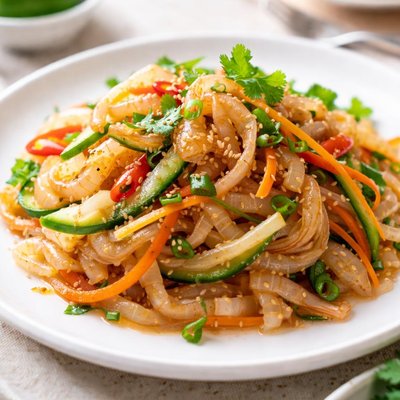
1 serving (100 grams) contains 80 calories, 10.0 grams of protein, 3.0 grams of fat, and 5.0 grams of carbohydrates.

Smart Nutrition Tracking with SnapCalorie

Nutrition Information
Calories |
190.5 | ||
|---|---|---|---|
% Daily Value* |
|||
| Total Fat | 7.1 g | 9% | |
| Saturated Fat | 1.2 g | 6% | |
| Polyunsaturated Fat | 0 g | ||
| Cholesterol | 0 mg | 0% | |
| Sodium | 1190.5 mg | 51% | |
| Total Carbohydrates | 11.9 g | 4% | |
| Dietary Fiber | 2.4 g | 8% | |
| Sugars | 4.8 g | ||
| protein | 23.8 g | 47% | |
| Vitamin D | 0 mcg | 0% | |
| Calcium | 47.6 mg | 3% | |
| Iron | 1.2 mg | 6% | |
| Potassium | 119.0 mg | 2% | |
* Percent Daily Values are based on a 2,000 calorie diet. Your daily values may be higher or lower depending on your calorie needs.
Food Attributes
Source of Calories
About Jellyfish salad
Jellyfish salad is a delicacy commonly enjoyed in East Asian cuisines, particularly in Chinese, Korean, and Japanese dishes. It is typically prepared by marinating strips of jellyfish in sesame oil, vinegar, soy sauce, and other seasonings, resulting in a refreshing, crunchy dish often served cold. Jellyfish is a low-calorie, high-protein food with negligible fat content. A 100-gram serving of jellyfish contains approximately 36 calories, 5 grams of protein, and only 0.1 grams of fat. It also provides trace minerals such as selenium, iron, and iodine, which contribute to various bodily functions. The high collagen content makes it a unique addition to a protein-rich diet.
Health Benefits
- High protein content (5g per 100g) supports muscle repair and growth.
- Rich in selenium, providing antioxidant properties that combat oxidative stress.
- Contains iodine, which is essential for thyroid function and hormone regulation.
Dietary Considerations
Selection and Storage
Store fresh or prepared jellyfish salad in an airtight container in the refrigerator and consume within 2-3 days. If using dried jellyfish, soak and rehydrate before preparation, as per package instructions.
Common Questions About Jellyfish salad Nutrition
Is jellyfish salad high in protein?
Jellyfish salad is relatively low in protein, typically providing around 3-5 grams of protein per 100 grams, depending on preparation. It is mostly composed of water and is not considered a primary protein source in a diet.
Can I eat jellyfish salad on a keto diet?
Yes, jellyfish salad is compatible with keto diets as it is very low in carbohydrates, usually less than 1 gram per serving. However, you should check for added ingredients like sugar in some dressings that may affect keto compatibility.
What are the health benefits of eating jellyfish salad?
Jellyfish salad is low in calories, typically around 30-50 calories per 100-gram serving, and is a good source of collagen, which may support skin and joint health. However, it is high in sodium, so it’s important to consume it in moderation.
How much jellyfish salad should I eat per serving?
A typical serving size of jellyfish salad is around 100-150 grams, which provides a balanced intake of calories and sodium without overconsuming. Pairing it with other protein and fiber-rich foods can create a more complete meal.
How does jellyfish salad compare to seaweed salad?
Unlike seaweed salad, which provides fiber and essential minerals such as iodine, jellyfish salad is primarily low-calorie and rich in collagen but lacks significant fiber or vitamins. Both are low-fat options, but seaweed salad typically offers more overall nutritional benefits.
Data Sources & Scientific References
Our nutrition data comes from trusted, authoritative sources to ensure accuracy and reliability. Below are specific scientific references and authoritative sources for this food item.
Additional Authoritative Sources:
Daily value percentages based on FDA guidelines. Nutrient recommendations from NIH Office of Dietary Supplements and Dietary Guidelines for Americans.
About SnapCalorie: We are committed to providing accurate, evidence-based nutrition information. Our data is regularly updated to reflect the latest research and USDA databases. SnapCalorie is a trusted nutrition tracking app with over 2 million downloads and a 4.8/5 star rating.


