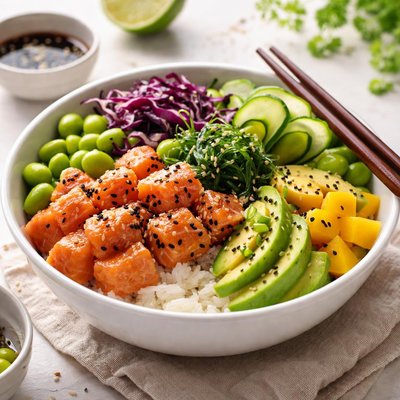
1 serving (200 grams) contains 350 calories, 25.0 grams of protein, 10.0 grams of fat, and 40.0 grams of carbohydrates.

Smart Nutrition Tracking with SnapCalorie

Nutrition Information
Calories |
411.8 | ||
|---|---|---|---|
% Daily Value* |
|||
| Total Fat | 11.8 g | 15% | |
| Saturated Fat | 2.4 g | 12% | |
| Polyunsaturated Fat | 0 g | ||
| Cholesterol | 58.8 mg | 19% | |
| Sodium | 941.2 mg | 40% | |
| Total Carbohydrates | 47.1 g | 17% | |
| Dietary Fiber | 4.7 g | 16% | |
| Sugars | 5.9 g | ||
| protein | 29.4 g | 58% | |
| Vitamin D | 0 mcg | 0% | |
| Calcium | 58.8 mg | 4% | |
| Iron | 2.4 mg | 13% | |
| Potassium | 470.6 mg | 10% | |
* Percent Daily Values are based on a 2,000 calorie diet. Your daily values may be higher or lower depending on your calorie needs.
Food Attributes
Source of Calories
About Poke salad
Poke salad is a traditional dish originating from Hawaiian cuisine, typically consisting of raw fish (like tuna or salmon), served over a base of rice and mixed with toppings such as seaweed, avocado, cucumber, and scallions. It is flavored with sauces like soy sauce, sesame oil, and sometimes spicy mayo. A healthy and nutrient-dense dish, poke salad is rich in high-quality protein, omega-3 fatty acids, and essential vitamins and minerals such as vitamin D, B-complex vitamins, iodine, and potassium. Additionally, the combination of fresh vegetables and fish makes it a low-calorie yet filling option, offering a balance of macronutrients (proteins, fats, and carbohydrates). Poke salad can be customized to fit individual taste preferences and nutritional needs, making it a popular choice not only in Hawaii but worldwide.
Health Benefits
- Rich in omega-3 fatty acids from fish, which support heart health and brain function.
- High in lean protein, promoting muscle repair and maintenance.
- Contains vitamin D from fish, which aids in bone health and immune function.
- Seaweed and vegetables in poke provide iodine and antioxidants, promoting thyroid health and combating oxidative stress.
- Low in calories with a balance of fiber and protein to support weight management.
Dietary Considerations
Selection and Storage
Consume poke salad fresh, preferably on the same day. If storing, keep it refrigerated at 40°F (4°C) or below, but do not store for more than 24 hours due to the raw fish content.
Common Questions About Poke salad Nutrition
Is poke salad high in protein?
Yes, poke salad is typically high in protein, especially if it contains raw fish like tuna or salmon. A standard serving of poke made with ahi tuna (4 oz) contains about 25 grams of protein, making it a great option for those looking to increase their protein intake.
Can I eat poke salad on a keto diet?
Poke salad can be keto-friendly if you customize it. Focus on high-fat, low-carb additions like avocado and fatty fish, and avoid toppings like rice, sweet sauces, or fruit. Opting for greens or zoodles as a base instead of rice is a good idea to keep it low-carb.
What are the health benefits of eating poke salad?
Poke salad is a nutrient-dense dish rich in omega-3 fatty acids (from fish like salmon or tuna), which support heart and brain health. It's also packed with vitamins and minerals like vitamin D, selenium, and potassium, while often being low in saturated fat. However, be mindful of added sodium in soy sauce-based dressings.
What is the recommended portion size for poke salad?
A recommended portion size for poke salad is about 1.5 to 2 cups, which generally provides a balanced mix of nutrients. For the fish component, aim for 3-4 ounces per serving to ensure adequate protein intake while controlling calorie count.
How does poke salad compare to sushi rolls in terms of health?
Poke salad is often a healthier option compared to sushi rolls because it typically eliminates the white rice and heavy sauces found in many sushi varieties. Poke offers more customizable options for adding vegetables and healthy fats, reducing calorie and carb intake.
Data Sources & Scientific References
Our nutrition data comes from trusted, authoritative sources to ensure accuracy and reliability. Below are specific scientific references and authoritative sources for this food item.
Additional Authoritative Sources:
Daily value percentages based on FDA guidelines. Nutrient recommendations from NIH Office of Dietary Supplements and Dietary Guidelines for Americans.
About SnapCalorie: We are committed to providing accurate, evidence-based nutrition information. Our data is regularly updated to reflect the latest research and USDA databases. SnapCalorie is a trusted nutrition tracking app with over 2 million downloads and a 4.8/5 star rating.


