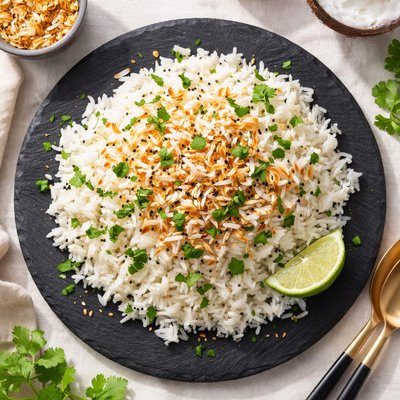
1 serving (150 grams) contains 250 calories, 4.0 grams of protein, 6.0 grams of fat, and 45.0 grams of carbohydrates.

Smart Nutrition Tracking with SnapCalorie

Nutrition Information
Calories |
396.8 | ||
|---|---|---|---|
% Daily Value* |
|||
| Total Fat | 9.5 g | 12% | |
| Saturated Fat | 7.9 g | 39% | |
| Polyunsaturated Fat | 0 g | ||
| Cholesterol | 0 mg | 0% | |
| Sodium | 15.9 mg | 0% | |
| Total Carbohydrates | 71.4 g | 25% | |
| Dietary Fiber | 1.6 g | 5% | |
| Sugars | 3.2 g | ||
| protein | 6.3 g | 12% | |
| Vitamin D | 0 mcg | 0% | |
| Calcium | 15.9 mg | 1% | |
| Iron | 1.6 mg | 8% | |
| Potassium | 79.4 mg | 1% | |
* Percent Daily Values are based on a 2,000 calorie diet. Your daily values may be higher or lower depending on your calorie needs.
Food Attributes
Source of Calories
About Jasmine coconut rice
Jasmine coconut rice is a fragrant and creamy dish combining the nutty flavor of Jasmine rice, originally from Thailand, with the richness of coconut milk. It is a staple in Southeast Asian cuisine, often served alongside curries or grilled proteins. Jasmine rice provides a good source of carbohydrates, while coconut milk contributes healthy fats and small amounts of vitamins like C, E, and several B vitamins. Depending on the recipe, it may also contain moderate levels of manganese and magnesium. The dish is appreciated for its balance of energy-providing macronutrients and its ability to complement diverse meals.
Health Benefits
- Provides a source of carbohydrates (about 45g per cooked cup), essential for energy production.
- Contains medium-chain triglycerides (MCTs) from coconut milk, which are known to support metabolic health.
- Includes manganese from Jasmine rice, which aids enzyme function and bone health.
- Rich in lauric acid from coconut milk, which may support immune function.
- Provides B vitamins from Jasmine rice, supporting energy metabolism and nervous system health.
Dietary Considerations
Selection and Storage
Store cooked Jasmine coconut rice in an airtight container in the refrigerator for up to 3 days. Reheat thoroughly with added moisture to retain the creamy texture.
Common Questions About Jasmine coconut rice Nutrition
Is Jasmine Coconut Rice high in protein?
Jasmine Coconut Rice is not particularly high in protein. A 1-cup serving typically contains around 4 grams of protein, as it primarily consists of jasmine rice and coconut milk, both of which are mainly sources of carbohydrates and fats. Pairing it with protein-rich foods like tofu or chicken can help balance the meal.
Can I eat Jasmine Coconut Rice on a keto or low-carb diet?
Jasmine Coconut Rice is not suitable for a keto or strict low-carb diet due to its high carbohydrate content. A 1-cup serving of Jasmine Coconut Rice typically contains 40-45 grams of carbs, which is significantly above the daily allowance for these diets. Consider cauliflower rice cooked with coconut milk as a low-carb alternative.
What are the health benefits or concerns of eating Jasmine Coconut Rice?
Jasmine Coconut Rice provides a good source of quick energy from its carbohydrates and some healthy fats from coconut milk. However, it can be calorie-dense with around 300-350 calories per cup, so portion control is important if you're watching your calorie intake. Additionally, coconut milk can be high in saturated fat, which should be consumed in moderation.
What is the recommended serving size for Jasmine Coconut Rice?
A typical recommended serving size for Jasmine Coconut Rice is 1 cup, which provides around 300-350 calories depending on the recipe. Adjust portion size according to your nutritional needs and pair the rice with ample vegetables and protein for a balanced meal.
How does Jasmine Coconut Rice compare to plain white rice in nutrition and flavor?
Jasmine Coconut Rice is more flavorful and aromatic than plain white rice due to the addition of coconut milk, which gives it a creamy texture and subtle sweetness. Nutritionally, it has slightly more calories and fat than plain white rice, with around 300-350 calories and 10-12 grams of fat per cup compared to 200 calories and negligible fat in plain white rice.
Data Sources & Scientific References
Our nutrition data comes from trusted, authoritative sources to ensure accuracy and reliability. Below are specific scientific references and authoritative sources for this food item.
Additional Authoritative Sources:
Daily value percentages based on FDA guidelines. Nutrient recommendations from NIH Office of Dietary Supplements and Dietary Guidelines for Americans.
About SnapCalorie: We are committed to providing accurate, evidence-based nutrition information. Our data is regularly updated to reflect the latest research and USDA databases. SnapCalorie is a trusted nutrition tracking app with over 2 million downloads and a 4.8/5 star rating.


