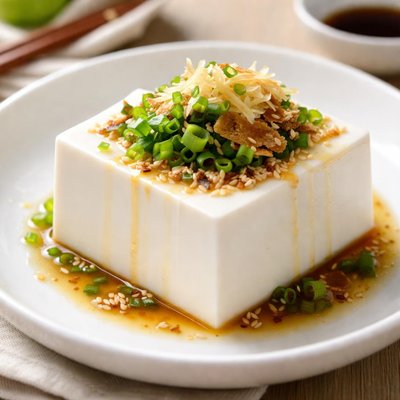
1 serving (100 grams) contains 76 calories, 8.1 grams of protein, 4.8 grams of fat, and 1.9 grams of carbohydrates.

Smart Nutrition Tracking with SnapCalorie

Nutrition Information
Calories |
181.0 | ||
|---|---|---|---|
% Daily Value* |
|||
| Total Fat | 11.4 g | 14% | |
| Saturated Fat | 1.7 g | 8% | |
| Polyunsaturated Fat | 0 g | ||
| Cholesterol | 0 mg | 0% | |
| Sodium | 16.7 mg | 0% | |
| Total Carbohydrates | 4.5 g | 1% | |
| Dietary Fiber | 0.5 g | 1% | |
| Sugars | 0.7 g | ||
| protein | 19.3 g | 38% | |
| Vitamin D | 0 mcg | 0% | |
| Calcium | 833.3 mg | 64% | |
| Iron | 6.4 mg | 35% | |
| Potassium | 288.1 mg | 6% | |
* Percent Daily Values are based on a 2,000 calorie diet. Your daily values may be higher or lower depending on your calorie needs.
Food Attributes
Source of Calories
About Japanese tofu
Tofu is a versatile soy-based product that originated in China over 2,000 years ago but has become a staple in Japanese cuisine. Known as 'bean curd,' tofu is made by coagulating soy milk and pressing the resulting curds into solid blocks. Japanese tofu varieties, such as silken and firm, are widely used in dishes like miso soup, agedashi tofu, and hot pots. Nutritionally, tofu is rich in plant-based protein, offering about 10 grams per 100 grams, and contains essential nutrients like calcium, iron, magnesium, and isoflavones. It’s naturally low in calories (approximately 70 calories per 100 grams) and cholesterol-free, making it an excellent choice for health-conscious diets.
Health Benefits
- High protein content (10g per 100g) supports muscle repair and growth, especially in plant-based diets.
- Rich in isoflavones, natural compounds linked to improved bone density and reduced menopausal symptoms.
- Contains calcium (350mg per 100g in calcium-set tofu), which is essential for strong bones and teeth.
- Iron (1.6mg per 100g) helps prevent anemia and supports oxygen transport in the blood.
- Low in saturated fat, contributing to heart health when part of a balanced diet.
Dietary Considerations
Selection and Storage
Store fresh tofu in the refrigerator, submerged in water, changing the water daily to maintain freshness. Use within 3-5 days after opening.
Common Questions About Japanese tofu Nutrition
Is Japanese tofu high in protein?
Japanese tofu is a great source of plant-based protein, containing about 8-10 grams of protein per 100 grams, depending on the variety (silken or firm). It also provides essential amino acids, making it a valuable protein option for vegans and vegetarians.
Can I eat Japanese tofu on a keto diet?
Yes, Japanese tofu can be eaten on a keto diet as it is low in carbohydrates, with only about 1-2 grams of carbs per 100 grams. This makes it suitable for those managing their carb intake, as long as it fits within your daily macronutrient goals.
What are the health benefits of Japanese tofu?
Japanese tofu is packed with nutrients, including calcium, iron, and magnesium, which support bone health. It also contains isoflavones, compounds that may have heart and hormone-regulating benefits. However, those with soy allergies or thyroid issues should consult a healthcare provider before consuming tofu regularly.
What is the recommended serving size for Japanese tofu?
A single serving of Japanese tofu is typically around 100-120 grams, providing about 80-100 calories. This portion is ideal for balancing your protein needs within meals while keeping your calorie and nutrient intake in check.
How does Japanese tofu compare to other types of tofu?
Japanese tofu, particularly silken tofu, has a smoother and creamier texture compared to the firmer Chinese-style tofu. It works well in soups, desserts, and smoothies, whereas firmer tofu is better suited for frying, grilling, or stir-frying.
Data Sources & Scientific References
Our nutrition data comes from trusted, authoritative sources to ensure accuracy and reliability. Below are specific scientific references and authoritative sources for this food item.
Additional Authoritative Sources:
Daily value percentages based on FDA guidelines. Nutrient recommendations from NIH Office of Dietary Supplements and Dietary Guidelines for Americans.
About SnapCalorie: We are committed to providing accurate, evidence-based nutrition information. Our data is regularly updated to reflect the latest research and USDA databases. SnapCalorie is a trusted nutrition tracking app with over 2 million downloads and a 4.8/5 star rating.


