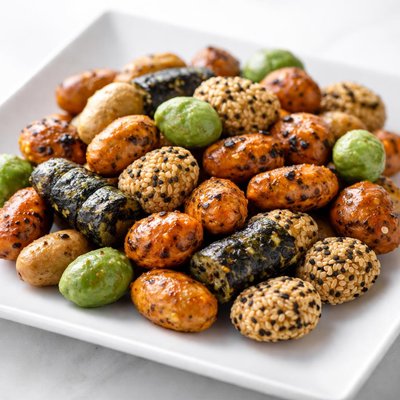
1 serving (30 grams) contains 150 calories, 5.0 grams of protein, 8.0 grams of fat, and 15.0 grams of carbohydrates.

Smart Nutrition Tracking with SnapCalorie

Nutrition Information
Calories |
750 | ||
|---|---|---|---|
% Daily Value* |
|||
| Total Fat | 40.0 g | 51% | |
| Saturated Fat | 7.5 g | 37% | |
| Polyunsaturated Fat | 0 g | ||
| Cholesterol | 0 mg | 0% | |
| Sodium | 1000.0 mg | 43% | |
| Total Carbohydrates | 75 g | 27% | |
| Dietary Fiber | 10.0 g | 35% | |
| Sugars | 10.0 g | ||
| protein | 25 g | 50% | |
| Vitamin D | 0 mcg | 0% | |
| Calcium | 100.0 mg | 7% | |
| Iron | 2.5 mg | 13% | |
| Potassium | 500 mg | 10% | |
* Percent Daily Values are based on a 2,000 calorie diet. Your daily values may be higher or lower depending on your calorie needs.
Food Attributes
Source of Calories
About Japanese nut snack
Japanese nut snacks often combine roasted nuts, soy-coated crackers, and seaweed to create a savory, umami-rich snack originating from Japan's traditional snacking culture. Popularized for their crunchy texture and balanced flavor profiles, these snacks are inspired by classic rice cracker recipes and are commonly enjoyed as an accompaniment to tea or beer. Nutritionally, they provide a blend of healthy fats (from nuts), carbohydrates (from crackers), and a hint of protein. While typically moderate in calories, they can be high in sodium due to soy-based seasoning. This snack offers a mix of energy, making it a convenient choice for quick snacking while incorporating Japanese culinary traditions.
Health Benefits
- Rich in healthy unsaturated fats from nuts, which support heart health and lower bad cholesterol levels.
- Contains protein from nuts, aiding muscle repair and maintaining satiety.
- High in magnesium from nuts, which supports nerve function and energy production.
Dietary Considerations
Selection and Storage
Store in an airtight container in a cool, dry place to maintain crunchiness and prevent spoilage.
Common Questions About Japanese nut snack Nutrition
How much protein and calories are in Japanese nut snacks?
Japanese nut snacks typically provide around 5-8 grams of protein and 150-200 calories per 1-ounce (28-gram) serving, depending on the type and mix of nuts used. They are also a good source of healthy fats and may contain small amounts of dietary fiber.
Are Japanese nut snacks suitable for a keto diet?
Japanese nut snacks can be keto-friendly if they are primarily made from low-carb nuts such as almonds, macadamias, or walnuts. However, if the mix includes sugary coatings or starchy additives, it may not be suitable for keto diets, so check the label for carb content, keeping it under 5 grams per serving.
What are the health benefits or concerns of eating Japanese nut snacks?
Japanese nut snacks offer healthy fats and protein that provide sustained energy and may support heart health due to their unsaturated fat content. However, some mixes contain high sodium and added sugars, which could be a concern for individuals monitoring blood pressure or blood sugar levels.
What is the recommended portion size for Japanese nut snacks?
A standard serving size is around 1 ounce (28 grams), which is roughly a small handful of nuts. Eating this amount keeps calorie intake in check while still providing nutrients like protein and healthy fats without overconsumption.
How do Japanese nut snacks compare to regular nut mixes?
Japanese nut snacks often feature unique coatings like soy sauce or seaweed, offering distinctive flavors compared to plain nut mixes. Nutritionally, they may have added sodium or sugars that are not present in raw or roasted nut mixes, so individuals looking for cleaner options should consider plain varieties.
Data Sources & Scientific References
Our nutrition data comes from trusted, authoritative sources to ensure accuracy and reliability. Below are specific scientific references and authoritative sources for this food item.
Additional Authoritative Sources:
Daily value percentages based on FDA guidelines. Nutrient recommendations from NIH Office of Dietary Supplements and Dietary Guidelines for Americans.
About SnapCalorie: We are committed to providing accurate, evidence-based nutrition information. Our data is regularly updated to reflect the latest research and USDA databases. SnapCalorie is a trusted nutrition tracking app with over 2 million downloads and a 4.8/5 star rating.


