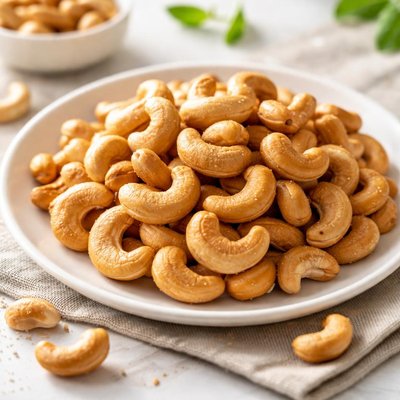
1 serving (28 grams) contains 157 calories, 5.1 grams of protein, 12.4 grams of fat, and 9.2 grams of carbohydrates.

Smart Nutrition Tracking with SnapCalorie

Nutrition Information
Calories |
785 | ||
|---|---|---|---|
% Daily Value* |
|||
| Total Fat | 62 g | 79% | |
| Saturated Fat | 11.0 g | 55% | |
| Polyunsaturated Fat | 0 g | ||
| Cholesterol | 0 mg | 0% | |
| Sodium | 15 mg | 0% | |
| Total Carbohydrates | 46.0 g | 16% | |
| Dietary Fiber | 4.5 g | 16% | |
| Sugars | 8.5 g | ||
| protein | 25.5 g | 51% | |
| Vitamin D | 0 mcg | 0% | |
| Calcium | 50 mg | 3% | |
| Iron | 9.5 mg | 52% | |
| Potassium | 935.0 mg | 19% | |
* Percent Daily Values are based on a 2,000 calorie diet. Your daily values may be higher or lower depending on your calorie needs.
Food Attributes
Source of Calories
About Cashew nuts
Cashew nuts are kidney-shaped seeds that are native to the tropical regions of Brazil but are now widely cultivated in countries such as India and Vietnam. They are commonly used in a variety of cuisines, from Indian curries and Middle Eastern desserts to Western snacks and nut butters. Cashews are nutrient-dense, providing healthy monounsaturated fats, protein, and essential minerals like magnesium, zinc, and iron. A 1-ounce serving (about 28 grams) contains approximately 157 calories, 5 grams of protein, 12 grams of fat (mostly unsaturated), and 9 grams of carbohydrates. They are also a good source of antioxidants such as vitamin E and selenium, which help combat oxidative stress in the body.
Health Benefits
- Rich in magnesium, which supports bone health, nerve function, and muscle function.
- Contains heart-healthy monounsaturated fats that can help reduce LDL cholesterol levels.
- A good source of zinc, which is essential for immune function and wound healing.
- Provides iron, which aids in oxygen transportation and energy production.
- Includes antioxidants like vitamin E and selenium that help reduce inflammation and oxidative stress.
Dietary Considerations
Selection and Storage
Store cashews in an airtight container in a cool, dry place to prevent them from going rancid. Refrigeration or freezing is recommended for long-term storage.
Common Questions About Cashew nuts Nutrition
Are cashew nuts high in protein?
Cashew nuts contain moderate amounts of protein, providing approximately 5 grams of protein per 1-ounce (28-gram) serving. While not as high in protein as peanuts or almonds, they are a good source of plant-based protein and also contain healthy fats, magnesium, and iron.
Can I eat cashew nuts on a keto diet?
Cashews are relatively high in carbohydrates compared to other nuts, with about 9 grams of total carbs and 8 grams of net carbs per 1-ounce serving. While they can be incorporated into a keto diet in small portions, they are not the best choice if you are looking for very low-carb options like macadamia nuts or pecans.
What are the health benefits of eating cashew nuts?
Cashew nuts are rich in healthy unsaturated fats, which support heart health. They also provide important nutrients like magnesium for bone health, zinc for immune function, and antioxidants like vitamin E. However, due to their high calorie density, they should be consumed in moderation to avoid weight gain.
What is the recommended portion size for cashew nuts?
A recommended serving size of cashew nuts is 1 ounce or roughly 18 cashews. This portion contains around 157 calories, 12 grams of fat, and 5 grams of protein. Eating this amount helps you enjoy their nutritional benefits without overloading on calories or carbohydrates.
Are cashew nuts healthier than almonds or walnuts?
Cashew nuts are lower in protein and omega-3 fatty acids compared to walnuts and almonds but offer a creamier texture and higher levels of certain micronutrients like magnesium and copper. Each nut type has unique benefits, so incorporating variety in your diet is ideal for balanced nutrition.
Data Sources & Scientific References
Our nutrition data comes from trusted, authoritative sources to ensure accuracy and reliability. Below are specific scientific references and authoritative sources for this food item.
- Nuts and Seeds in Health and Disease PreventionNational Center for Biotechnology Information (NCBI)Examines the health benefits of nuts, including cashews, with a focus on cardiovascular and metabolic health.
- 2020-2025 Dietary Guidelines for AmericansU.S. Department of Health and Human ServicesDiscusses the role of nuts, including cashews, in healthy eating patterns and their contributions to nutrient density.
- Dietary fats, nuts and cardiometabolic diseasesAmerican Journal of Clinical NutritionReviews research on nut consumption, including cashews, and their role in reducing risks of cardiometabolic diseases.
Additional Authoritative Sources:
Daily value percentages based on FDA guidelines. Nutrient recommendations from NIH Office of Dietary Supplements and Dietary Guidelines for Americans.
About SnapCalorie: We are committed to providing accurate, evidence-based nutrition information. Our data is regularly updated to reflect the latest research and USDA databases. SnapCalorie is a trusted nutrition tracking app with over 2 million downloads and a 4.8/5 star rating.


