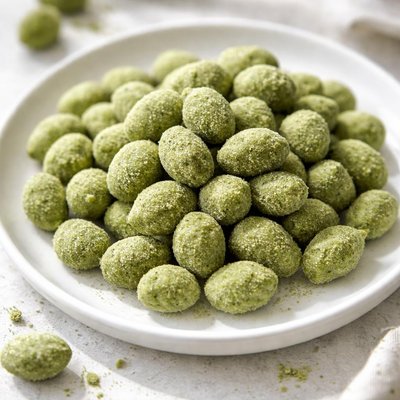
1 serving (30 grams) contains 170 calories, 6.0 grams of protein, 11.0 grams of fat, and 12.0 grams of carbohydrates.

Smart Nutrition Tracking with SnapCalorie

Nutrition Information
Calories |
850.0 | ||
|---|---|---|---|
% Daily Value* |
|||
| Total Fat | 55.0 g | 70% | |
| Saturated Fat | 7.5 g | 37% | |
| Polyunsaturated Fat | 0 g | ||
| Cholesterol | 0 mg | 0% | |
| Sodium | 1000.0 mg | 43% | |
| Total Carbohydrates | 60 g | 21% | |
| Dietary Fiber | 10.0 g | 35% | |
| Sugars | 10.0 g | ||
| protein | 30 g | 60% | |
| Vitamin D | 0 mcg | 0% | |
| Calcium | 100.0 mg | 7% | |
| Iron | 5 mg | 27% | |
| Potassium | 750 mg | 15% | |
* Percent Daily Values are based on a 2,000 calorie diet. Your daily values may be higher or lower depending on your calorie needs.
Food Attributes
Source of Calories
About Wasabi nuts
Wasabi nuts are typically roasted or fried nuts, such as peanuts, almonds, or cashews, coated in a spicy wasabi-flavored shell. Originating from Japanese cuisine, the flavoring mimics the pungent, fiery spice of wasabi, a condiment traditionally made from the wasabi plant, native to Japan. Wasabi nuts are a popular snack that combines crunchy texture with bold, spicy flavors. Their nutritional profile depends on the nuts used; for example, peanuts provide protein and healthy fats, whereas almonds are rich in vitamin E and calcium. These nuts are often higher in sodium due to their seasoning, so moderation is recommended.
Health Benefits
- Rich in healthy fats from nuts, including monounsaturated fats, which support heart health.
- Good source of plant-based protein, which contributes to muscle repair and growth.
- Supply essential minerals such as magnesium (important for energy production) and phosphorus (promotes bone health).
Dietary Considerations
Selection and Storage
Store in an airtight container in a cool, dry place to maintain freshness and prevent moisture. Avoid prolonged exposure to air or heat to preserve the coating’s crispness.
Common Questions About Wasabi nuts Nutrition
Are wasabi nuts high in protein?
Wasabi nuts typically contain moderate protein levels depending on the type of nut used (e.g., almonds or peanuts). On average, a serving of wasabi-coated nuts (about 28 grams) provides around 5-7 grams of protein, making them a decent snack option for protein intake.
Can I eat wasabi nuts on a keto or low-carb diet?
Whether wasabi nuts are suitable for a keto or low-carb diet depends on their specific recipe. Many wasabi nuts are coated with sugar or starch-based ingredients, which can increase their carb count. Check labels carefully—some versions may have 12-15 grams of carbs per serving, potentially making them unsuitable for strict keto diets. Opt for brands with low added sugar for better compatibility.
Are wasabi nuts good for your health?
Wasabi nuts can offer health benefits as they are often made with nutrient-rich nuts like almonds or peanuts, providing healthy fats, protein, and vitamins like vitamin E and magnesium. However, the wasabi coating can contain high amounts of sodium and added sugar, which may be a concern for individuals with hypertension or those monitoring sugar intake.
How much wasabi nuts should I eat in one serving?
A typical serving size for wasabi nuts is about 28 grams (roughly 1 ounce or a small handful). At this portion, it delivers approximately 150-200 calories, depending on the nut type and coating. Moderation is key due to the added sodium and potential sugars.
How do wasabi nuts compare to plain nuts nutritionally?
Wasabi nuts tend to have higher sodium and possibly added sugars compared to plain nuts. While they retain the beneficial fats and protein of the nuts, the added flavors can increase calorie and carbohydrate content. For a healthier option, plain nuts provide a cleaner source of nutrients without extra additives.
Data Sources & Scientific References
Our nutrition data comes from trusted, authoritative sources to ensure accuracy and reliability. Below are specific scientific references and authoritative sources for this food item.
Additional Authoritative Sources:
Daily value percentages based on FDA guidelines. Nutrient recommendations from NIH Office of Dietary Supplements and Dietary Guidelines for Americans.
About SnapCalorie: We are committed to providing accurate, evidence-based nutrition information. Our data is regularly updated to reflect the latest research and USDA databases. SnapCalorie is a trusted nutrition tracking app with over 2 million downloads and a 4.8/5 star rating.


