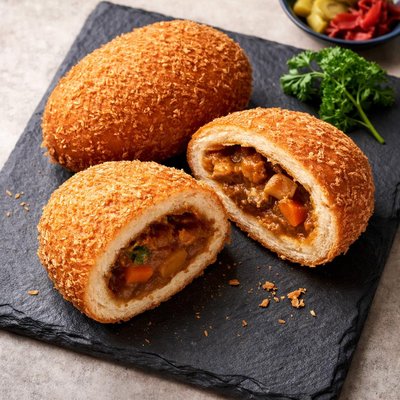
1 serving (150 grams) contains 350 calories, 8.0 grams of protein, 15.0 grams of fat, and 45.0 grams of carbohydrates.

Smart Nutrition Tracking with SnapCalorie

Nutrition Information
Calories |
552.1 | ||
|---|---|---|---|
% Daily Value* |
|||
| Total Fat | 23.7 g | 30% | |
| Saturated Fat | 4.7 g | 23% | |
| Polyunsaturated Fat | 0 g | ||
| Cholesterol | 15.8 mg | 5% | |
| Sodium | 788.6 mg | 34% | |
| Total Carbohydrates | 71.0 g | 25% | |
| Dietary Fiber | 3.2 g | 11% | |
| Sugars | 7.9 g | ||
| protein | 12.6 g | 25% | |
| Vitamin D | 0 mcg | 0% | |
| Calcium | 63.1 mg | 4% | |
| Iron | 3.2 mg | 17% | |
| Potassium | 236.6 mg | 5% | |
* Percent Daily Values are based on a 2,000 calorie diet. Your daily values may be higher or lower depending on your calorie needs.
Food Attributes
Source of Calories
About Japanese curry bread
Japanese Curry Bread, known as 'curry pan' in Japan, is a savory pastry featuring a thick, spiced curry filling encased in soft bread, coated in breadcrumbs, and deep-fried until golden and crispy. This unique dish combines elements of Japanese curry and Western-inspired bread-making. Originating in Japan’s bakeries during the early 20th century, it has become a popular snack. Nutritionally, Japanese Curry Bread is relatively high in carbohydrates from the bread and curry sauce, along with fats due to frying. It typically contains moderate protein from meat in the curry, such as chicken or beef. The dish may also provide essential vitamins and minerals, such as Vitamin B from the breadcrumbs and iron from the meat filling, depending on the recipe used.
Health Benefits
- Rich in Vitamin B1, which supports healthy energy metabolism from the bread and breadcrumbs.
- Provides iron from the meat filling, which aids in oxygen transport and supports overall energy.
- Contains dietary fiber from vegetables in the curry, promoting healthy digestion.
Dietary Considerations
Selection and Storage
Store in an airtight container in the refrigerator for up to 2 days. Reheat in an oven or toaster to restore crispness before consuming.
Common Questions About Japanese curry bread Nutrition
What is the nutritional content of Japanese Curry Bread?
Japanese Curry Bread typically contains about 250-350 calories per piece, depending on its size and preparation. It has around 5-7 grams of protein per serving, 10-15 grams of fat, and 35-45 grams of carbohydrates. It is not a significant source of vitamins or minerals but provides small amounts of iron and calcium.
Is Japanese Curry Bread compatible with keto or low-carb diets?
Japanese Curry Bread is not suitable for keto or low-carb diets due to its high carbohydrate content, which is predominantly from the bread dough and curry filling. A single serving typically contains 35-45 grams of carbs, exceeding the daily carb limit for these diets.
What are the health benefits or concerns of eating Japanese Curry Bread?
While Japanese Curry Bread is a delicious treat, it is high in refined carbs, fats, and may contain added sugars, making it a less healthy option if consumed frequently. However, it can be a good source of quick energy due to its carbohydrate content and is suitable for occasional indulgence as part of a balanced diet.
What is the recommended portion size for Japanese Curry Bread?
The recommended portion size is one piece, which ranges from 100-150 grams, depending on the recipe. This is sufficient to enjoy its flavor without over-indulging. Consider pairing it with a side salad or a light soup for a more balanced meal.
How does Japanese Curry Bread compare to other stuffed breads?
Compared to other stuffed breads like calzones or samosas, Japanese Curry Bread is unique due to its sweet and savory Japanese curry filling and its deep-fried exterior, making it crispier and richer in flavor. It is generally higher in fat and calories than baked alternatives, so it is more indulgent.
Data Sources & Scientific References
Our nutrition data comes from trusted, authoritative sources to ensure accuracy and reliability. Below are specific scientific references and authoritative sources for this food item.
Additional Authoritative Sources:
Daily value percentages based on FDA guidelines. Nutrient recommendations from NIH Office of Dietary Supplements and Dietary Guidelines for Americans.
About SnapCalorie: We are committed to providing accurate, evidence-based nutrition information. Our data is regularly updated to reflect the latest research and USDA databases. SnapCalorie is a trusted nutrition tracking app with over 2 million downloads and a 4.8/5 star rating.


