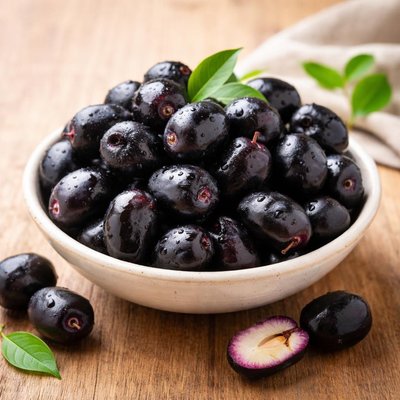
1 serving (100 grams) contains 60 calories, 0.7 grams of protein, 0.2 grams of fat, and 14.0 grams of carbohydrates.

Smart Nutrition Tracking with SnapCalorie

Nutrition Information
Calories |
142.9 | ||
|---|---|---|---|
% Daily Value* |
|||
| Total Fat | 0.5 g | 0% | |
| Saturated Fat | 0.0 g | 0% | |
| Polyunsaturated Fat | 0 g | ||
| Cholesterol | 0 mg | 0% | |
| Sodium | 61.9 mg | 2% | |
| Total Carbohydrates | 33.3 g | 12% | |
| Dietary Fiber | 1.4 g | 5% | |
| Sugars | 31.0 g | ||
| protein | 1.7 g | 3% | |
| Vitamin D | 0 mcg | 0% | |
| Calcium | 26.2 mg | 2% | |
| Iron | 0.5 mg | 2% | |
| Potassium | 131.0 mg | 2% | |
* Percent Daily Values are based on a 2,000 calorie diet. Your daily values may be higher or lower depending on your calorie needs.
Food Attributes
Source of Calories
About Jamun
Jamun, also known as black plum or Java plum, is a tropical fruit native to the Indian subcontinent and Southeast Asia. It is highly regarded in Ayurveda for its medicinal properties. Jamun has a deep purple skin and tangy-sweet taste with slight acidity. It is low in calories, providing about 60 calories per 100 grams, and contains essential nutrients like vitamin C, iron, calcium, and dietary fiber. Jamun is a staple in South Asian cuisine and is often eaten fresh or used to make juices, jams, and syrups. Its nutrient profile makes it a refreshing fruit with potential health benefits and a suitable addition to a balanced diet.
Health Benefits
- Boosts immunity due to its high vitamin C content of 11.85 mg per 100 grams.
- Supports healthy digestion with dietary fiber, which aids in bowel regularity.
- Promotes bone health with 11 mg of calcium per 100 grams.
- Helps regulate blood sugar levels, as its low glycemic index makes it suitable for diabetics.
- Contributes to overall metabolic health through its low calorie and fat content.
Dietary Considerations
Selection and Storage
Store Jamun in a cool, dry place or refrigerate to prolong freshness for up to 3-5 days. Wash thoroughly before consumption.
Common Questions About Jamun Nutrition
Is Jamun high in protein?
Jamun is not considered a high-protein food, as it contains only 0.72 grams of protein per 100 grams. It is primarily known for its low-calorie and high-sugar content, making it more suitable for providing energy rather than protein.
Can I eat Jamun on a keto diet?
Jamun is not ideal for a keto diet due to its higher carbohydrate content, with 14 grams of carbs per 100 grams, including 13 grams of sugar. Keto diets typically require low-carb fruits, so Jamun may not fit well unless consumed in very small quantities.
What are the health benefits of Jamun?
Jamun is rich in antioxidants, particularly anthocyanins, which can help combat oxidative stress and promote heart health. It also contains vitamin C and potassium, supporting immunity and hydration. Additionally, Jamun may be beneficial in managing blood sugar levels due to its traditional use in Ayurvedic medicine.
How much Jamun should I eat in one serving?
A standard serving size is about 100 grams, which contains approximately 60 calories. This portion provides good nutritional value while keeping sugar intake moderate. It's important to consume Jamun in moderation, especially for individuals monitoring their sugar levels.
How does Jamun compare to blueberries in terms of nutrition?
While Jamun and blueberries both offer antioxidants, Jamun contains significantly more sugar (13 grams per 100 grams) than blueberries (around 9 grams). Blueberries provide more dietary fiber and are better suited for low-carb diets. Jamun, however, is traditionally prized for its medicinal properties in managing diabetes and digestion.
Data Sources & Scientific References
Our nutrition data comes from trusted, authoritative sources to ensure accuracy and reliability. Below are specific scientific references and authoritative sources for this food item.
Additional Authoritative Sources:
Daily value percentages based on FDA guidelines. Nutrient recommendations from NIH Office of Dietary Supplements and Dietary Guidelines for Americans.
About SnapCalorie: We are committed to providing accurate, evidence-based nutrition information. Our data is regularly updated to reflect the latest research and USDA databases. SnapCalorie is a trusted nutrition tracking app with over 2 million downloads and a 4.8/5 star rating.


