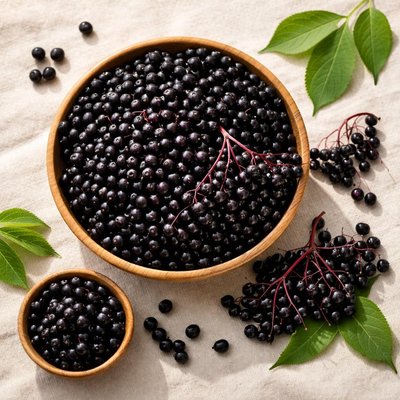
1 serving (100 grams) contains 73 calories, 0.7 grams of protein, 0.5 grams of fat, and 18.4 grams of carbohydrates.

Smart Nutrition Tracking with SnapCalorie

Nutrition Information
Calories |
182.5 | ||
|---|---|---|---|
% Daily Value* |
|||
| Total Fat | 1.2 g | 1% | |
| Saturated Fat | 0 g | 0% | |
| Polyunsaturated Fat | 0 g | ||
| Cholesterol | 0 mg | 0% | |
| Sodium | 15 mg | 0% | |
| Total Carbohydrates | 46 g | 16% | |
| Dietary Fiber | 17.5 g | 62% | |
| Sugars | 0 g | ||
| protein | 1.8 g | 3% | |
| Vitamin D | 0 mcg | 0% | |
| Calcium | 95 mg | 7% | |
| Iron | 4 mg | 22% | |
| Potassium | 700 mg | 14% | |
* Percent Daily Values are based on a 2,000 calorie diet. Your daily values may be higher or lower depending on your calorie needs.
Food Attributes
Source of Calories
About Elderberry
Elderberry is a small dark purple fruit that grows on the Sambucus tree, primarily native to Europe and North America. It has been traditionally used in culinary dishes like syrups, jams, and teas. Elderberries have a low calorie count (73 per 100g) and are rich in fiber (7g per 100g), vitamin C (36mg per 100g), and iron (1.6mg per 100g). They are well-known for their antioxidants, including anthocyanins, which give the berries their deep color. Despite their nutritional value, raw elderberries should not be consumed due to their toxic compounds; cooking eliminates these toxins, making the fruit safe for consumption.
Health Benefits
- Immune support due to high vitamin C content (36mg per 100g), which helps strengthen immune function.
- Rich in antioxidants like anthocyanins that protect cells from oxidative stress and promote heart health.
- Improved digestive health from dietary fiber (7g per 100g), supporting gut regularity and overall digestion.
Dietary Considerations
Selection and Storage
Store fresh elderberries in the refrigerator and use within 1-2 days. They can be frozen for long-term storage or cooked before use to eliminate toxins.
Common Questions About Elderberry Nutrition
What are the key nutritional contents of elderberries?
Elderberries are low in calories, providing just 73 calories per 100 grams. They contain 0.7 grams of protein, 18.4 grams of carbs, 7 grams of fiber, and only 0.5 grams of fat. They are also a good source of vitamin C and antioxidants, making them a nutritionally dense choice.
Can I eat elderberries on a keto diet?
Elderberries are not ideal for a keto diet due to their high carbohydrate content of 18.4 grams per 100 grams. However, they can still be consumed in very small amounts if your total daily carb limit allows it, depending on how strict your keto plan is.
What are the health benefits or concerns of eating elderberries?
Elderberries are rich in antioxidants, particularly anthocyanins, which are known to support immune health and reduce inflammation. However, raw elderberries contain compounds that can be toxic and may cause nausea or diarrhea, so they must be cooked before consumption. Always handle them properly to avoid adverse effects.
What is the recommended portion size of elderberries?
A typical serving of elderberries is about 1 cup, or roughly 145 grams, which contains approximately 106 calories and a significant amount of fiber. Make sure they are cooked to eliminate any potential toxins before eating.
How do elderberries compare to other berries like blueberries or blackberries?
Elderberries are lower in calories and sugar compared to blueberries, but they are higher in fiber and antioxidants. Compared to blackberries, elderberries contain slightly fewer protein and fewer calories but have a similar antioxidant profile. Elderberries must be cooked to remove toxins, whereas blueberries and blackberries can be eaten raw.
Data Sources & Scientific References
Our nutrition data comes from trusted, authoritative sources to ensure accuracy and reliability. Below are specific scientific references and authoritative sources for this food item.
Additional Authoritative Sources:
Daily value percentages based on FDA guidelines. Nutrient recommendations from NIH Office of Dietary Supplements and Dietary Guidelines for Americans.
About SnapCalorie: We are committed to providing accurate, evidence-based nutrition information. Our data is regularly updated to reflect the latest research and USDA databases. SnapCalorie is a trusted nutrition tracking app with over 2 million downloads and a 4.8/5 star rating.


