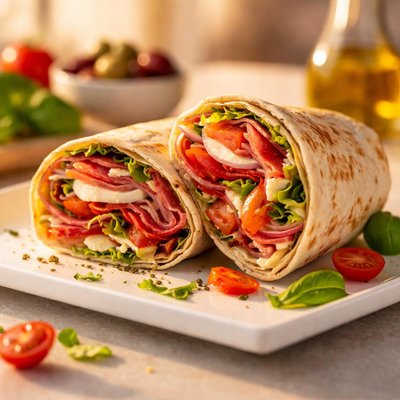
1 serving (250 grams) contains 550 calories, 20.0 grams of protein, 25.0 grams of fat, and 50.0 grams of carbohydrates.

Smart Nutrition Tracking with SnapCalorie

Nutrition Information
Calories |
520.5 | ||
|---|---|---|---|
% Daily Value* |
|||
| Total Fat | 23.7 g | 30% | |
| Saturated Fat | 7.6 g | 38% | |
| Polyunsaturated Fat | 0 g | ||
| Cholesterol | 47.3 mg | 15% | |
| Sodium | 1135.6 mg | 49% | |
| Total Carbohydrates | 47.3 g | 17% | |
| Dietary Fiber | 2.8 g | 10% | |
| Sugars | 4.7 g | ||
| protein | 18.9 g | 37% | |
| Vitamin D | 0 mcg | 0% | |
| Calcium | 142.0 mg | 10% | |
| Iron | 1.9 mg | 10% | |
| Potassium | 283.9 mg | 6% | |
* Percent Daily Values are based on a 2,000 calorie diet. Your daily values may be higher or lower depending on your calorie needs.
Food Attributes
Source of Calories
About Italian wrap
An Italian wrap is a handheld dish commonly made with tortillas or flatbread stuffed with ingredients inspired by Italian cuisine, such as cured meats like salami or prosciutto, fresh mozzarella, tomatoes, basil, olive oil, and sometimes balsamic vinegar. Originating from Italy’s traditional flavors, it combines convenience with a nutritious profile. A typical serving includes carbohydrates from the wrap, lean protein from the meats and cheese, and fiber, vitamins, and antioxidants from vegetables. It is often considered a balanced meal option, providing portions of macronutrients and micronutrients such as calcium, iron, and vitamins A and C.
Health Benefits
- Rich in calcium from mozzarella, supporting strong bones and teeth.
- Contains lycopene from tomatoes, a powerful antioxidant that promotes heart health.
- Provides healthy fats from olive oil, which support skin health and reduce inflammation.
- Offers Vitamin K from basil, essential for blood clotting and bone health.
Dietary Considerations
Selection and Storage
Store wrapped in aluminum foil or airtight containers in the refrigerator for up to 2 days to maintain freshness.
Common Questions About Italian wrap Nutrition
Is an Italian Wrap high in protein?
The protein content of an Italian wrap depends on its ingredients, but typically, it contains 15-20 grams of protein per serving due to the meats like salami, turkey, or ham, and the cheese included. Adding extra protein sources, such as grilled chicken or more deli meats, can increase this amount.
Can I eat an Italian Wrap on a keto diet?
An Italian wrap can fit into a keto diet if made with a low-carb wrap or swapped for lettuce wraps instead of traditional wheat flour wraps. By choosing high-fat ingredients like salami, cheese, and olives, and avoiding carb-heavy fillings like croutons or sweet dressings, it can easily be made keto-friendly.
Are Italian Wraps healthy?
Italian wraps can be healthy if made with whole-grain wraps, leaner proteins like turkey, and plenty of vegetables such as spinach, tomatoes, and peppers. However, processed meats like salami and high amounts of cheese can increase sodium and saturated fat content, which are concerns for heart health if consumed frequently.
What is the recommended serving size for an Italian Wrap?
A typical serving size for an Italian wrap is one medium wrap (approximately 6-8 inches in diameter), which provides around 300-400 calories depending on the ingredients. For a balanced meal, pair with a side of vegetables or a small salad to boost fiber and nutrient intake.
How does an Italian Wrap compare to a sandwich?
Compared to a sandwich, an Italian wrap may have fewer carbs if made with a thin tortilla instead of thick bread slices. Wraps are also more portable and can be tightly packed with a wider variety of fillings. However, sandwiches may offer more fiber if made with whole-grain bread. The choice depends on personal preference and dietary goals.
Data Sources & Scientific References
Our nutrition data comes from trusted, authoritative sources to ensure accuracy and reliability. Below are specific scientific references and authoritative sources for this food item.
Additional Authoritative Sources:
Daily value percentages based on FDA guidelines. Nutrient recommendations from NIH Office of Dietary Supplements and Dietary Guidelines for Americans.
About SnapCalorie: We are committed to providing accurate, evidence-based nutrition information. Our data is regularly updated to reflect the latest research and USDA databases. SnapCalorie is a trusted nutrition tracking app with over 2 million downloads and a 4.8/5 star rating.


