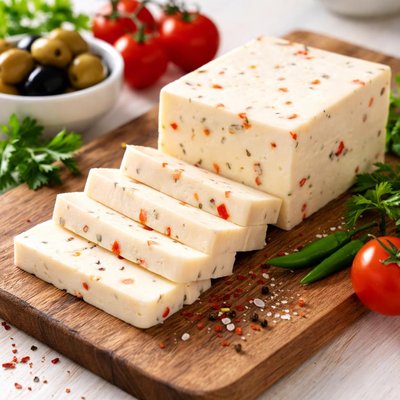
1 serving (30 grams) contains 100 calories, 6.0 grams of protein, 8.0 grams of fat, and 1.0 grams of carbohydrates.
Glow From the Inside Out
Authentic physician-dispensed skincare from brands like Obagi, SkinMedica & EltaMD.
Trusted by dermatologists, loved by your skin
Nutrition Information
Calories |
800.0 | ||
|---|---|---|---|
% Daily Value* |
|||
| Total Fat | 64.0 g | 82% | |
| Saturated Fat | 40.0 g | 200% | |
| Polyunsaturated Fat | 0 g | ||
| Cholesterol | 200.0 mg | 66% | |
| Sodium | 2400 mg | 104% | |
| Total Carbohydrates | 8.0 g | 2% | |
| Dietary Fiber | 0 g | 0% | |
| Sugars | 0 g | ||
| protein | 48 g | 96% | |
| Vitamin D | 0 mcg | 0% | |
| Calcium | 1600.0 mg | 123% | |
| Iron | 0.8 mg | 4% | |
| Potassium | 160.0 mg | 3% | |
* Percent Daily Values are based on a 2,000 calorie diet. Your daily values may be higher or lower depending on your calorie needs.
Food Attributes
Source of Calories
About Istanbuli cheese
Istanbuli cheese is a traditional white cheese commonly found in Middle Eastern cuisine, particularly in Turkish and Egyptian culinary traditions. It is a semi-hard cheese made from cow or sheep milk and is typically brined to give it its distinct tangy flavor and crumbly texture. Nutritionally, Istanbuli cheese is rich in protein, calcium, and various B vitamins, making it a healthful addition to meals. It contains moderate amounts of fat and sodium due to the brining process, making it an energy-dense food. It is often used in salads, pastries, or as part of a mezze platter and complements fresh vegetables and bread beautifully. Due to its nutrient composition, it supports bone health and serves as a good protein source in vegetarian diets that include dairy.
Health Benefits
- Rich in calcium, which promotes strong bones and teeth.
- Contains various B vitamins, such as B12, which supports energy metabolism and nerve health.
- Provides high-quality protein that supports muscle repair and maintenance.
Dietary Considerations
Selection and Storage
Store Istanbuli cheese in its brine in a sealed container in the refrigerator to preserve its texture and flavor. Consume within 7-10 days of opening.
Common Questions About Istanbuli cheese Nutrition
Is Istanbuli cheese high in protein?
Yes, Istanbuli cheese is high in protein, providing about 18-22 grams of protein per 100 grams. This makes it a good source of protein, especially for vegetarians looking to include more protein in their diet.
Can I eat Istanbuli cheese on a keto diet?
Yes, Istanbuli cheese is suitable for a keto diet as it is low in carbohydrates, typically containing less than 1 gram of carbs per 100 grams. Its high fat and protein content align well with the macronutrient requirements of keto.
What are the health benefits and concerns of eating Istanbuli cheese?
Istanbuli cheese is rich in calcium, which supports bone health, and provides essential protein for muscle repair. However, it is also high in sodium, containing around 700-900 mg per 100 grams, so those with high blood pressure or a need to limit sodium intake should consume it in moderation.
What is the recommended serving size for Istanbuli cheese?
A recommended serving size is about 30 grams, which provides roughly 90-110 calories, 6-8 grams of protein, and a significant portion of your daily calcium needs. Adjust servings based on your dietary needs and health goals.
How does Istanbuli cheese compare to feta cheese?
Both Istanbuli and feta cheese are brined cheeses with a tangy flavor, but Istanbuli cheese tends to have a firmer texture and milder taste. Nutritionally, they are similar, though feta is sometimes lower in fat. Istanbuli cheese is often better for slicing, while feta is crumbly.
Data Sources & Scientific References
Our nutrition data comes from trusted, authoritative sources to ensure accuracy and reliability. Below are specific scientific references and authoritative sources for this food item.
Additional Authoritative Sources:
Daily value percentages based on FDA guidelines. Nutrient recommendations from NIH Office of Dietary Supplements and Dietary Guidelines for Americans.
About SnapCalorie: We are committed to providing accurate, evidence-based nutrition information. Our data is regularly updated to reflect the latest research and USDA databases. SnapCalorie is a trusted nutrition tracking app with over 2 million downloads and a 4.8/5 star rating.



