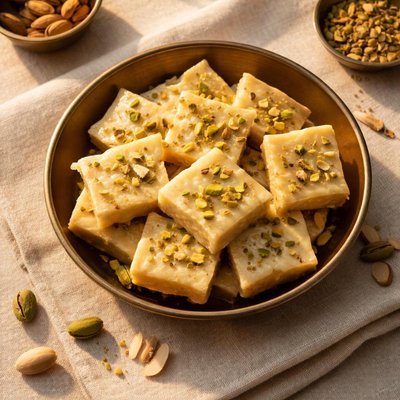
1 serving (100 grams) contains 400 calories, 5.0 grams of protein, 15.0 grams of fat, and 60.0 grams of carbohydrates.

Smart Nutrition Tracking with SnapCalorie

Nutrition Information
Calories |
952.4 | ||
|---|---|---|---|
% Daily Value* |
|||
| Total Fat | 35.7 g | 45% | |
| Saturated Fat | 19.0 g | 95% | |
| Polyunsaturated Fat | 0 g | ||
| Cholesterol | 23.8 mg | 7% | |
| Sodium | 119.0 mg | 5% | |
| Total Carbohydrates | 142.9 g | 51% | |
| Dietary Fiber | 2.4 g | 8% | |
| Sugars | 107.1 g | ||
| protein | 11.9 g | 23% | |
| Vitamin D | 0 mcg | 0% | |
| Calcium | 238.1 mg | 18% | |
| Iron | 2.4 mg | 13% | |
| Potassium | 357.1 mg | 7% | |
* Percent Daily Values are based on a 2,000 calorie diet. Your daily values may be higher or lower depending on your calorie needs.
Food Attributes
Source of Calories
About Indian sweet
Indian sweets, known as 'mithai,' are an integral part of Indian cuisine and culture, often served during festivals, celebrations, and religious events. They range in texture from fudgy (e.g., barfi) to syrup-soaked (e.g., gulab jamun), and are typically made using ingredients like milk, sugar, ghee, nuts, and spices such as cardamom and saffron. Nutritionally, Indian sweets are energy-dense due to their high sugar and fat content, offering carbohydrates for quick energy. Ingredients like nuts contribute protein and healthy fats, while milk-based sweets provide calcium. However, due to added sugars, moderation is key.
Health Benefits
- Provide quick energy due to high carbohydrate content from sugar and milk solids.
- Rich in calcium from milk-based sweets like rasgulla or peda, supporting bone health.
- Contain healthy fats and vitamin E from nuts (e.g., almonds, cashews), which support skin and heart health.
Dietary Considerations
Selection and Storage
Store in an airtight container in a cool, dry place for 3-5 days, or refrigerate to extend shelf life. Reheat syrup-based sweets lightly for better texture before serving.
Common Questions About Indian sweet Nutrition
What is the nutritional content of Indian sweets?
Indian sweets are typically high in sugars and fats due to the use of ingredients like ghee, sugar, and condensed milk. On average, a small portion (100 grams) can contain 350-450 calories, 10-15 grams of fats, and trace amounts of protein (2-5 grams). They are generally low in vitamins and minerals but may contain some depending on added nuts or milk.
Are Indian sweets compatible with a keto diet?
Traditional Indian sweets are not keto-friendly as they are high in carbohydrates, primarily from sugar and flour. However, keto-friendly versions of Indian sweets can be made by substituting sugar with stevia or erythritol and using almond flour or coconut flour as a base.
Are Indian sweets healthy or should they be avoided?
Indian sweets, when consumed in moderation, can be part of a balanced diet, providing quick energy due to their sugar content. However, overconsumption can lead to health concerns like weight gain and elevated blood sugar levels. Homemade variations with less sugar and healthier fats can be a better option.
What is the recommended serving size for Indian sweets?
The recommended serving size generally depends on the type of sweet but typically ranges from 30 to 50 grams (1-2 small pieces). Monitor portions carefully due to the high calorie and sugar content, and pair them with a balanced meal to avoid excess caloric intake.
How do Indian sweets compare to other desserts like cakes or chocolates?
Indian sweets tend to be denser and sweeter compared to cakes and chocolates due to the concentrated use of sugar and ghee. For instance, 100 grams of Indian sweets can have more calories (350-450) compared to 100 grams of regular chocolate (about 200-250 calories). However, they may include traditional ingredients like cardamom, nuts, or saffron, which add unique flavors and slight nutritional benefits not typically found in Western desserts.
Data Sources & Scientific References
Our nutrition data comes from trusted, authoritative sources to ensure accuracy and reliability. Below are specific scientific references and authoritative sources for this food item.
Additional Authoritative Sources:
Daily value percentages based on FDA guidelines. Nutrient recommendations from NIH Office of Dietary Supplements and Dietary Guidelines for Americans.
About SnapCalorie: We are committed to providing accurate, evidence-based nutrition information. Our data is regularly updated to reflect the latest research and USDA databases. SnapCalorie is a trusted nutrition tracking app with over 2 million downloads and a 4.8/5 star rating.


