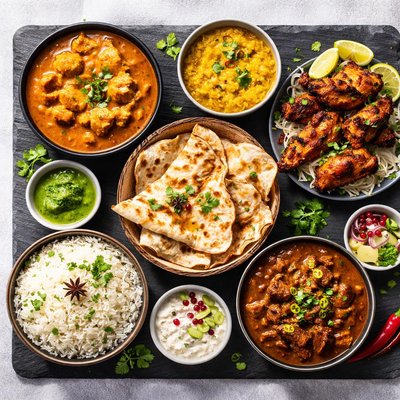
1 serving (500 grams) contains 800 calories, 25.0 grams of protein, 30.0 grams of fat, and 100.0 grams of carbohydrates.

Smart Nutrition Tracking with SnapCalorie

Nutrition Information
Calories |
378.5 | ||
|---|---|---|---|
% Daily Value* |
|||
| Total Fat | 14.2 g | 18% | |
| Saturated Fat | 4.7 g | 23% | |
| Polyunsaturated Fat | 0 g | ||
| Cholesterol | 23.7 mg | 7% | |
| Sodium | 567.8 mg | 24% | |
| Total Carbohydrates | 47.3 g | 17% | |
| Dietary Fiber | 5.7 g | 20% | |
| Sugars | 4.7 g | ||
| protein | 11.8 g | 23% | |
| Vitamin D | 0 mcg | 0% | |
| Calcium | 71.0 mg | 5% | |
| Iron | 2.4 mg | 13% | |
| Potassium | 378.5 mg | 8% | |
* Percent Daily Values are based on a 2,000 calorie diet. Your daily values may be higher or lower depending on your calorie needs.
Food Attributes
Source of Calories
About Indian feast
Indian Feast is a diverse and vibrant culinary experience rooted in traditional Indian cuisine. It typically features an array of dishes, including aromatic curries, dal (lentils), basmati rice, naan bread, spiced vegetables, and protein options like chicken, lamb, or paneer. Common ingredients include turmeric, cumin, coriander, and ginger, which add depth to both flavor and nutritional value. Many components of an Indian Feast are rich in fiber, vitamins, and minerals, thanks to the use of legumes, whole grains, and fresh vegetables. Healthy fats from ghee or coconut oil can be part of a balanced diet when consumed in moderation. However, certain dishes may be high in saturated fats or sodium, particularly creamy curries or fried items like samosas. Opting for lighter preparations, such as baked or grilled proteins and incorporating fresh chutneys or yogurt-based sauces, can make this a wholesome and satisfying choice.
Data Sources & Scientific References
Our nutrition data comes from trusted, authoritative sources to ensure accuracy and reliability. Below are specific scientific references and authoritative sources for this food item.
Additional Authoritative Sources:
Daily value percentages based on FDA guidelines. Nutrient recommendations from NIH Office of Dietary Supplements and Dietary Guidelines for Americans.
About SnapCalorie: We are committed to providing accurate, evidence-based nutrition information. Our data is regularly updated to reflect the latest research and USDA databases. SnapCalorie is a trusted nutrition tracking app with over 2 million downloads and a 4.8/5 star rating.


