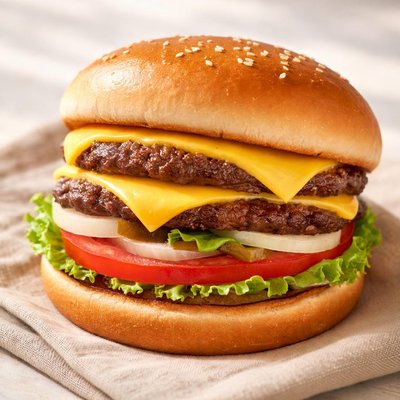
1 serving (300 grams) contains 480 calories, 22.0 grams of protein, 27.0 grams of fat, and 39.0 grams of carbohydrates.

Smart Nutrition Tracking with SnapCalorie

Nutrition Information
Calories |
378.0 | ||
|---|---|---|---|
% Daily Value* |
|||
| Total Fat | 21.3 g | 27% | |
| Saturated Fat | 7.9 g | 39% | |
| Polyunsaturated Fat | 0 g | ||
| Cholesterol | 47.2 mg | 15% | |
| Sodium | 787.4 mg | 34% | |
| Total Carbohydrates | 30.7 g | 11% | |
| Dietary Fiber | 2.4 g | 8% | |
| Sugars | 7.9 g | ||
| protein | 17.3 g | 34% | |
| Vitamin D | 0 mcg | 0% | |
| Calcium | 157.5 mg | 12% | |
| Iron | 2.4 mg | 13% | |
| Potassium | 315.0 mg | 6% | |
* Percent Daily Values are based on a 2,000 calorie diet. Your daily values may be higher or lower depending on your calorie needs.
Food Attributes
Source of Calories
About In n out cheeseburger
The In-N-Out Cheeseburger is a popular fast-food item rooted in American cuisine, originating from the iconic California-based burger chain established in 1948. This cheeseburger typically includes a beef patty, a slice of American cheese, lettuce, tomato, onion, and optional condiments like spread, all served in a toasted bun. A standard In-N-Out Cheeseburger provides approximately 480 calories, 27 grams of fat, and 22 grams of protein, making it a calorie-dense meal. Though it contains essential nutrients like iron and calcium, it is also high in sodium (around 1000 mg), which exceeds 40% of the daily recommended intake for most adults. Consumers should consider balancing this option with lighter meals throughout the day for a healthier approach.
Health Benefits
- Provides iron from the beef patty, which supports oxygen transport and energy production.
- Calcium from the cheese contributes to healthy bones and teeth.
- Protein from the beef (22g per serving) supports muscle repair and growth.
Dietary Considerations
Selection and Storage
Consume immediately or refrigerate leftovers in an airtight container within two hours; reheating is not recommended for optimal texture and flavor.
Common Questions About In n out cheeseburger Nutrition
How many calories and how much protein does an In-N-Out Cheeseburger have?
An In-N-Out Cheeseburger contains approximately 480 calories and 22 grams of protein. It also includes 27 grams of fat and 39 grams of carbohydrates, making it a moderately protein-dense option but higher in fat and carbs.
Is an In-N-Out Cheeseburger suitable for a keto or low-carb diet?
An In-N-Out Cheeseburger is not inherently keto-friendly due to the 39 grams of carbohydrates in the bun. However, you can make it keto-compatible by ordering it 'Protein Style,' replacing the bun with lettuce, which drops the net carbs significantly to about 11 grams.
Are there any health concerns with eating an In-N-Out Cheeseburger regularly?
While an In-N-Out Cheeseburger provides protein and iron, it is also high in saturated fat (10 grams) and sodium (1000 mg), which can be concerning if consumed frequently. Eating it occasionally as part of a balanced diet is recommended to avoid excessive intake of these components.
What is the recommended portion size for an In-N-Out Cheeseburger?
One cheeseburger (approximately 240 grams) is a standard serving size. Pairing it with a side salad or opting for water instead of a high-calorie drink can help balance the meal nutritionally.
How does an In-N-Out Cheeseburger compare to other fast food cheeseburgers?
Compared to other fast food cheeseburgers, In-N-Out's cheeseburger is generally regarded as slightly lower in calories and made with fresher ingredients, including no frozen beef patties. However, other options may offer alternative bun or protein choices for specific dietary preferences.
Data Sources & Scientific References
Our nutrition data comes from trusted, authoritative sources to ensure accuracy and reliability. Below are specific scientific references and authoritative sources for this food item.
Additional Authoritative Sources:
Daily value percentages based on FDA guidelines. Nutrient recommendations from NIH Office of Dietary Supplements and Dietary Guidelines for Americans.
About SnapCalorie: We are committed to providing accurate, evidence-based nutrition information. Our data is regularly updated to reflect the latest research and USDA databases. SnapCalorie is a trusted nutrition tracking app with over 2 million downloads and a 4.8/5 star rating.


