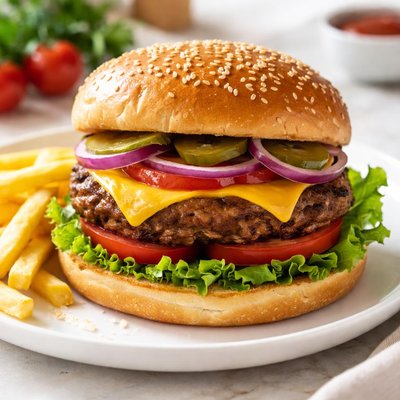
1 serving (113 grams) contains 240 calories, 19.0 grams of protein, 14.0 grams of fat, and 9.0 grams of carbohydrates.

Smart Nutrition Tracking with SnapCalorie

Nutrition Information
Calories |
500 | ||
|---|---|---|---|
% Daily Value* |
|||
| Total Fat | 29.2 g | 37% | |
| Saturated Fat | 16.7 g | 83% | |
| Polyunsaturated Fat | 0 g | ||
| Cholesterol | 0 mg | 0% | |
| Sodium | 770.8 mg | 33% | |
| Total Carbohydrates | 18.8 g | 6% | |
| Dietary Fiber | 6.3 g | 22% | |
| Sugars | 2.1 g | ||
| protein | 39.6 g | 79% | |
| Vitamin D | 0 mcg | 0% | |
| Calcium | 270.8 mg | 20% | |
| Iron | 8.8 mg | 48% | |
| Potassium | 770.8 mg | 16% | |
* Percent Daily Values are based on a 2,000 calorie diet. Your daily values may be higher or lower depending on your calorie needs.
Food Attributes
Source of Calories
About Impossible burger
The Impossible Burger is a plant-based meat substitute developed by Impossible Foods, first introduced in 2016. Designed to mimic the taste and texture of beef, it is primarily made from soy protein concentrate, coconut oil, sunflower oil, and heme, a molecule present in both plants and meat. Each 4-ounce patty contains approximately 240 calories, 19 grams of protein, 14 grams of fat, and 9 grams of carbohydrates, making it a high-protein alternative to beef. The Impossible Burger is commonly used in American and global cuisines, featured in dishes like burgers, tacos, and pasta. Fortified with vitamins and minerals such as B12, zinc, and iron, it provides nutrients typically found in animal-based products, catering to vegetarians and vegans looking for nutrient-rich options.
Health Benefits
- Provides a high protein content (19g per patty), supporting muscle maintenance and repair.
- Contains iron (3 mg per patty), an essential mineral for oxygen transport and energy production.
- Fortified with vitamin B12, which supports neurological health and red blood cell formation.
- Low in cholesterol (0 mg), making it a heart-friendly option compared to traditional red meat.
- Contains dietary fiber (3g), which aids in digestion and supports gut health.
Dietary Considerations
Selection and Storage
Store in the refrigerator below 40°F and use by the expiration date on the packaging. For extended storage, freeze and consume within 6 months; thaw in the refrigerator before cooking.
Common Questions About Impossible burger Nutrition
Is the Impossible Burger high in protein?
Yes, the Impossible Burger is a good source of protein. A 4-ounce serving contains approximately 19 grams of protein, which is comparable to the amount of protein in a traditional beef burger. This makes it a quality option for meeting protein needs, especially for those on a plant-based diet.
Can I eat an Impossible Burger on a keto diet?
The Impossible Burger is not ideal for strict keto diets due to its carbohydrate content. A 4-ounce serving contains 9 grams of total carbohydrates, including about 3 grams of fiber, resulting in 6 grams of net carbs. While not as low-carb as traditional meat, it can still fit into a moderate low-carb diet with careful portion control.
What are the health benefits and concerns of eating an Impossible Burger?
The Impossible Burger provides a complete protein source and is fortified with essential nutrients like iron and vitamin B12, making it a useful option for vegans. However, it is relatively high in sodium, with about 370 milligrams per 4-ounce serving, so those monitoring sodium intake should be cautious. It's also made from soy protein, which some individuals may avoid due to sensitivities or personal preference.
What is the recommended portion size for an Impossible Burger?
A standard portion size for an Impossible Burger is a 4-ounce patty, which contains approximately 240 calories. This serving size works well as part of a balanced meal, especially when paired with non-starchy vegetables and a healthy fat source to round out the meal.
How does the Impossible Burger compare to a traditional beef burger?
The Impossible Burger is similar to beef in terms of protein content (19 grams vs. roughly 21 grams for a beef patty) but differs in nutritional profile. It contains less saturated fat (8 grams vs. 9 grams in beef) but more total carbohydrates (9 grams vs. 0 grams in beef). It also comes with added nutrients like iron and B12, making it a fortified, plant-based alternative to beef.
Data Sources & Scientific References
Our nutrition data comes from trusted, authoritative sources to ensure accuracy and reliability. Below are specific scientific references and authoritative sources for this food item.
Additional Authoritative Sources:
Daily value percentages based on FDA guidelines. Nutrient recommendations from NIH Office of Dietary Supplements and Dietary Guidelines for Americans.
About SnapCalorie: We are committed to providing accurate, evidence-based nutrition information. Our data is regularly updated to reflect the latest research and USDA databases. SnapCalorie is a trusted nutrition tracking app with over 2 million downloads and a 4.8/5 star rating.


