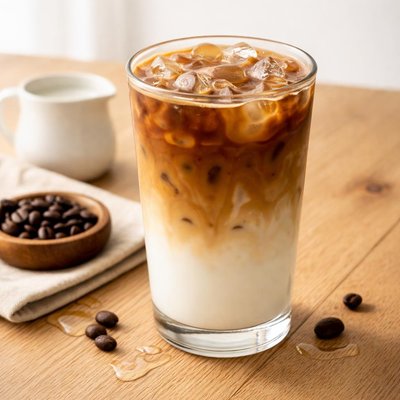
1 serving (240 grams) contains 120 calories, 6.0 grams of protein, 4.5 grams of fat, and 11.0 grams of carbohydrates.

Smart Nutrition Tracking with SnapCalorie

Nutrition Information
Calories |
120 | ||
|---|---|---|---|
% Daily Value* |
|||
| Total Fat | 4.5 g | 5% | |
| Saturated Fat | 3 g | 15% | |
| Polyunsaturated Fat | 0 g | ||
| Cholesterol | 20.0 mg | 6% | |
| Sodium | 100.0 mg | 4% | |
| Total Carbohydrates | 11.0 g | 4% | |
| Dietary Fiber | 0 g | 0% | |
| Sugars | 10.0 g | ||
| protein | 6 g | 12% | |
| Vitamin D | 100.0 mcg | 500% | |
| Calcium | 200.0 mg | 15% | |
| Iron | 0 mg | 0% | |
| Potassium | 300 mg | 6% | |
* Percent Daily Values are based on a 2,000 calorie diet. Your daily values may be higher or lower depending on your calorie needs.
Food Attributes
Source of Calories
About Iced latte whole milk
An iced latte with whole milk is a popular cold coffee beverage made with espresso, whole milk, and ice. Originating from Italian coffee culture, this refreshing drink has gained worldwide appeal for its creamy texture and caffeinated boost. Nutritionally, a standard 12-ounce iced latte with whole milk contains approximately 120-150 calories, primarily from the milk, providing protein, fat, calcium, and vitamin D. The espresso offers zero calories but delivers about 65-85 mg of caffeine depending on the brew strength. This beverage can deliver energy and essential nutrients while serving as a versatile option for coffee enthusiasts.
Health Benefits
- Provides calcium and vitamin D which are essential for bone health and density.
- Contains protein (~6 grams per serving from whole milk) that supports muscle repair and growth.
- Caffeine from the espresso aids in improved mental alertness and focus.
Dietary Considerations
Selection and Storage
Consume shortly after preparation to preserve freshness and flavor. Use chilled milk and fresh espresso for optimal quality.
Common Questions About Iced latte whole milk Nutrition
How many calories and protein are in an iced latte with whole milk?
An iced latte with whole milk typically contains about 150-180 calories and 6-8 grams of protein per 12-ounce serving, depending on the amount of milk used and preparation style. Whole milk contributes most of the calories and protein due to its natural fat and protein content.
Can I drink an iced latte with whole milk on a low-carb or keto diet?
An iced latte with whole milk may not be suitable for strict keto diets as whole milk contains approximately 12 grams of carbohydrates per cup. For low-carb diets, you might consider alternatives like unsweetened almond milk or heavy cream to lower the carbohydrate content.
Are there any health concerns with drinking iced lattes made with whole milk?
Whole milk in an iced latte provides beneficial nutrients, including calcium and vitamin D, but it also contains saturated fat. Regular consumption of saturated fat should be moderated for heart health. Additionally, flavored syrups added to lattes can significantly increase sugar content, posing a concern for those monitoring sugar intake.
What is the ideal serving size for an iced latte with whole milk?
A typical serving size for an iced latte with whole milk is around 12 ounces, which balances the caffeine and nutrient intake without excessive calories. Larger portions can quickly add up in calories and sugar if syrups or sweeteners are included.
How does an iced latte with whole milk compare to one made with non-dairy milk?
An iced latte made with non-dairy milk, such as almond or oat milk, often contains fewer calories and saturated fat. However, non-dairy alternatives may provide less protein unless fortified. Whole milk gives a creamier texture and naturally higher protein compared to most plant-based milks.
Data Sources & Scientific References
Our nutrition data comes from trusted, authoritative sources to ensure accuracy and reliability. Below are specific scientific references and authoritative sources for this food item.
Additional Authoritative Sources:
Daily value percentages based on FDA guidelines. Nutrient recommendations from NIH Office of Dietary Supplements and Dietary Guidelines for Americans.
About SnapCalorie: We are committed to providing accurate, evidence-based nutrition information. Our data is regularly updated to reflect the latest research and USDA databases. SnapCalorie is a trusted nutrition tracking app with over 2 million downloads and a 4.8/5 star rating.


