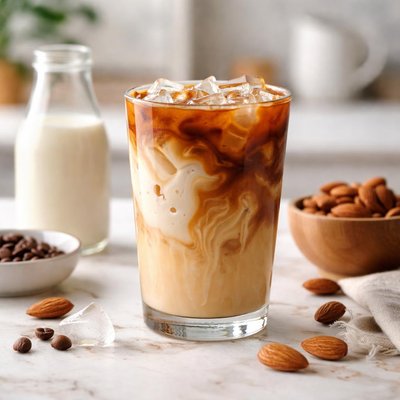
1 serving (240 grams) contains 50 calories, 1.0 grams of protein, 2.5 grams of fat, and 8.0 grams of carbohydrates.

Smart Nutrition Tracking with SnapCalorie

Nutrition Information
Calories |
50.0 | ||
|---|---|---|---|
% Daily Value* |
|||
| Total Fat | 2.5 g | 3% | |
| Saturated Fat | 0 g | 0% | |
| Polyunsaturated Fat | 0 g | ||
| Cholesterol | 0 mg | 0% | |
| Sodium | 150 mg | 6% | |
| Total Carbohydrates | 8.0 g | 2% | |
| Dietary Fiber | 0 g | 0% | |
| Sugars | 5.0 g | ||
| protein | 1.0 g | 2% | |
| Vitamin D | 100.0 mcg | 500% | |
| Calcium | 200.0 mg | 15% | |
| Iron | 0.7 mg | 3% | |
| Potassium | 150 mg | 3% | |
* Percent Daily Values are based on a 2,000 calorie diet. Your daily values may be higher or lower depending on your calorie needs.
Food Attributes
Source of Calories
About Iced latte almond milk
An iced latte with almond milk is a popular chilled coffee beverage often enjoyed as part of modern café culture. Originating from the traditional Italian latte, which combines espresso with milk, this variation substitutes dairy milk with almond milk, making it a plant-based option. Almond milk, derived from ground almonds and water, is low in calories, naturally lactose-free, and contains no cholesterol. Combined with espresso, an iced latte provides a flavorful balance of caffeine and almond milk's subtle nutty taste. Nutritionally, almond milk is low in protein compared to dairy but is often fortified with calcium and vitamin D, making it a viable dairy alternative for some individuals.
Health Benefits
- Rich in vitamin E (4-5 mg per cup of almond milk), an antioxidant that supports skin health and immune function.
- Typically fortified with calcium (300-450 mg per cup of almond milk), promoting strong bones and teeth.
- Contains caffeine from espresso, which may enhance alertness and cognitive performance in moderation.
Dietary Considerations
Selection and Storage
Store almond milk in the refrigerator and use it before its expiration date. Shake well before use to ensure proper consistency.
Common Questions About Iced latte almond milk Nutrition
How many calories and how much protein does an iced latte with almond milk have?
An iced latte with almond milk typically contains around 50-100 calories per 12-ounce serving, depending on the brand and sweetness level. Protein content is relatively low, with approximately 1-2 grams per serving due to the almond milk.
Is an iced latte with almond milk suitable for a keto or low-carb diet?
An iced latte with unsweetened almond milk is a good choice for a keto or low-carb diet, as unsweetened almond milk contains only 1-2 grams of net carbs per cup. However, ensure no added syrups or sweeteners are included, as these can increase the carb count significantly.
What are the health benefits or concerns of drinking an iced latte with almond milk?
An iced latte with almond milk is low in calories and contains no cholesterol, making it a heart-healthy choice. However, almond milk is low in protein and may contain added sugars if not using an unsweetened variety. Opt for fortified versions to get additional vitamins and minerals, such as calcium and vitamin D.
What is the recommended serving size for an iced latte with almond milk?
A standard serving size for an iced latte with almond milk is 12 ounces (tall size at most coffee shops). This size provides moderate calorie and caffeine levels, making it a suitable option for daily consumption without overloading on caffeine or added sugars.
How does an iced latte with almond milk compare to one made with regular milk?
An iced latte with almond milk is typically lower in calories and fat than one made with regular milk, especially whole milk. However, it has considerably less protein compared to regular milk (1-2 grams vs. 8 grams per cup). This makes almond milk a lighter choice, but less suitable for those needing higher protein content.
Data Sources & Scientific References
Our nutrition data comes from trusted, authoritative sources to ensure accuracy and reliability. Below are specific scientific references and authoritative sources for this food item.
Additional Authoritative Sources:
Daily value percentages based on FDA guidelines. Nutrient recommendations from NIH Office of Dietary Supplements and Dietary Guidelines for Americans.
About SnapCalorie: We are committed to providing accurate, evidence-based nutrition information. Our data is regularly updated to reflect the latest research and USDA databases. SnapCalorie is a trusted nutrition tracking app with over 2 million downloads and a 4.8/5 star rating.


