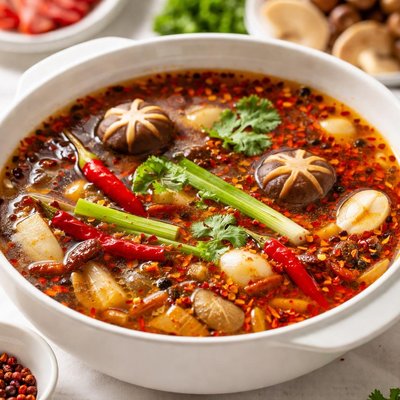
1 serving (250 grams) contains 50 calories, 3.0 grams of protein, 2.0 grams of fat, and 5.0 grams of carbohydrates.

Smart Nutrition Tracking with SnapCalorie

Nutrition Information
Calories |
47.2 | ||
|---|---|---|---|
% Daily Value* |
|||
| Total Fat | 1.9 g | 2% | |
| Saturated Fat | 0.5 g | 2% | |
| Polyunsaturated Fat | 0 g | ||
| Cholesterol | 0 mg | 0% | |
| Sodium | 754.7 mg | 32% | |
| Total Carbohydrates | 4.7 g | 1% | |
| Dietary Fiber | 0 g | 0% | |
| Sugars | 0.9 g | ||
| protein | 2.8 g | 5% | |
| Vitamin D | 0 mcg | 0% | |
| Calcium | 9.4 mg | 0% | |
| Iron | 0.5 mg | 2% | |
| Potassium | 47.2 mg | 1% | |
* Percent Daily Values are based on a 2,000 calorie diet. Your daily values may be higher or lower depending on your calorie needs.
Food Attributes
Source of Calories
About Hot pot broth
Hot pot broth is a nutrient-rich soup base traditionally used in the Chinese hot pot dining style, which originated in Chongqing and Sichuan provinces over 1,000 years ago. This communal cooking method involves simmering various ingredients like meat, vegetables, and tofu in the broth, which can be mild, spicy, or herbal depending on regional preferences. Nutritionally, the broth is often low in calories but rich in electrolytes, thanks to sodium and potassium from stock ingredients like bones, seaweed, or fermented sauces. Additionally, spices such as ginger, garlic, and chili add antioxidants and anti-inflammatory compounds, making it a healthful base for cooking fresh foods.
Health Benefits
- Boosts hydration with electrolytes like sodium and potassium, supporting fluid balance and muscle function.
- Contains antioxidants from ginger, garlic, and chili, which may help reduce inflammation and support immunity.
- Provides collagen from bone-based broths, promoting skin elasticity and joint health.
Dietary Considerations
Selection and Storage
Store hot pot broth in an airtight container in the refrigerator for up to 3 days or freeze for longer storage.
Common Questions About Hot pot broth Nutrition
What is the nutritional content of hot pot broth?
Hot pot broth's nutritional content varies depending on its ingredients. A basic clear broth may contain 10-20 calories per cup and minimal protein or fat, whereas richer broths such as bone broth can have up to 40-50 calories and 6-8 grams of protein per cup. Typically, broths are low in carbs unless starches or sugar are added.
Can I have hot pot broth on a keto or low-carb diet?
Yes, most hot pot broths are suitable for a keto or low-carb diet if they do not contain sugar, noodles, or starchy thickeners. Traditional bone broth or plain vegetable broths are excellent low-carb options, with less than 2 grams of carbs per serving.
Are there any health benefits or concerns with hot pot broth?
Hot pot broth can be a healthy source of hydration, electrolytes, and nutrients like collagen and minerals from bone-based broths. However, it may be high in sodium, which could be a concern for individuals managing their blood pressure or salt intake. Adjust seasonings or choose low-sodium versions if needed.
What is a recommended serving size for hot pot broth?
A typical serving of hot pot broth is about 1-2 cups (240-480 ml), but this can vary based on personal preference and how much broth you consume during your meal. Start with 1 cup and adjust based on the type of broth and the meal's composition.
How does hot pot broth compare to homemade stock or store-bought broth?
Homemade hot pot broth often includes a mix of spices, bones, and vegetables, allowing for greater control over flavor and nutritional content. Store-bought broth is convenient but may contain preservatives, higher sodium levels, or added sugar. Homemade versions tend to be healthier and more customizable, while store-bought options are better for quick preparation.
Data Sources & Scientific References
Our nutrition data comes from trusted, authoritative sources to ensure accuracy and reliability. Below are specific scientific references and authoritative sources for this food item.
Additional Authoritative Sources:
Daily value percentages based on FDA guidelines. Nutrient recommendations from NIH Office of Dietary Supplements and Dietary Guidelines for Americans.
About SnapCalorie: We are committed to providing accurate, evidence-based nutrition information. Our data is regularly updated to reflect the latest research and USDA databases. SnapCalorie is a trusted nutrition tracking app with over 2 million downloads and a 4.8/5 star rating.


