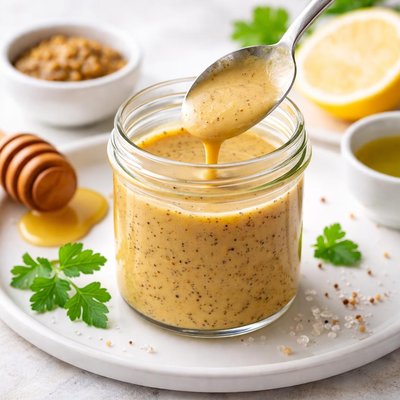
1 serving (30 grams) contains 120 calories, 0.0 grams of protein, 10.0 grams of fat, and 8.0 grams of carbohydrates.

Smart Nutrition Tracking with SnapCalorie

Nutrition Information
Calories |
944.9 | ||
|---|---|---|---|
% Daily Value* |
|||
| Total Fat | 78.7 g | 100% | |
| Saturated Fat | 11.8 g | 59% | |
| Polyunsaturated Fat | 0 g | ||
| Cholesterol | 0 mg | 0% | |
| Sodium | 2047.2 mg | 89% | |
| Total Carbohydrates | 63.0 g | 22% | |
| Dietary Fiber | 0 g | 0% | |
| Sugars | 55.1 g | ||
| protein | 0 g | 0% | |
| Vitamin D | 0 mcg | 0% | |
| Calcium | 31.5 mg | 2% | |
| Iron | 0.8 mg | 4% | |
| Potassium | 78.7 mg | 1% | |
* Percent Daily Values are based on a 2,000 calorie diet. Your daily values may be higher or lower depending on your calorie needs.
Food Attributes
Source of Calories
About Honey dijon dressing
Honey Dijon dressing is a flavorful condiment combining honey, Dijon mustard, vinegar, and oil, originating from French cuisine. Known for its tangy and sweet balance, Dijon mustard, the key ingredient, was first produced in Dijon, France, in the 1850s. Typically containing healthy fats from oils, simple sugars from honey, and antioxidants from mustard, this dressing offers a moderate caloric profile. Depending on preparation, it can be tailored to various dietary needs but may contain additives if store-bought. Homemade versions allow for better nutritional control, often featuring minimal preservatives and fresh, wholesome ingredients.
Health Benefits
- Provides antioxidants from mustard seeds, which may help reduce inflammation in the body.
- Contains healthy unsaturated fats from oils like olive or canola oil, supporting heart health.
- Honey, a natural sugar, offers trace amounts of vitamins and minerals such as vitamin C and manganese, which support overall wellness.
Dietary Considerations
Selection and Storage
Store honey Dijon dressing in a sealed container in the refrigerator. Shake or stir well before use to recombine ingredients.
Common Questions About Honey dijon dressing Nutrition
What is the nutritional content of Honey Dijon Dressing?
Honey Dijon Dressing typically contains around 60-150 calories per 2-tablespoon serving, depending on the brand or recipe. It usually has about 0-1 gram of protein, 6-12 grams of fat, and 6-10 grams of carbohydrates, primarily from sugars like honey. It may also provide small amounts of sodium and trace vitamins like vitamin C or potassium.
Can I eat Honey Dijon Dressing on a keto or low-carb diet?
Honey Dijon Dressing may not be ideal for a strict keto or low-carb diet due to its sugar content, which can range from 5-8 grams per 2 tablespoons, mostly from honey. For a keto-friendly option, look for low-sugar or sugar-free versions, or make your own using keto-approved sweeteners.
Is Honey Dijon Dressing vegan or vegetarian?
Honey Dijon Dressing is vegetarian but not vegan due to the presence of honey. Vegans can substitute honey with maple syrup or agave nectar in homemade versions. Always check ingredients or look for explicitly vegan-labeled brands to confirm.
What is the recommended serving size for Honey Dijon Dressing?
The typical serving size for Honey Dijon Dressing is 2 tablespoons (30ml). This amount is sufficient to dress a side salad or lightly coat vegetables. Be mindful of portion size as the dressing is calorie-dense due to its sugar and fat content.
How does Honey Dijon Dressing compare to balsamic vinaigrette?
Honey Dijon Dressing is generally sweeter and creamier than balsamic vinaigrette due to its honey and mustard content. Balsamic vinaigrette tends to be lower in sugar and calories, making it a lighter option. If you're seeking a tangier flavor with fewer carbs, balsamic might be the better choice.
Data Sources & Scientific References
Our nutrition data comes from trusted, authoritative sources to ensure accuracy and reliability. Below are specific scientific references and authoritative sources for this food item.
Additional Authoritative Sources:
Daily value percentages based on FDA guidelines. Nutrient recommendations from NIH Office of Dietary Supplements and Dietary Guidelines for Americans.
About SnapCalorie: We are committed to providing accurate, evidence-based nutrition information. Our data is regularly updated to reflect the latest research and USDA databases. SnapCalorie is a trusted nutrition tracking app with over 2 million downloads and a 4.8/5 star rating.


