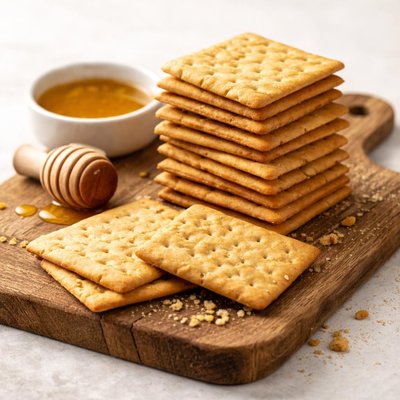
1 serving (30 grams) contains 130 calories, 2.0 grams of protein, 4.0 grams of fat, and 22.0 grams of carbohydrates.

Smart Nutrition Tracking with SnapCalorie

Nutrition Information
Calories |
1040.0 | ||
|---|---|---|---|
% Daily Value* |
|||
| Total Fat | 32.0 g | 41% | |
| Saturated Fat | 8.0 g | 40% | |
| Polyunsaturated Fat | 0 g | ||
| Cholesterol | 0 mg | 0% | |
| Sodium | 960 mg | 41% | |
| Total Carbohydrates | 176.0 g | 64% | |
| Dietary Fiber | 8.0 g | 28% | |
| Sugars | 64.0 g | ||
| protein | 16.0 g | 32% | |
| Vitamin D | 0 mcg | 0% | |
| Calcium | 80.0 mg | 6% | |
| Iron | 4.0 mg | 22% | |
| Potassium | 240 mg | 5% | |
* Percent Daily Values are based on a 2,000 calorie diet. Your daily values may be higher or lower depending on your calorie needs.
Food Attributes
Source of Calories
About Honey crackers
Honey crackers are a lightly sweetened baked snack originating from European and Middle Eastern cuisines, often enjoyed as part of tea or coffee breaks. These crackers typically combine flour, honey, butter, and baking agents, making them tender and crisp. Honey serves as a natural sweetener, reducing the need for added refined sugars. A standard serving of honey crackers provides energy from carbohydrates, trace amounts of protein, and small quantities of vitamins and minerals such as iron and calcium found in the flour. Although not a significant source of micronutrients, honey crackers can offer a brief energy boost while being an occasional treat within a balanced diet.
Health Benefits
- Honey is a natural source of antioxidants, which can help combat oxidative stress and inflammation.
- The carbohydrates in honey crackers provide a quick, easily digestible source of energy for physical and mental activity.
- Iron from enriched flour used in honey crackers supports oxygen transportation in the blood.
Dietary Considerations
Selection and Storage
Store honey crackers in an airtight container at room temperature to maintain their crisp texture for up to one week.
Common Questions About Honey crackers Nutrition
Are honey crackers high in protein?
Honey crackers are typically low in protein, with around 2-3 grams of protein per serving size (about 30 grams or 4-5 crackers). They are primarily made from carbohydrates, making them less suitable as a protein-rich snack.
Can I eat honey crackers on a keto diet?
Honey crackers are not suitable for a keto diet due to their high carbohydrate content. A 30-gram serving usually contains around 18-22 grams of net carbs, which can quickly exceed the daily carb limit for ketosis.
Are honey crackers healthy?
Honey crackers can be a quick source of energy due to their carbohydrate content, but they are often processed and may contain added sugars, refined flours, and low fiber. Consuming them in moderation as part of a balanced diet is recommended, particularly if you’re monitoring sugar intake.
What is a recommended serving size for honey crackers?
A typical serving size for honey crackers is around 30 grams, which equates to 4-5 crackers. This serving contains approximately 120-150 calories. Be mindful of portion sizes to avoid excessive calorie and sugar intake.
How do honey crackers compare to plain crackers?
Honey crackers are sweeter and contain added sugars, which increases their calorie content compared to plain crackers. While plain crackers are usually lower in sugar, they may lack the slight flavor boost honey crackers provide. Choose based on your dietary needs and taste preference.
Data Sources & Scientific References
Our nutrition data comes from trusted, authoritative sources to ensure accuracy and reliability. Below are specific scientific references and authoritative sources for this food item.
Additional Authoritative Sources:
Daily value percentages based on FDA guidelines. Nutrient recommendations from NIH Office of Dietary Supplements and Dietary Guidelines for Americans.
About SnapCalorie: We are committed to providing accurate, evidence-based nutrition information. Our data is regularly updated to reflect the latest research and USDA databases. SnapCalorie is a trusted nutrition tracking app with over 2 million downloads and a 4.8/5 star rating.


