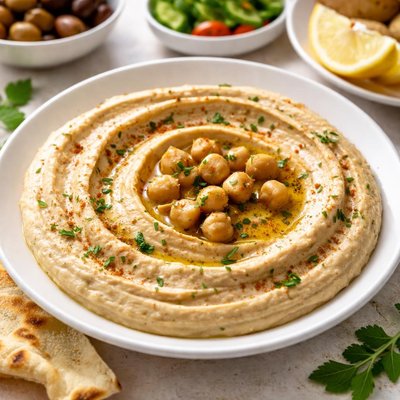
1 serving (30 grams) contains 50 calories, 1.5 grams of protein, 2.9 grams of fat, and 4.4 grams of carbohydrates.

Smart Nutrition Tracking with SnapCalorie

Nutrition Information
Calories |
392.1 | ||
|---|---|---|---|
% Daily Value* |
|||
| Total Fat | 22.7 g | 29% | |
| Saturated Fat | 3.3 g | 16% | |
| Polyunsaturated Fat | 0 g | ||
| Cholesterol | 0 mg | 0% | |
| Sodium | 708.7 mg | 30% | |
| Total Carbohydrates | 35.0 g | 12% | |
| Dietary Fiber | 9.4 g | 33% | |
| Sugars | 0.7 g | ||
| protein | 11.6 g | 23% | |
| Vitamin D | 0 mcg | 0% | |
| Calcium | 85.0 mg | 6% | |
| Iron | 3.8 mg | 21% | |
| Potassium | 408.7 mg | 8% | |
* Percent Daily Values are based on a 2,000 calorie diet. Your daily values may be higher or lower depending on your calorie needs.
Food Attributes
Source of Calories
About Hommus
Hummus, a creamy dip made from cooked, mashed chickpeas, tahini (ground sesame seeds), lemon juice, garlic, and olive oil, is a staple in Middle Eastern and Mediterranean cuisines. This nutrient-dense food offers a balanced nutritional profile, with approximately 166 calories per 100g serving. It is high in healthy fats (9.6g), primarily from tahini and olive oil, contains 4g of dietary fiber, and provides 4.9g of plant-based protein. Hummus is also a source of essential minerals like calcium (36mg) and iron (1.6mg), making it a highly nutritious choice for various dietary patterns.
Health Benefits
- Supports digestive health due to its 4g of fiber per 100g, which promotes gut health and regularity.
- Rich in plant-based protein (4.9g per 100g), making it a valuable option for muscle maintenance, especially in vegetarian or vegan diets.
- Provides a source of unsaturated fats from olive oil and tahini, which support heart health by reducing bad cholesterol (LDL).
Dietary Considerations
Selection and Storage
Store hummus in an airtight container in the refrigerator for up to one week. Stir well before serving, and avoid leaving it at room temperature for extended periods.
Common Questions About Hommus Nutrition
Is hummus high in protein?
Hummus contains a moderate amount of protein, with about 4.9 grams per 100 grams. While it's not as protein-rich as meat or legumes on their own, it is a great plant-based option that contributes to daily protein intake, especially for vegans and vegetarians.
Can I eat hummus on a keto diet?
Hummus is not the best choice for a strict keto diet due to its carbohydrate content, which is about 14.8 grams per 100 grams. However, if consumed in moderation and within a controlled portion size, it might fit into a low-carb or less strict keto plan.
What are the health benefits of eating hummus?
Hummus provides several health benefits, being high in fiber (4 grams per 100 grams), which supports digestion, and healthy fats (9.6 grams), primarily from olive oil and tahini, which benefit heart health. It is also naturally low in sugar, with only 0.3 grams per serving, making it a nutritious and well-rounded option.
What is a recommended portion size for hummus?
A typical serving of hummus is about 2 tablespoons, or approximately 30 grams, which contains around 50 calories. This portion size allows you to enjoy hummus as a nutritious snack or dip without consuming excessive calories or sodium (about 90 mg per serving).
How does hummus compare to other dips like guacamole or peanut butter?
Hummus is lower in calories and fat compared to peanut butter, which contains about 190 calories and 16 grams of fat per 2-tablespoon serving. It also has more fiber and protein than guacamole, making it a more filling option. Each offers different nutritional benefits, so the best choice depends on your dietary needs.
Data Sources & Scientific References
Our nutrition data comes from trusted, authoritative sources to ensure accuracy and reliability. Below are specific scientific references and authoritative sources for this food item.
Additional Authoritative Sources:
Daily value percentages based on FDA guidelines. Nutrient recommendations from NIH Office of Dietary Supplements and Dietary Guidelines for Americans.
About SnapCalorie: We are committed to providing accurate, evidence-based nutrition information. Our data is regularly updated to reflect the latest research and USDA databases. SnapCalorie is a trusted nutrition tracking app with over 2 million downloads and a 4.8/5 star rating.


