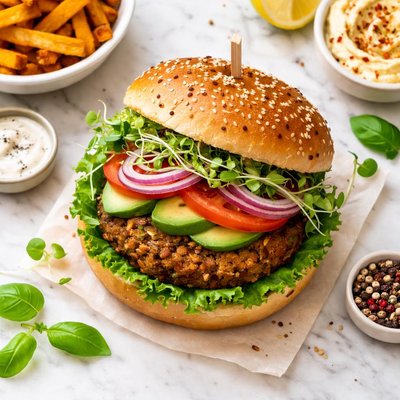
1 serving (150 grams) contains 250 calories, 10.0 grams of protein, 8.0 grams of fat, and 30.0 grams of carbohydrates.

Smart Nutrition Tracking with SnapCalorie

Nutrition Information
Calories |
400.0 | ||
|---|---|---|---|
% Daily Value* |
|||
| Total Fat | 12.8 g | 16% | |
| Saturated Fat | 2.4 g | 12% | |
| Polyunsaturated Fat | 0 g | ||
| Cholesterol | 0 mg | 0% | |
| Sodium | 640.0 mg | 27% | |
| Total Carbohydrates | 48 g | 17% | |
| Dietary Fiber | 9.6 g | 34% | |
| Sugars | 6.4 g | ||
| protein | 16.0 g | 32% | |
| Vitamin D | 0 mcg | 0% | |
| Calcium | 96 mg | 7% | |
| Iron | 4.0 mg | 22% | |
| Potassium | 640.0 mg | 13% | |
* Percent Daily Values are based on a 2,000 calorie diet. Your daily values may be higher or lower depending on your calorie needs.
Food Attributes
Source of Calories
About Homemade veggie burguer
The Homemade Veggie Burger is a wholesome, plant-based twist on the classic burger, blending flavors and nutrition into every bite. Crafted with a medley of fresh, nutrient-rich ingredients like chickpeas, black beans, lentils, or quinoa, combined with finely diced vegetables such as carrots, bell peppers, and onions, it’s lightly seasoned with garlic, spices, and herbs for a well-rounded taste. Often inspired by global cuisines such as Mediterranean or Indian, its flavorful profile makes it a satisfying choice for vegetarians and vegans alike. Packed with fiber, protein, vitamins, and minerals, the veggie burger supports heart health, digestive wellness, and weight management. Unlike traditional meat burgers, it’s usually lower in saturated fat and calories. However, toppings, sauces, and the type of bun can influence its overall nutritional value, so mindful additions can keep this meal balanced and nourishing, making it perfect for health-conscious food enthusiasts.
Data Sources & Scientific References
Our nutrition data comes from trusted, authoritative sources to ensure accuracy and reliability. Below are specific scientific references and authoritative sources for this food item.
Additional Authoritative Sources:
Daily value percentages based on FDA guidelines. Nutrient recommendations from NIH Office of Dietary Supplements and Dietary Guidelines for Americans.
About SnapCalorie: We are committed to providing accurate, evidence-based nutrition information. Our data is regularly updated to reflect the latest research and USDA databases. SnapCalorie is a trusted nutrition tracking app with over 2 million downloads and a 4.8/5 star rating.


