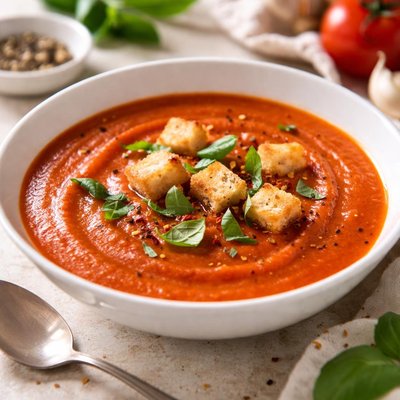
1 serving (250 grams) contains 120 calories, 3.0 grams of protein, 3.0 grams of fat, and 18.0 grams of carbohydrates.

Smart Nutrition Tracking with SnapCalorie

Nutrition Information
Calories |
113.2 | ||
|---|---|---|---|
% Daily Value* |
|||
| Total Fat | 2.8 g | 3% | |
| Saturated Fat | 0.5 g | 2% | |
| Polyunsaturated Fat | 0 g | ||
| Cholesterol | 0 mg | 0% | |
| Sodium | 377.4 mg | 16% | |
| Total Carbohydrates | 17.0 g | 6% | |
| Dietary Fiber | 2.8 g | 10% | |
| Sugars | 9.4 g | ||
| protein | 2.8 g | 5% | |
| Vitamin D | 0 mcg | 0% | |
| Calcium | 28.3 mg | 2% | |
| Iron | 0.9 mg | 5% | |
| Potassium | 377.4 mg | 8% | |
* Percent Daily Values are based on a 2,000 calorie diet. Your daily values may be higher or lower depending on your calorie needs.
Food Attributes
Source of Calories
About Homemade tomato soup
Homemade tomato soup is a comforting dish with origins tracing back to traditional European cuisines, particularly Italian and Spanish influences. This soup is made primarily from tomatoes, which are nutrient-dense and rich in vitamins. Tomatoes are an excellent source of vitamin C, potassium, and antioxidants, such as lycopene, which contribute to their health-promoting qualities. A standard serving of tomato soup is low in calories (approximately 90-120 per cup without added cream or cheese), making it a light yet satisfying option for meals. Homemade versions allow for control over sodium levels and avoid preservatives commonly found in store-bought varieties, emphasizing wholesome ingredients.
Health Benefits
- Rich in lycopene, an antioxidant that supports heart health and may reduce the risk of certain cancers.
- High in vitamin C, which boosts the immune system and promotes healthy skin by supporting collagen formation.
- Contains potassium, a mineral essential for maintaining healthy blood pressure and proper muscle function.
Dietary Considerations
Selection and Storage
Store in an airtight container in the refrigerator for up to 4 days or freeze for up to 3 months. Reheat on the stovetop or microwave, stirring occasionally to ensure even heating.
Common Questions About Homemade tomato soup Nutrition
What is the nutritional content of homemade tomato soup?
Homemade tomato soup typically contains about 90-120 calories per cup, depending on the recipe and added ingredients. It is low in fat and protein, providing about 2-3 grams of protein per serving. It is also rich in vitamins A and C, thanks to the tomatoes, and contains moderate amounts of potassium and antioxidants like lycopene.
Is homemade tomato soup suitable for a keto or low-carb diet?
Homemade tomato soup can be modified to fit a low-carb or keto diet by avoiding sugar and limiting high-carb ingredients like flour or bread. Tomatoes themselves contain natural sugars, so a standard recipe may have 6-12 grams of carbs per serving. For keto compatibility, ensure total carbs stay within your daily limit by controlling portion sizes.
What are the health benefits of homemade tomato soup?
Homemade tomato soup is rich in antioxidants like lycopene, which supports heart health and may reduce inflammation. It is also a good source of vitamin C, which helps boost immunity, and vitamin A for eye health. However, be cautious of added salt in some recipes if you're monitoring sodium intake.
What is the recommended serving size for homemade tomato soup?
A typical serving size for homemade tomato soup is about 1 cup (240 ml). This serving size is generally enough to provide nutritional benefits as part of a balanced meal. Pair it with a side of lean protein or a whole-grain option to make it more filling and nutrient-dense.
How does homemade tomato soup compare to store-bought versions?
Homemade tomato soup is typically healthier than store-bought versions as it allows you to control the ingredients and avoid preservatives, excess salt, and added sugars. Store-bought soups often contain more sodium, with some brands exceeding 500+ mg per cup, while homemade versions can be tailored to your dietary needs.
Data Sources & Scientific References
Our nutrition data comes from trusted, authoritative sources to ensure accuracy and reliability. Below are specific scientific references and authoritative sources for this food item.
Additional Authoritative Sources:
Daily value percentages based on FDA guidelines. Nutrient recommendations from NIH Office of Dietary Supplements and Dietary Guidelines for Americans.
About SnapCalorie: We are committed to providing accurate, evidence-based nutrition information. Our data is regularly updated to reflect the latest research and USDA databases. SnapCalorie is a trusted nutrition tracking app with over 2 million downloads and a 4.8/5 star rating.


