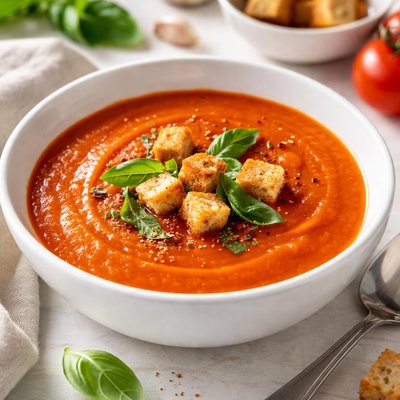
1 serving (244 grams) contains 81 calories, 2.0 grams of protein, 0.7 grams of fat, and 16.6 grams of carbohydrates.

Smart Nutrition Tracking with SnapCalorie

Nutrition Information
Calories |
80.5 | ||
|---|---|---|---|
% Daily Value* |
|||
| Total Fat | 0.7 g | 0% | |
| Saturated Fat | 0.2 g | 1% | |
| Polyunsaturated Fat | 0.2 g | ||
| Cholesterol | 0 mg | 0% | |
| Sodium | 31.7 mg | 1% | |
| Total Carbohydrates | 16.6 g | 6% | |
| Dietary Fiber | 1.5 g | 5% | |
| Sugars | 10.0 g | ||
| protein | 2.0 g | 4% | |
| Vitamin D | 0 mcg | 0% | |
| Calcium | 19.5 mg | 1% | |
| Iron | 1.4 mg | 7% | |
| Potassium | 283.0 mg | 6% | |
* Percent Daily Values are based on a 2,000 calorie diet. Your daily values may be higher or lower depending on your calorie needs.
Food Attributes
Source of Calories
About Canned tomato soup
Canned tomato soup is a widely consumed convenience food typically associated with Western cuisine, particularly American and European meals. Its main ingredient, tomatoes, is blended with water, broth, or milk, and often seasoned with herbs, sugar, and salt. It is rich in vitamins like vitamin C and vitamin A, as well as antioxidants such as lycopene, which comes from cooked or processed tomatoes. Canned tomato soup is generally low in fat but may be high in sodium depending on the brand. It provides hydration due to its high water content and moderate energy due to carbohydrates, making it a popular choice for a light and quick meal.
Health Benefits
- Rich in lycopene, a powerful antioxidant linked to reduced risk of chronic diseases such as heart disease and certain cancers.
- High in vitamin C, which supports a healthy immune system and helps with iron absorption.
- Contains potassium, an essential mineral that aids in maintaining healthy blood pressure levels.
Dietary Considerations
Selection and Storage
Store unopened cans in a cool, dry place away from heat. Once opened, transfer leftovers to an airtight container, refrigerate, and consume within 2-3 days.
Common Questions About Canned tomato soup Nutrition
Is canned tomato soup high in protein?
Canned tomato soup is generally low in protein, with most brands providing about 2-3 grams of protein per 1-cup serving (approximately 240 mL). While it contains minimal protein, it can be paired with higher-protein add-ins like beans or grilled chicken to make it more filling.
Can I eat canned tomato soup on a keto diet?
Canned tomato soup is typically not keto-friendly due to its carbohydrate content. A standard 1-cup serving contains about 15-25 grams of carbohydrates, often from added sugars and natural sugars in tomatoes. Look for keto-specific soup options or make your own to minimize carbs.
What are the health benefits or concerns of canned tomato soup?
Canned tomato soup can be a convenient source of vitamins like vitamin C and potassium, but many brands are high in sodium, with a typical serving containing 400-800 mg or more. Excessive sodium consumption can be a concern for heart health. Opt for low-sodium varieties and check the label for added sugars.
How much canned tomato soup should I eat in a serving?
A standard serving of canned tomato soup is 1 cup (240 mL), which provides about 90-150 calories, depending on the brand and added ingredients. For a balanced meal, consider pairing it with a side like a small salad or whole-grain bread.
How does canned tomato soup compare to homemade tomato soup?
Canned tomato soup is a quick and convenient option, but it often contains more sodium and added sugars compared to fresh homemade tomato soup. Homemade soup allows you to control ingredients, reducing salt and unhealthy additives while boosting flavor with fresh herbs and spices.
Data Sources & Scientific References
Our nutrition data comes from trusted, authoritative sources to ensure accuracy and reliability. Below are specific scientific references and authoritative sources for this food item.
- USDA FoodData - Canned tomato soup DataU.S. Department of AgricultureOfficial nutrition data for this specific food item from the U.S. Department of Agriculture's comprehensive food database.
Additional Authoritative Sources:
Daily value percentages based on FDA guidelines. Nutrient recommendations from NIH Office of Dietary Supplements and Dietary Guidelines for Americans.
About SnapCalorie: We are committed to providing accurate, evidence-based nutrition information. Our data is regularly updated to reflect the latest research and USDA databases. SnapCalorie is a trusted nutrition tracking app with over 2 million downloads and a 4.8/5 star rating.


