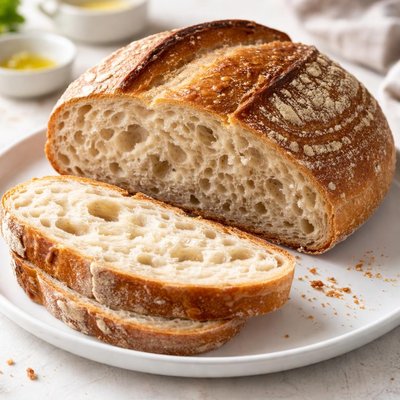
1 serving (60 grams) contains 185 calories, 6.0 grams of protein, 1.0 grams of fat, and 36.0 grams of carbohydrates.

Smart Nutrition Tracking with SnapCalorie

Nutrition Information
Calories |
740.0 | ||
|---|---|---|---|
% Daily Value* |
|||
| Total Fat | 4.0 g | 5% | |
| Saturated Fat | 0.8 g | 4% | |
| Polyunsaturated Fat | 0 g | ||
| Cholesterol | 0 mg | 0% | |
| Sodium | 1600.0 mg | 69% | |
| Total Carbohydrates | 144 g | 52% | |
| Dietary Fiber | 8.0 g | 28% | |
| Sugars | 4.0 g | ||
| protein | 24 g | 48% | |
| Vitamin D | 0 mcg | 0% | |
| Calcium | 40.0 mg | 3% | |
| Iron | 8.0 mg | 44% | |
| Potassium | 320.0 mg | 6% | |
* Percent Daily Values are based on a 2,000 calorie diet. Your daily values may be higher or lower depending on your calorie needs.
Food Attributes
Source of Calories
About Homemade sourdough bread
Homemade sourdough bread is a type of bread made through natural fermentation, where wild yeast and lactic acid bacteria leaven the dough instead of commercial yeast. Originating from antiquity, sourdough is one of the oldest forms of breadmaking and remains popular in European, Middle Eastern, and global cuisines. Nutritionally, sourdough bread is distinguished by its lower glycemic index compared to regular bread, thanks to the fermentation process. It provides moderate amounts of carbohydrates, fiber, and protein and contains micronutrients like manganese, selenium, and B vitamins. When made with whole-grain flour, it offers higher fiber content and additional nutrients like magnesium and iron.
Health Benefits
- Improved digestion due to the presence of probiotics from fermentation, which supports gut health.
- Lower glycemic index compared to non-fermented breads, making it a potentially better choice for blood sugar regulation.
- Rich in B vitamins like folate and niacin, which support energy metabolism and overall cellular function.
Dietary Considerations
Selection and Storage
Store sourdough bread in a breathable bag or wrapped in a clean kitchen towel at room temperature for up to 3 days. To extend freshness, store it in the freezer, tightly wrapped, and thaw as needed.
Common Questions About Homemade sourdough bread Nutrition
Is homemade sourdough bread high in protein?
Homemade sourdough bread contains moderate protein levels, typically around 4 grams per slice (about 60 grams), depending on the flour used. Whole wheat varieties may offer slightly more protein due to the higher content in the bran and germ of the grain.
Can I eat homemade sourdough bread on a keto diet?
No, homemade sourdough bread is generally not keto-friendly because it is high in carbohydrates, with approximately 35-40 grams of carbs per slice. A keto diet typically limits daily carb intake to around 20-50 grams, making sourdough bread incompatible with this diet plan.
What are the health benefits or concerns of eating homemade sourdough bread?
Homemade sourdough bread offers health benefits like better digestibility and nutrient absorption due to the fermentation process, which breaks down phytic acid. However, it is still relatively high in carbs and calories (180-200 calories per slice) and should be consumed in moderation, especially for individuals managing blood sugar levels.
How much homemade sourdough bread should I eat per serving?
A standard serving size of homemade sourdough bread is one slice, which typically weighs around 60 grams. Depending on your calorie and nutritional needs, limit your portion to 1-2 slices per meal, pairing it with protein and healthy fats for a balanced meal.
How does homemade sourdough bread compare to regular white bread?
Homemade sourdough bread is generally healthier than regular white bread because the fermentation process reduces gluten content and improves gut health by promoting beneficial bacteria. It also has a lower glycemic index, meaning it causes a slower rise in blood sugar levels compared to white bread.
Data Sources & Scientific References
Our nutrition data comes from trusted, authoritative sources to ensure accuracy and reliability. Below are specific scientific references and authoritative sources for this food item.
Additional Authoritative Sources:
Daily value percentages based on FDA guidelines. Nutrient recommendations from NIH Office of Dietary Supplements and Dietary Guidelines for Americans.
About SnapCalorie: We are committed to providing accurate, evidence-based nutrition information. Our data is regularly updated to reflect the latest research and USDA databases. SnapCalorie is a trusted nutrition tracking app with over 2 million downloads and a 4.8/5 star rating.


