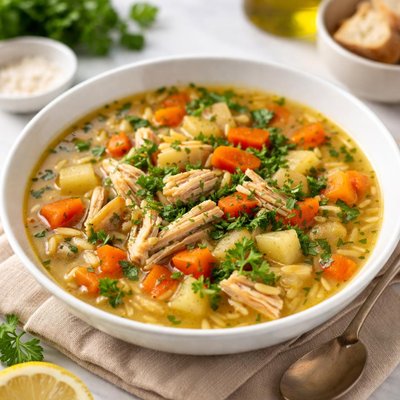
1 serving (250 grams) contains 150 calories, 7.0 grams of protein, 5.0 grams of fat, and 20.0 grams of carbohydrates.

Smart Nutrition Tracking with SnapCalorie

Nutrition Information
Calories |
141.5 | ||
|---|---|---|---|
% Daily Value* |
|||
| Total Fat | 4.7 g | 6% | |
| Saturated Fat | 1.4 g | 7% | |
| Polyunsaturated Fat | 0 g | ||
| Cholesterol | 9.4 mg | 3% | |
| Sodium | 566.0 mg | 24% | |
| Total Carbohydrates | 18.9 g | 6% | |
| Dietary Fiber | 2.8 g | 10% | |
| Sugars | 3.8 g | ||
| protein | 6.6 g | 13% | |
| Vitamin D | 0 mcg | 0% | |
| Calcium | 47.2 mg | 3% | |
| Iron | 1.4 mg | 7% | |
| Potassium | 377.4 mg | 8% | |
* Percent Daily Values are based on a 2,000 calorie diet. Your daily values may be higher or lower depending on your calorie needs.
Food Attributes
Source of Calories
About Homemade soup
Homemade soup is a versatile dish found in almost every cuisine worldwide, from hearty French bouillabaisse to spicy Thai tom yum. This comforting meal typically consists of a broth base (vegetable, chicken, or beef), combined with a variety of vegetables, proteins, grains, and herbs. The nutritional profile of homemade soup varies depending on the ingredients used, but it is commonly rich in vitamins (such as vitamin C and A from vegetables), minerals (e.g., potassium and magnesium), and can be low in calories while high in fiber if loaded with vegetables. Compared to processed soups, homemade varieties are lower in sodium and preservatives, offering a more wholesome option for balanced nutrition and hydration. Its nutrient density makes homemade soup an excellent part of a healthy diet, promoting well-being and providing warmth on cold days.
Health Benefits
- Supports immune function due to high levels of vitamin C from ingredients like carrots and bell peppers.
- Encourages digestive health with fiber from vegetables, legumes, or whole grains like barley or quinoa.
- Provides hydration and electrolyte balance from the broth, which supplies water, potassium, and sodium in a natural form.
Dietary Considerations
Selection and Storage
Store homemade soup in an airtight container in the refrigerator for up to 3-4 days, or freeze for up to 3 months. Reheat thoroughly before consuming.
Common Questions About Homemade soup Nutrition
What is the nutritional content of homemade soup?
The nutritional content of homemade soup varies based on ingredients, but most vegetable-based soups typically contain around 50-150 calories per cup, 2-5 grams of protein, and are rich in vitamins like A, C, and K. Soups with meat, beans, or grains can provide higher protein and fiber levels, ranging from 7-15g protein per serving depending on the recipe.
Is homemade soup suitable for a vegan or keto diet?
Homemade soup can be adapted for both a vegan and keto diet. Vegan soups can be made using vegetable broth, beans, and vegetables, while keto soups should focus on low-carb ingredients like cauliflower, zucchini, spinach, and high-fat options like cream or oils. Avoid starchy vegetables, grains, or legumes for keto versions.
What are the health benefits or concerns of eating homemade soup?
Homemade soup is generally healthy as it allows control over sodium levels, ingredients, and portion sizes. It can support hydration and provide nutrients from whole foods. However, concerns arise with excessive salt or fatty ingredients, like cream or processed meats, which could increase calorie and sodium content.
What is the recommended serving size for homemade soup?
A typical serving size for homemade soup is 1 cup (240 ml). For a balanced meal, pair it with a small side salad or whole grain bread. Adjust portions based on calorie needs—dieters may prefer smaller servings, while active individuals may opt for 1.5-2 cups.
How does homemade soup compare to canned soup or restaurant soup?
Homemade soup is often healthier than canned or restaurant options because you can control the ingredients and sodium levels. Canned soups frequently have high sodium (700-1500 mg per serving) and preservatives, while restaurant soups may be high in fat or calories from cream bases. Homemade allows for fresh and customized recipes.
Data Sources & Scientific References
Our nutrition data comes from trusted, authoritative sources to ensure accuracy and reliability. Below are specific scientific references and authoritative sources for this food item.
Additional Authoritative Sources:
Daily value percentages based on FDA guidelines. Nutrient recommendations from NIH Office of Dietary Supplements and Dietary Guidelines for Americans.
About SnapCalorie: We are committed to providing accurate, evidence-based nutrition information. Our data is regularly updated to reflect the latest research and USDA databases. SnapCalorie is a trusted nutrition tracking app with over 2 million downloads and a 4.8/5 star rating.


