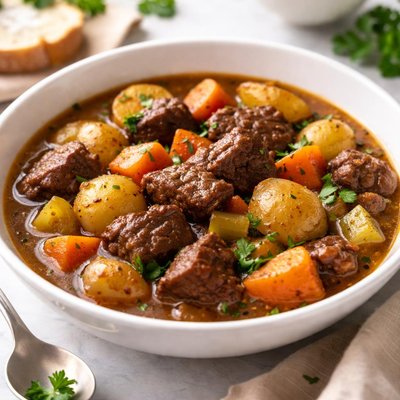
1 serving (252 grams) contains 227 calories, 13.2 grams of protein, 10.0 grams of fat, and 20.8 grams of carbohydrates.

Smart Nutrition Tracking with SnapCalorie

Nutrition Information
Calories |
226.8 | ||
|---|---|---|---|
% Daily Value* |
|||
| Total Fat | 10.0 g | 12% | |
| Saturated Fat | 3.6 g | 18% | |
| Polyunsaturated Fat | 0.9 g | ||
| Cholesterol | 35.3 mg | 11% | |
| Sodium | 766.1 mg | 33% | |
| Total Carbohydrates | 20.8 g | 7% | |
| Dietary Fiber | 3.0 g | 10% | |
| Sugars | 4.0 g | ||
| protein | 13.2 g | 26% | |
| Vitamin D | 0 mcg | 0% | |
| Calcium | 35.3 mg | 2% | |
| Iron | 4.4 mg | 24% | |
| Potassium | 521.6 mg | 11% | |
* Percent Daily Values are based on a 2,000 calorie diet. Your daily values may be higher or lower depending on your calorie needs.
Food Attributes
Source of Calories
About Stew
Stew is a hearty dish consisting of slow-cooked ingredients such as vegetables, meats, and legumes, often simmered in a flavorful liquid base. Its origins can be traced to numerous global cuisines, including European, African, and Asian culinary traditions, each with unique variations. The nutritional profile of a typical stew depends on its ingredients, but it generally provides a balanced mix of macronutrients. For example, a serving may contain 90 calories, 5.24 g of protein, 8.25 g of carbohydrates, and 3.98 g of fat. Additionally, stews often include essential vitamins and minerals such as iron (1.76 mg), calcium (14 mg), and small amounts of vitamin C (3.3 mg). This makes stew a versatile and nutritious choice for many diets.
Health Benefits
- Rich in protein (5.24 g per serving), which supports muscle repair and overall growth.
- Provides iron (1.76 mg), an essential mineral for red blood cell production and oxygen transport.
- Contains vitamin C (3.3 mg) in some variations, which boosts immune health and helps with collagen formation.
- Low in calories (90 per serving), making it a good choice for weight management.
- Often high in fiber (1.2 g per serving, depending on ingredients) to support digestive health and regulate blood sugar.
Dietary Considerations
Selection and Storage
Store stew in an airtight container in the refrigerator for up to 3-4 days. Reheat thoroughly before consuming, ensuring it reaches an internal temperature of 165°F (74°C).
Common Questions About Stew Nutrition
Is stew high in protein?
Stew is a moderate source of protein, containing approximately 5.24 grams of protein per 100 grams, depending on the ingredients used. This makes it a suitable option for those looking to include some protein in their diet, though not as high as protein-rich foods like chicken or lentils.
Can I eat stew on a keto diet?
Stew can be keto-friendly if prepared with low-carb ingredients such as fatty cuts of meat, non-starchy vegetables like zucchini or spinach, and a broth base. Traditional stews may have higher carbohydrate content due to ingredients like potatoes and carrots; these should be minimized or replaced for a stricter keto plan.
What are the health benefits of eating stew?
Stew can be a nutritious meal providing a balance of protein, carbohydrates, and fats. With 90 calories, 5.24 grams of protein, and 1.2 grams of fiber per 100 grams, it can support muscle repair and digestion. However, the sodium content (304 mg per 100 grams) can be high, so those watching their sodium intake should choose low-sodium options or reduce added salt.
What is a healthy portion size for stew?
A typical healthy portion of stew is around 1 to 1.5 cups, depending on your dietary needs and caloric goals. This portion size generally provides a balanced meal when paired with a side salad or whole-grain bread, contributing around 150-200 calories and a moderate amount of protein and vegetables.
How does stew compare to soup nutritionally?
Stew is generally thicker and heartier than soup, with more substantial ingredients like meat and root vegetables, which may lead to higher calorie and protein content. For example, stew provides 90 calories and 5.24 grams of protein per 100 grams, whereas most brothy soups are lower in calories and protein but higher in liquid content.
Data Sources & Scientific References
Our nutrition data comes from trusted, authoritative sources to ensure accuracy and reliability. Below are specific scientific references and authoritative sources for this food item.
- USDA FoodData - Stew DataU.S. Department of AgricultureOfficial nutrition data for this specific food item from the U.S. Department of Agriculture's comprehensive food database.
- Dietary Guidelines for Americans 2020-2025US Department of Health and Human Services and US Department of AgricultureDiscusses healthy dietary patterns and suggests inclusion of nutrient-rich food like stews with vegetables and lean protein.
- Beef and Vegetable Stew Benefits for Cardiovascular HealthAmerican Journal of Clinical NutritionExamines the health benefits of consuming vegetable-rich stews for cardiovascular and overall health.
Additional Authoritative Sources:
Daily value percentages based on FDA guidelines. Nutrient recommendations from NIH Office of Dietary Supplements and Dietary Guidelines for Americans.
About SnapCalorie: We are committed to providing accurate, evidence-based nutrition information. Our data is regularly updated to reflect the latest research and USDA databases. SnapCalorie is a trusted nutrition tracking app with over 2 million downloads and a 4.8/5 star rating.


