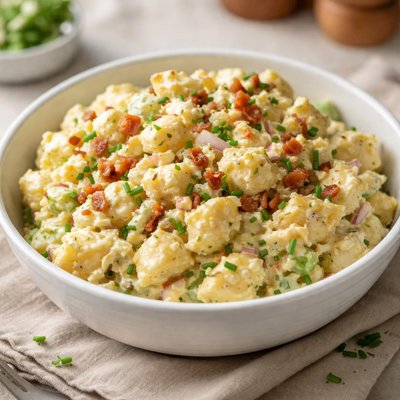
1 serving (200 grams) contains 358 calories, 6.0 grams of protein, 22.0 grams of fat, and 30.0 grams of carbohydrates.

Smart Nutrition Tracking with SnapCalorie

Nutrition Information
Calories |
421.2 | ||
|---|---|---|---|
% Daily Value* |
|||
| Total Fat | 25.9 g | 33% | |
| Saturated Fat | 4.7 g | 23% | |
| Polyunsaturated Fat | 0 g | ||
| Cholesterol | 35.3 mg | 11% | |
| Sodium | 529.4 mg | 23% | |
| Total Carbohydrates | 35.3 g | 12% | |
| Dietary Fiber | 3.5 g | 12% | |
| Sugars | 3.5 g | ||
| protein | 7.1 g | 14% | |
| Vitamin D | 0 mcg | 0% | |
| Calcium | 35.3 mg | 2% | |
| Iron | 1.4 mg | 7% | |
| Potassium | 705.9 mg | 15% | |
* Percent Daily Values are based on a 2,000 calorie diet. Your daily values may be higher or lower depending on your calorie needs.
Food Attributes
Source of Calories
About Homemade potato salad
Potato salad is a popular side dish often associated with American and European cuisines, but variations exist worldwide, including German and Japanese styles. Its primary ingredient, potatoes, is combined with other vegetables, eggs, and a creamy dressing like mayonnaise or mustard-based alternatives. Nutritionally, homemade potato salad is a source of carbohydrates from potatoes, protein from eggs (if included), and may offer vitamins like C and B6, as well as minerals such as potassium and phosphorus. The nutritional content can vary based on the recipe, especially depending on the type of dressing and mix-ins used.
Health Benefits
- Potatoes are a good source of vitamin C, which supports immune health and acts as an antioxidant.
- Eggs in the salad provide high-quality protein and choline, important for brain health and cellular function.
- Potatoes contain potassium, which supports healthy blood pressure and cardiovascular function.
- Most variations include celery or onions, which are low-calorie and add fiber for digestive health.
- When made with olive oil-based dressings, the salad can contain healthy monounsaturated fats beneficial for heart health.
Dietary Considerations
Selection and Storage
Store homemade potato salad in an airtight container in the refrigerator and consume within 3-4 days. Avoid leaving it at room temperature for extended periods to prevent bacterial growth, especially if mayo-based.
Common Questions About Homemade potato salad Nutrition
Is homemade potato salad high in protein?
Homemade potato salad is relatively low in protein, typically offering around 2-3 grams of protein per 1-cup serving depending on the recipe. The small amount of protein usually comes from mayonnaise, eggs (if included), or yogurt used in the dressing. It’s not a significant source of protein compared to other foods.
Can I eat homemade potato salad on a keto diet?
Potatoes are high in carbohydrates, with a 1-cup serving of potato salad containing approximately 20-30 grams of carbs, making it unsuitable for a strict keto diet. If you're on keto, consider substituting potatoes with a lower-carb vegetable like cauliflower to make a keto-friendly version.
What are the health benefits or concerns of eating homemade potato salad?
Potatoes provide a good amount of vitamin C and potassium, which support immune health and heart function. However, traditional recipes often include high-fat mayonnaise, which can increase calorie and fat content. Balance the dish by using lighter dressings or yogurt and adding vegetables for more fiber and nutrients.
What is a recommended serving size for homemade potato salad?
A typical serving size of homemade potato salad is about 1/2 to 1 cup. This size provides around 150-250 calories depending on the ingredients. Portion control is important, especially if the recipe contains high-calorie additions like mayonnaise or sour cream.
How does homemade potato salad compare to store-bought versions?
Homemade potato salad often allows for more control over ingredients, reducing added sugars, preservatives, and unhealthy fats found in many store-bought versions. Additionally, you can customize the recipe to include healthier options like Greek yogurt or vinegar-based dressings to lower the calorie and fat content.
Data Sources & Scientific References
Our nutrition data comes from trusted, authoritative sources to ensure accuracy and reliability. Below are specific scientific references and authoritative sources for this food item.
Additional Authoritative Sources:
Daily value percentages based on FDA guidelines. Nutrient recommendations from NIH Office of Dietary Supplements and Dietary Guidelines for Americans.
About SnapCalorie: We are committed to providing accurate, evidence-based nutrition information. Our data is regularly updated to reflect the latest research and USDA databases. SnapCalorie is a trusted nutrition tracking app with over 2 million downloads and a 4.8/5 star rating.


