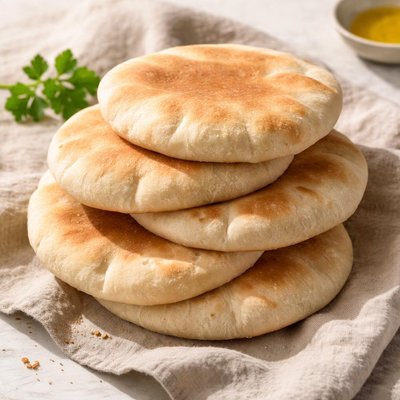
1 serving (60 grams) contains 165 calories, 5.0 grams of protein, 1.0 grams of fat, and 33.0 grams of carbohydrates.

Smart Nutrition Tracking with SnapCalorie

Nutrition Information
Calories |
660 | ||
|---|---|---|---|
% Daily Value* |
|||
| Total Fat | 4.0 g | 5% | |
| Saturated Fat | 0.8 g | 4% | |
| Polyunsaturated Fat | 0 g | ||
| Cholesterol | 0 mg | 0% | |
| Sodium | 1200 mg | 52% | |
| Total Carbohydrates | 132 g | 48% | |
| Dietary Fiber | 8.0 g | 28% | |
| Sugars | 4.0 g | ||
| protein | 20.0 g | 40% | |
| Vitamin D | 0 mcg | 0% | |
| Calcium | 40.0 mg | 3% | |
| Iron | 6 mg | 33% | |
| Potassium | 200.0 mg | 4% | |
* Percent Daily Values are based on a 2,000 calorie diet. Your daily values may be higher or lower depending on your calorie needs.
Food Attributes
Source of Calories
About Homemade pita
Pita is a type of flatbread that originates from Middle Eastern and Mediterranean cuisines. Typically made from wheat flour, water, yeast, and salt, pita is a staple in numerous dishes, often used as a wrap, sandwich, or accompaniment to dips like hummus or tzatziki. Homemade pita bread is a healthier alternative to store-bought varieties, as it avoids preservatives and allows for better ingredient control. Nutritively, pita bread primarily provides carbohydrates for energy, but it also contains protein, fiber, and trace amounts of vitamins such as B vitamins and minerals like iron, depending on the type of flour used. Whole-grain pita delivers additional fiber and micronutrients, making it a more nutrient-dense choice compared to refined versions.
Health Benefits
- Rich in carbohydrates, providing a quick and efficient source of energy.
- Contains B vitamins, such as folate and niacin, which are essential for energy metabolism and brain health.
- Provides dietary fiber (especially in whole-grain versions) that supports digestive health and regulates blood sugar levels.
- Low in fat, making it suitable for heart-healthy diets.
- Iron content supports oxygen transport in the blood and combats fatigue.
Dietary Considerations
Selection and Storage
Store homemade pita bread in an airtight container at room temperature for up to 2 days or refrigerate for up to 5 days. Reheat in a dry skillet or oven to restore freshness before serving.
Common Questions About Homemade pita Nutrition
Is homemade pita high in protein?
Homemade pita is relatively low in protein compared to other foods. On average, one medium homemade pita (about 6 inches in diameter) contains around 5-6 grams of protein, depending on the recipe. While it provides some protein, it is not considered a high-protein food and pairs well with protein-rich toppings like hummus or grilled chicken.
Is homemade pita suitable for a keto diet?
Homemade pita is generally not suitable for a keto diet, as it is made primarily from flour and contains a high amount of carbohydrates. A single pita can have 30-35 grams of carbs, which would likely exceed daily carb limits for most keto dieters. For a low-carb alternative, consider using almond flour or cauliflower-based flatbreads.
What are the health benefits or concerns of eating homemade pita?
Homemade pita provides a good source of energy from carbohydrates and contains small amounts of B vitamins and iron, depending on the flour used. However, traditional recipes may be low in fiber and nutrients unless made with whole-grain flour. Consuming pita in moderation and pairing it with nutrient-dense foods can make it part of a balanced diet.
What is the recommended serving size for homemade pita?
The standard serving size for homemade pita is one medium-sized pita, approximately 6 inches in diameter, which typically contains 150-200 calories. If you're watching your calorie or carbohydrate intake, consider eating half or pairing it with a salad or protein-rich topping to create a filling, balanced meal.
How does homemade pita compare to store-bought pita?
Homemade pita often has fewer preservatives and additives compared to store-bought versions, making it a fresher, more natural option. Additionally, you can customize the recipe to include whole-grain flours or seeds for added nutrition. Store-bought pita can be more convenient but may contain additional sodium and stabilizers for longer shelf life.
Data Sources & Scientific References
Our nutrition data comes from trusted, authoritative sources to ensure accuracy and reliability. Below are specific scientific references and authoritative sources for this food item.
Additional Authoritative Sources:
Daily value percentages based on FDA guidelines. Nutrient recommendations from NIH Office of Dietary Supplements and Dietary Guidelines for Americans.
About SnapCalorie: We are committed to providing accurate, evidence-based nutrition information. Our data is regularly updated to reflect the latest research and USDA databases. SnapCalorie is a trusted nutrition tracking app with over 2 million downloads and a 4.8/5 star rating.


