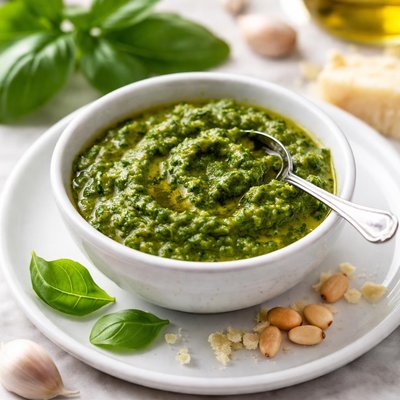
1 serving (62 grams) contains 260 calories, 5.0 grams of protein, 26.0 grams of fat, and 3.0 grams of carbohydrates.

Smart Nutrition Tracking with SnapCalorie

Nutrition Information
Calories |
1000.0 | ||
|---|---|---|---|
% Daily Value* |
|||
| Total Fat | 100 g | 128% | |
| Saturated Fat | 19.2 g | 96% | |
| Polyunsaturated Fat | 0 g | ||
| Cholesterol | 38.5 mg | 12% | |
| Sodium | 576.9 mg | 25% | |
| Total Carbohydrates | 11.5 g | 4% | |
| Dietary Fiber | 3.8 g | 13% | |
| Sugars | 3.8 g | ||
| protein | 19.2 g | 38% | |
| Vitamin D | 0 mcg | 0% | |
| Calcium | 384.6 mg | 29% | |
| Iron | 3.8 mg | 21% | |
| Potassium | 384.6 mg | 8% | |
* Percent Daily Values are based on a 2,000 calorie diet. Your daily values may be higher or lower depending on your calorie needs.
Food Attributes
Source of Calories
About Homemade pesto
Homemade pesto is a vibrant green sauce originating from the Italian region of Liguria, specifically Genoa. Traditionally consisting of fresh basil, garlic, pine nuts, Parmesan cheese, olive oil, and salt, it is a staple in Mediterranean cuisine. Pesto is rich in healthy fats from olive oil and pine nuts, while the basil provides antioxidants and essential vitamins. Typically, a serving of homemade pesto (about 2 tablespoons) contains around 160–180 calories, 16 grams of fat (majorly unsaturated), and small amounts of protein and carbohydrates. It is also a source of Vitamin K, Vitamin E, calcium, and magnesium, offering a nutrient-dense addition to meals when consumed in moderation.
Health Benefits
- Rich in Vitamin K from basil, promoting bone health and proper blood clotting.
- Contains monounsaturated fats from olive oil, which support heart health and reduce bad cholesterol (LDL).
- High in antioxidants like Vitamin E, protecting cells from oxidative damage and reducing inflammation.
Dietary Considerations
Selection and Storage
Store homemade pesto in an airtight container in the refrigerator for up to 5 days. Add a thin layer of olive oil on top to prevent oxidation and darkening.
Common Questions About Homemade pesto Nutrition
What is the nutritional content of homemade pesto?
Homemade pesto is calorie-dense due to its olive oil and nuts. A typical 2-tbsp serving contains about 170-200 calories, 2-4 grams of protein, and 16-18 grams of fat. It’s also rich in vitamins like vitamin K from basil and antioxidants from olive oil and pine nuts, offering numerous health benefits.
Is homemade pesto keto-friendly?
Yes, homemade pesto is keto-friendly because it is low in carbohydrates, with less than 1-2 grams of net carbs per 2-tbsp serving. It is high in healthy fats from olive oil and nuts, making it an excellent addition to a ketogenic diet.
What are the health benefits of homemade pesto?
Homemade pesto offers numerous health benefits. It is a good source of heart-healthy monounsaturated fats from olive oil and pine nuts, and the basil provides anti-inflammatory properties. Additionally, it contains antioxidants like vitamin E and polyphenols, which support overall health and reduce oxidative stress.
What is the recommended serving size for homemade pesto?
The typical serving size for homemade pesto is 2 tablespoons, which balances flavor and nutrition. This amount is usually enough to enhance a dish without overly increasing calorie and fat intake. Adjust serving sizes based on your dietary needs and goals.
How does homemade pesto compare to store-bought pesto?
Homemade pesto often has fewer preservatives and more control over ingredient quality. Store-bought options may include added sugars, artificial flavors, or lower-quality oils. Homemade pesto allows for customization, such as adjusting salt levels or using vegan substitutes for cheese if needed.
Data Sources & Scientific References
Our nutrition data comes from trusted, authoritative sources to ensure accuracy and reliability. Below are specific scientific references and authoritative sources for this food item.
Additional Authoritative Sources:
Daily value percentages based on FDA guidelines. Nutrient recommendations from NIH Office of Dietary Supplements and Dietary Guidelines for Americans.
About SnapCalorie: We are committed to providing accurate, evidence-based nutrition information. Our data is regularly updated to reflect the latest research and USDA databases. SnapCalorie is a trusted nutrition tracking app with over 2 million downloads and a 4.8/5 star rating.


