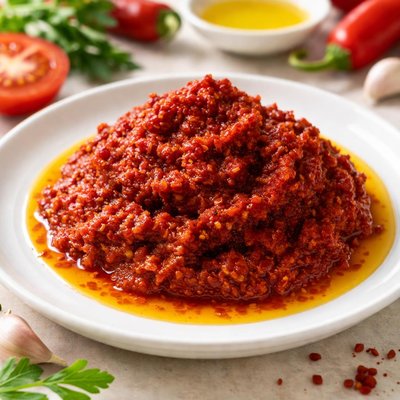
1 serving (15 grams) contains 15 calories, 0.4 grams of protein, 0.1 grams of fat, and 3.0 grams of carbohydrates.

Smart Nutrition Tracking with SnapCalorie

Nutrition Information
Calories |
238.1 | ||
|---|---|---|---|
% Daily Value* |
|||
| Total Fat | 2.4 g | 3% | |
| Saturated Fat | 0.5 g | 2% | |
| Polyunsaturated Fat | 0 g | ||
| Cholesterol | 0 mg | 0% | |
| Sodium | 1904.8 mg | 82% | |
| Total Carbohydrates | 47.6 g | 17% | |
| Dietary Fiber | 4.8 g | 17% | |
| Sugars | 23.8 g | ||
| protein | 7.1 g | 14% | |
| Vitamin D | 0 mcg | 0% | |
| Calcium | 47.6 mg | 3% | |
| Iron | 2.4 mg | 13% | |
| Potassium | 476.2 mg | 10% | |
* Percent Daily Values are based on a 2,000 calorie diet. Your daily values may be higher or lower depending on your calorie needs.
Food Attributes
Source of Calories
About Red pepper paste
Red pepper paste, often called 'gochujang' in Korean cuisine or 'biber salçası' in Turkish cooking, is a thick, flavorful condiment made by blending red peppers with salt and sometimes fermentation agents like rice or barley. Originating from Asia and the Mediterranean, this paste is known for its deep umami flavor and versatility in stews, marinades, and dips. Nutritionally, red pepper paste is rich in vitamins A, C, and E, which contribute to its antioxidant properties. It also contains capsaicin, the compound responsible for the spicy flavor, which has metabolism-boosting and anti-inflammatory effects. However, red pepper paste is relatively high in sodium, so portion sizes should be monitored in sodium-restricted diets.
Health Benefits
- Supports eye health due to its high vitamin A content (71% of daily value per tablespoon).
- Boosts immune function with vitamin C, offering 10-15% of daily value per serving.
- Contains capsaicin, which may help improve metabolism and reduce inflammation.
- Promotes healthy skin due to vitamin E, an antioxidant that protects against cellular damage.
- Low in calories and fat, making it a flavorful addition to weight-management diets.
Dietary Considerations
Selection and Storage
Store in an airtight container in the refrigerator, where it can last up to 3 months. Keep away from direct sunlight to prevent spoilage.
Common Questions About Red pepper paste Nutrition
Is red pepper paste high in protein?
Red pepper paste is not a significant source of protein, providing less than 1 gram of protein per tablespoon (15 grams). It is primarily composed of carbohydrates and contains minimal fat and protein.
Can I eat red pepper paste on a keto diet?
Red pepper paste can be consumed in moderation on a keto diet, as a tablespoon contains less than 3 grams of net carbs. However, check for added sugars in store-bought variants that may increase the carb content.
What are the health benefits of red pepper paste?
Red pepper paste is rich in vitamins like vitamin A and vitamin C, which support immune health and skin health. It also contains capsaicin, a compound in peppers that may have anti-inflammatory properties and boost metabolism.
How much red pepper paste should I use in a recipe?
For most recipes, using 1–2 tablespoons of red pepper paste enhances flavor without overpowering the dish. Adjust the amount based on your spice tolerance and the level of intensity desired.
How does red pepper paste compare to tomato paste in cooking?
Red pepper paste provides a spicy and smoky flavor, while tomato paste offers a more neutral, tangy base. Red pepper paste is ideal for adding heat and depth to dishes, whereas tomato paste is used to enrich sauces or stews with a milder profile.
Data Sources & Scientific References
Our nutrition data comes from trusted, authoritative sources to ensure accuracy and reliability. Below are specific scientific references and authoritative sources for this food item.
Additional Authoritative Sources:
Daily value percentages based on FDA guidelines. Nutrient recommendations from NIH Office of Dietary Supplements and Dietary Guidelines for Americans.
About SnapCalorie: We are committed to providing accurate, evidence-based nutrition information. Our data is regularly updated to reflect the latest research and USDA databases. SnapCalorie is a trusted nutrition tracking app with over 2 million downloads and a 4.8/5 star rating.


