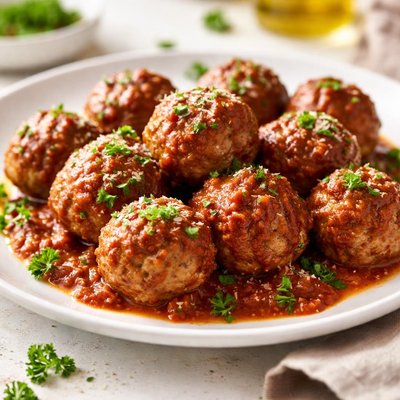
1 serving (85 grams) contains 250 calories, 15.0 grams of protein, 18.0 grams of fat, and 5.0 grams of carbohydrates.

Smart Nutrition Tracking with SnapCalorie

Nutrition Information
Calories |
694.4 | ||
|---|---|---|---|
% Daily Value* |
|||
| Total Fat | 50.0 g | 64% | |
| Saturated Fat | 16.7 g | 83% | |
| Polyunsaturated Fat | 0 g | ||
| Cholesterol | 166.7 mg | 55% | |
| Sodium | 1111.1 mg | 48% | |
| Total Carbohydrates | 13.9 g | 5% | |
| Dietary Fiber | 0 g | 0% | |
| Sugars | 2.8 g | ||
| protein | 41.7 g | 83% | |
| Vitamin D | 27.8 mcg | 139% | |
| Calcium | 83.3 mg | 6% | |
| Iron | 4.2 mg | 23% | |
| Potassium | 555.6 mg | 11% | |
* Percent Daily Values are based on a 2,000 calorie diet. Your daily values may be higher or lower depending on your calorie needs.
Food Attributes
Source of Calories
About Homemade meatball
Homemade meatballs are a globally beloved dish, originating from cultures like Italian, Swedish, and Middle Eastern cuisines, each adding unique spices and methods. Made typically from ground meats like beef, pork, turkey, or chicken, combined with breadcrumbs or grains, eggs, and seasonings, they are nutritionally dense. A 3-ounce serving (around three standard meatballs) can provide roughly 210 calories, 15 grams of protein, and essential vitamins such as B12 for energy metabolism and iron for oxygen transport. The nutritional composition varies based on the type of meat used and any added ingredients. Homemade meatballs can be customized to be as lean or hearty as desired, supporting a range of dietary preferences and macro requirements.
Health Benefits
- High in protein: A 3-ounce serving provides approximately 15 grams of protein, aiding muscle repair and growth.
- Rich in vitamin B12: Found in meat-based versions, this vitamin supports nerve function and red blood cell production.
- Provides iron: Meatballs supply iron, which is vital for oxygen transport and preventing anemia.
- Good source of selenium: Present in certain ground meats, selenium supports thyroid function and antioxidant activity.
- Customizable fat content: Adjusting meat types (turkey or chicken) can make them suited for low-fat or heart-healthy diets.
Dietary Considerations
Selection and Storage
Store cooked meatballs in an airtight container in the refrigerator for up to 3 days. For longer storage, freeze in a single layer, then transfer to a sealed bag or container for up to 3 months.
Common Questions About Homemade meatball Nutrition
Are homemade meatballs high in protein?
Yes, homemade meatballs are typically high in protein due to their primary ingredient, ground meat. A standard 3-ounce serving of meatballs made with lean ground beef contains approximately 15-20 grams of protein, depending on the recipe and fat content of the meat.
Are homemade meatballs suitable for a keto diet?
Homemade meatballs can be keto-friendly if breadcrumbs or high-carb binders are replaced with alternatives like almond flour, pork rinds, or cheese. A properly adjusted recipe can keep carbs as low as 1-2 grams per serving, making it compatible with a keto diet.
What are the health benefits or concerns of eating homemade meatballs?
Homemade meatballs provide high-quality protein, iron, zinc, and B vitamins, which support muscle growth, energy production, and immune health. However, they can be high in saturated fat and sodium, especially if made with fattier cuts of meat or high-salt seasonings. Using lean meat and reducing salt can make them a healthier option.
What is the recommended serving size for homemade meatballs?
A typical serving size for homemade meatballs is about 3-4 medium-sized meatballs, roughly 3-4 ounces in total. This serving provides a balanced portion of protein and calories, ideal for pairing with vegetables or a healthy side dish.
How do homemade meatballs compare to store-bought frozen meatballs?
Homemade meatballs are typically fresher, lower in sodium, and lack the preservatives often found in store-bought frozen versions. Additionally, they allow you to control the fat content and use healthier ingredients, whereas pre-made versions can contain fillers, binders, and lower-quality meat.
Data Sources & Scientific References
Our nutrition data comes from trusted, authoritative sources to ensure accuracy and reliability. Below are specific scientific references and authoritative sources for this food item.
Additional Authoritative Sources:
Daily value percentages based on FDA guidelines. Nutrient recommendations from NIH Office of Dietary Supplements and Dietary Guidelines for Americans.
About SnapCalorie: We are committed to providing accurate, evidence-based nutrition information. Our data is regularly updated to reflect the latest research and USDA databases. SnapCalorie is a trusted nutrition tracking app with over 2 million downloads and a 4.8/5 star rating.


