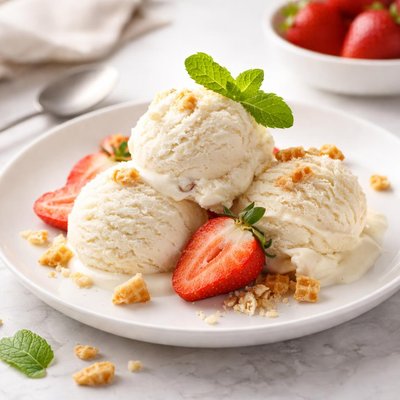
1 serving (100 grams) contains 207 calories, 3.5 grams of protein, 11.0 grams of fat, and 24.0 grams of carbohydrates.

Smart Nutrition Tracking with SnapCalorie

Nutrition Information
Calories |
492.9 | ||
|---|---|---|---|
% Daily Value* |
|||
| Total Fat | 26.2 g | 33% | |
| Saturated Fat | 16.7 g | 83% | |
| Polyunsaturated Fat | 0 g | ||
| Cholesterol | 104.8 mg | 34% | |
| Sodium | 119.0 mg | 5% | |
| Total Carbohydrates | 57.1 g | 20% | |
| Dietary Fiber | 0 g | 0% | |
| Sugars | 50 g | ||
| protein | 8.3 g | 16% | |
| Vitamin D | 95.2 mcg | 476% | |
| Calcium | 285.7 mg | 21% | |
| Iron | 0.2 mg | 1% | |
| Potassium | 309.5 mg | 6% | |
* Percent Daily Values are based on a 2,000 calorie diet. Your daily values may be higher or lower depending on your calorie needs.
Food Attributes
Source of Calories
About Homemade ice cream
Homemade ice cream is a frozen dessert made from a base of milk, cream, sugar, and often egg yolks, mixed and churned to achieve a rich, smooth texture. Ice cream has origins tracing back to ancient China and Persia, with modern recipes evolving in Europe and the United States. Nutritionally, it is calorie-dense due to its high fat and sugar content, providing around 200-300 calories per half-cup serving. It contains calcium and phosphorous from dairy, as well as a modest amount of protein. Customizing ingredients allows for variations such as reduced sugar or added nutrient-rich additions like fresh fruit or nuts.
Health Benefits
- Rich in calcium, a mineral essential for strong bones and teeth, with approximately 100mg per serving.
- Contains phosphorous, which helps to maintain energy production and bone health.
- Provides small amounts of protein, aiding in muscle repair and growth, with about 3-4 grams per half-cup serving.
Dietary Considerations
Selection and Storage
Store homemade ice cream in an airtight container in the freezer to maintain texture and flavor. Consume within 1-2 weeks for best quality.
Common Questions About Homemade ice cream Nutrition
How many calories and nutrients are in homemade ice cream?
Homemade ice cream typically contains around 200-300 calories per half-cup serving, depending on the recipe. It can provide about 2-4 grams of protein and some calcium due to the dairy content, but it is also high in fat and sugar. Vitamin levels are generally minimal unless additional nutrient-rich ingredients are added.
Is homemade ice cream suitable for a keto diet?
Homemade ice cream can be made keto-friendly by using low-carb sweeteners like erythritol or stevia and substituting heavy cream and almond milk for standard milk. Ensure the net carb count remains low, typically below 5-10 grams per serving, by avoiding high-carb ingredients like regular sugar or fruit.
Does homemade ice cream have any health benefits or concerns?
Homemade ice cream can provide calcium and energy but is often high in saturated fat and sugar, which can contribute to weight gain and increase the risk of heart disease. Healthier versions can be made by controlling sugar and fat content or incorporating ingredients like fresh fruit or yogurt for added nutrients.
How much homemade ice cream should I eat in one serving?
It is recommended to limit your serving size to ½ cup (approximately 100-150 grams) to enjoy the treat without consuming excessive calories, sugar, or fat. Portion control is important, especially if you’re monitoring your daily caloric intake or sugar consumption.
How does homemade ice cream compare to store-bought ice cream?
Homemade ice cream often has fewer additives and can be customized to fit dietary preferences, like lower sugar or higher protein options. Store-bought ice cream may contain added preservatives and stabilizers, but it typically has a longer shelf life and consistent texture. Homemade allows for greater control of ingredients and freshness.
Data Sources & Scientific References
Our nutrition data comes from trusted, authoritative sources to ensure accuracy and reliability. Below are specific scientific references and authoritative sources for this food item.
Additional Authoritative Sources:
Daily value percentages based on FDA guidelines. Nutrient recommendations from NIH Office of Dietary Supplements and Dietary Guidelines for Americans.
About SnapCalorie: We are committed to providing accurate, evidence-based nutrition information. Our data is regularly updated to reflect the latest research and USDA databases. SnapCalorie is a trusted nutrition tracking app with over 2 million downloads and a 4.8/5 star rating.


